ADB's $10 Billion Loan to Pakistan Reveals Deepening External Dependence
Synopsis
The ADB's recent $10 billion loan to Pakistan signals a troubling trend of increasing reliance on external funding. As peer nations achieve self-sufficiency, Pakistan struggles with debt and infrastructure needs, raising concerns about its economic future.
Key Takeaways
ADB's $10 billion loan underscores Pakistan's external funding reliance.
Peer nations have moved towards self-financing, unlike Pakistan.
Pakistan's total external debt exceeds $130 billion.
Inflation is easing, but growth remains sluggish.
Weak tax revenue generation is a major economic challenge.
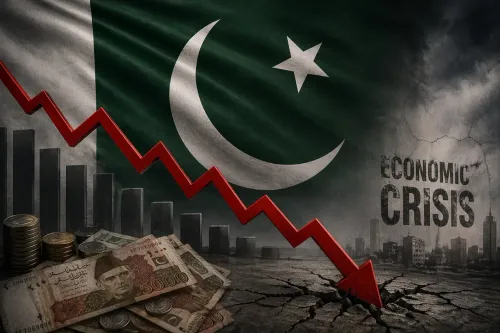
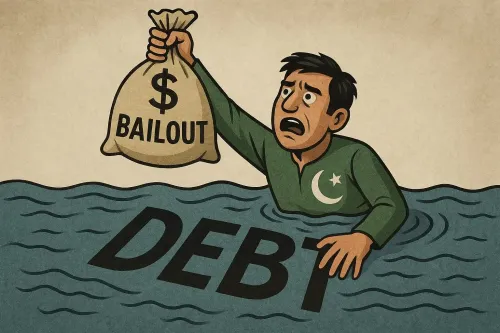
New Delhi, March 21 (NationPress) The recent declaration by the Asian Development Bank (ADB) regarding a substantial $10 billion loan to Pakistan over the next five years underscores the nation’s persistent dependence on foreign funding, even as other comparable countries manage to move away from such reliance, according to a recent report.
Experts have highlighted that nations previously seen as Pakistan's equals are now successfully financing their own growth, while Pakistan continues to seek loans for essential infrastructure projects, as noted by The Express Tribune.
This financial assistance is a component of a broader Country Partnership Strategy, which anticipates a total of $20 billion in support over a decade.
The escalating debt reflects Pakistan's ongoing need for external financing, with its total external debt surpassing $130 billion, nearly one-third of which is owed to multilateral organizations.
Analysts indicate that this credit support comes at a time when Pakistan is experiencing tentative recovery signs, with inflation dropping to 4.5 percent in FY25 and foreign exchange reserves hitting over $21 billion.
However, the report raises serious concerns regarding Pakistan's capacity to escape this cycle of dependency, pointing out that the overall growth rate remains insufficient to establish a sustainable long-term growth trajectory.
Since its independence, Pakistan has engaged in 23 IMF programs, more than any other country in Asia, resulting in an outstanding debt of nearly $9 billion to the fund.
Currently, Pakistan holds the fourth-largest debt to the IMF and comprises approximately half of the IMF's outstanding loans in Asia.
The report emphasizes that weak domestic revenue generation remains a fundamental issue, with the tax-to-GDP ratio being considerably lower than that of its peers, making it difficult to finance extensive infrastructure and developmental requirements without incurring further debt.
According to another recent analysis, Pakistan's outlook for 2026–2031 will be dictated by debt levels, inflation rates, and poverty measures, warning of sluggish growth and inflation that could severely impact household finances.
Experts contend that while stabilization programs and IMF support may provide temporary relief, they are inadequate for fostering sustained growth, and without decisive government action, job opportunities will remain concentrated in informal and low-productivity sectors.
aar/na
Point of View
The increasing dependence on external loans like the ADB's $10 billion credit is a concerning trend for Pakistan. While such financial support is essential for immediate infrastructure needs, it raises questions about the long-term sustainability of the country's economic growth and self-reliance.
NationPress
23 Sept 2026
Frequently Asked Questions
What is the purpose of the ADB's $10 billion loan to Pakistan?
The loan aims to support Pakistan's infrastructure development and economic growth over five years.
How does Pakistan's external debt compare to its peers?
Pakistan's external debt exceeds $130 billion, indicating a greater reliance on foreign funding compared to its peer nations.
What are the implications of Pakistan's reliance on loans?
Continued reliance on loans raises concerns about the country's ability to achieve self-sufficiency and sustainable growth.
How many IMF programs has Pakistan engaged in?
Pakistan has entered 23 IMF programs since its independence, more than any other Asian economy.
What are the challenges facing Pakistan's economy?
Key challenges include low domestic revenue mobilization and insufficient growth rates to fund essential development without borrowing.