Is Pakistan Facing a Crisis Under a $134 Billion Debt Burden?

Synopsis
Pakistan is in a perilous economic situation, grappling with a staggering $134 billion in external debt. With unemployment rising and growth stagnating, the country is caught in a cycle of dependence on foreign loans. Can it find a path to recovery amidst these challenges?
Key Takeaways
Pakistan's external debt has reached $134 billion .
The country faces $23-26 billion in external debt repayments for 2025-26.
Recent support from the UAE highlights Pakistan's dependency on foreign aid.
The IMF's assistance is crucial but requires strict reforms.
Unemployment is rising, now at 6.9% .
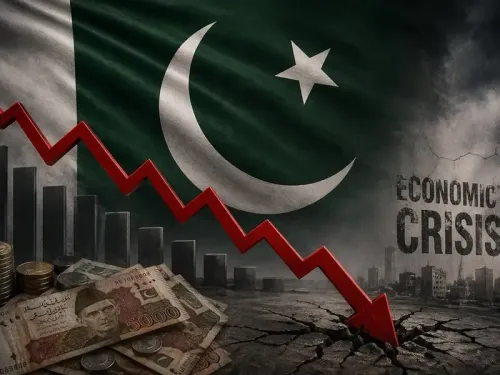
New Delhi, Feb 8 (NationPress) Pakistan is grappling with a prolonged economic crisis that has worsened over the years, characterized by escalating external debt burdens, stagnant economic growth, and significant structural weaknesses stemming from decades of inadequate governance and excessive dependence on foreign financing, as highlighted in a recent report.
As of late 2025, Pakistan's total external debt is estimated to be around $134 billion, which poses a considerable burden in relation to its GDP, according to an article from One World Outlook.
The nation is facing daunting external debt repayment obligations, amounting to an astonishing $23-26 billion in total servicing needs (including both principal and interest) for the fiscal year 2025-26, as noted in the article.
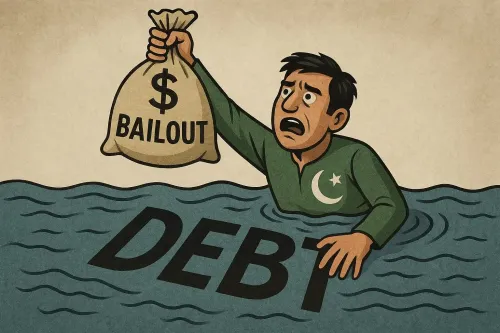
A recent development involved the United Arab Emirates (UAE) agreeing to roll over $2 billion of Pakistan's debt, highlighting the fragile state of Islamabad's financial management. This temporary measure emphasizes Pakistan's continued reliance on bilateral rollovers from allies such as the UAE, Saudi Arabia, and China to mitigate immediate default risks.
While the country’s foreign exchange reserves have shown some signs of recovery, with total liquid reserves reaching $21.29 billion as of late January 2026, they remain susceptible to maturities and import demands. The IMF’s $7 billion Extended Fund Facility (EFF), which was approved in September 2024 alongside the Resilience and Sustainability Facility, has been vital for maintaining stability. The second review was completed in December 2025, unlocking further disbursements, but progress is contingent on reforms such as fiscal discipline and restructuring of state-owned enterprises (SOEs), according to the article.
This year, bilateral commitments amount to around $12 billion in rollovers, yet the UAE’s cautious one-month extension suggests shifting dynamics, potentially influenced by increased risk perceptions or geopolitical factors, transitioning from concessional ‘brotherly’ aid to more commercial terms, the article indicates.
The debt burden is exacerbated by repeated engagements with the IMF. Pakistan has repeatedly undergone various programs, with the latest EFF focusing on macroeconomic stability, rebuilding reserves, broadening the tax base, and reforming SOEs. Although fiscal performance has improved (e.g., primary surplus targets met), inflation remains persistent, partly due to energy prices and external shocks. The economy has seen approximately 3% growth in recent periods, with modest projections ahead; however, this growth is insufficient to accommodate a rapidly growing population that requires millions of new jobs each year, as the article points out.
Employment trends reflect a stark human cost. Official unemployment has risen, with the rate reaching about 6.9% in 2024-25 (up from 6.3% previously), indicating increases across various demographics. The number of unemployed individuals surged by 1.4 million (31%) from 2020-21 to 2024-25. In recent years, hundreds of thousands of Pakistanis have sought employment abroad, driven by stagnant wages, limited opportunities, and rising costs. The economy struggles to generate 1.5 million jobs annually, a challenge exacerbated by IMF-mandated austerity measures (higher taxes, energy tariffs) and disruptions such as previous floods affecting agriculture and industry, the article states.
Point of View
I observe with concern the ongoing economic crisis facing Pakistan. The reliance on external debt and the pressing need for structural reforms are critical issues that must be addressed to ensure a sustainable future. Our commitment is to provide unbiased, factual reporting on these pressing matters, keeping the nation's best interests at heart.
NationPress
3 Oct 2026
Frequently Asked Questions
What is the current external debt of Pakistan?
Pakistan's total external debt is approximately $134 billion as of late 2025.
What are the repayment challenges for Pakistan in 2025-26?
Pakistan faces external debt repayment obligations of $23-26 billion, including principal and interest, for the fiscal year 2025-26.
How has the UAE supported Pakistan's financial situation?
The UAE recently rolled over $2 billion of Pakistan's debt, reflecting its ongoing reliance on bilateral assistance.
What role does the IMF play in Pakistan's economy?
The IMF has provided a $7 billion Extended Fund Facility to stabilize Pakistan's economy, contingent on implementing key reforms.
What are the unemployment trends in Pakistan?
Pakistan's unemployment rate has risen to approximately 6.9% in 2024-25, indicating a significant increase in joblessness across demographics.