Are Anti-Taliban Leaders in Danger After the Assassination of Former Afghan General in Tehran?
Synopsis
The assassination of General Ikramuddin Saree in Tehran has sent shockwaves through the Afghan opposition community. With leaders condemning the act as terrorism, many are questioning the safety of former military personnel in exile. The implications of this incident raise serious concerns about Iran's role in the ongoing threats faced by those opposing the Taliban.
Key Takeaways
General Ikramuddin Saree was assassinated in Tehran.
The killing has alarmed Afghan opposition leaders.
Concerns are growing regarding the safety of former Afghan security officials.
There are indications of a connection between the Taliban and the Iranian regime.
Calls for justice are mounting among Afghan political groups.
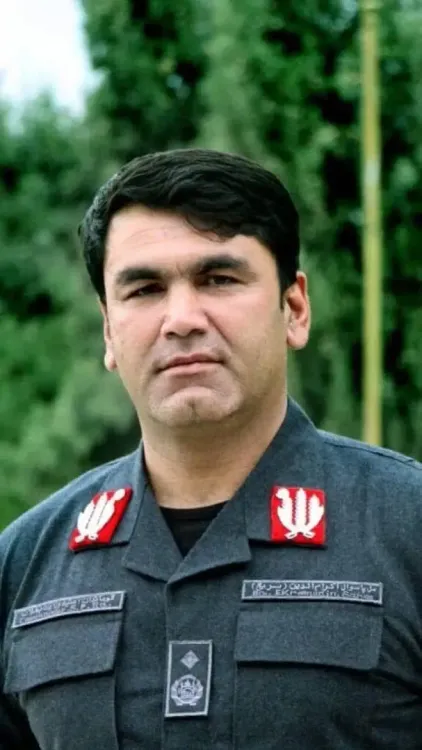
Kabul, Dec 25 (NationPress) Numerous Afghan leaders have vocally denounced the assassination of former Afghanistan police commander General Ikramuddin Saree, who was fatally shot near his home in Tehran, Iran's capital, on Wednesday evening.
Reports from Afghan news outlets on Thursday indicated that no person or group has taken responsibility for the assassination yet, and Iranian authorities have not provided any investigation details.
Relatives revealed that Saree sustained critical injuries in the shooting and succumbed while being rushed to the hospital. Reports noted that the incident took place in the Valiasr district, one of Tehran’s most bustling areas, as reported by the prominent Afghan news agency Khaama Press.
General Saree had previously held the position of police chief in Afghanistan’s Baghlan and Takhar provinces, and was recognized as a senior security official during the prior government. Like many former Afghan military members, he had sought asylum in Iran following the Taliban's resurgence in August 2021.
Leaders of Afghanistan's opposition movements termed the assassination an “act of terror,” emphasizing that it has intensified apprehensions among former security officials residing overseas.
Describing him as one of the dedicated commanders committed to his people and homeland, statements from Jamiat-e Islami, the National Resistance Front, and the Freedom Front stated that Saree’s assassination highlights the escalating dangers faced by former Afghan military and security personnel in exile.
“Recently, the late Maruf Gholami, a former commander of the Islamic Jamiat, was also martyred in Mashhad. Such killings, particularly in cities where Afghan political and consular offices are under Taliban control, raise serious alarms. It is anticipated that the Iranian authorities will take measures to identify and bring the murderers to justice,” said a statement from Jamiat-e-Islami Afghanistan on X.
The National Resistance Front (NRF) remarked that Saree’s assassination in broad daylight on Iranian territory reveals the profound and concealed alliances between the Taliban and the Iranian regime. They cautioned anti-Taliban factions that Iran is no longer a secure sanctuary for them.
The Freedom Front blamed the Taliban for the assassination, characterizing it as part of a wider strategy to eliminate former Afghan security personnel beyond Afghanistan’s borders. Former intelligence chief Rahmatullah Nabil extended his condolences, noting that the assassination has deeply unsettled Afghans both locally and abroad, as reported by leading Afghan media outlet Amu TV.
Alongside Saree, one of his associates was also killed in the attack, while another was injured.
“The targeting of former Afghan security officials continues even in exile, while the perpetrators enjoy complete impunity,” remarked Naseer Ahmad Faiq, Afghanistan’s charge d’affaires to the United Nations, on X.
Point of View
It is imperative to acknowledge the serious implications these events hold for the safety of individuals opposing the Taliban. The recent assassination of General Saree is a stark reminder of the dangers present even in exile, signaling a critical need for international attention and protective measures for those at risk.
NationPress
30 Sept 2026
Frequently Asked Questions
What happened to General Ikramuddin Saree?
General Ikramuddin Saree was assassinated near his home in Tehran, Iran, on December 25, 2023.
Who condemned the assassination?
Numerous Afghan leaders and opposition movements have condemned the assassination, labeling it an act of terrorism.
What are the implications of this event?
The assassination raises serious concerns about the safety of former Afghan military personnel in exile and highlights the connections between the Taliban and the Iranian regime.
How did the Iranian authorities respond?
As of now, Iranian authorities have not released any information regarding the investigation into Saree's assassination.
What did the National Resistance Front say?
The National Resistance Front stated that the killing exposes the hidden ties between the Taliban and the Iranian regime, warning that Iran is no longer a safe haven for anti-Taliban movements.