Afghanistan-Pakistan rift deepens over Taliban allegations
Synopsis
The Taliban-led government has accused Pakistan of backing armed opponents, including through alleged cross-border activity in Badakhshan. Pakistan's Ministry of Information rejected the accusations, according to a report that also cited Islamabad's security concerns and Afghanistan's strengthening ties with India.
Key Takeaways
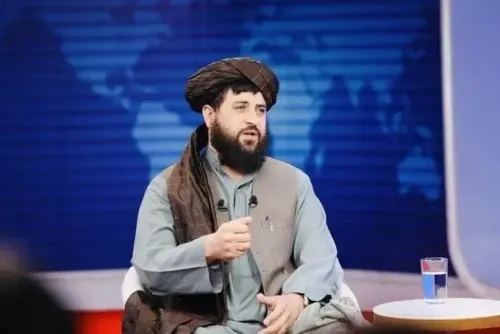
Taliban Foreign Minister Amir Khan Muttaqi accused Pakistan of seeking to destabilise Afghanistan .
Taliban spokesperson Zabihullah Mujahid alleged that attackers in Badakhshan crossed through Pakistan's Chitral region.
Pakistan's Ministry of Information rejected the accusations, according to Page 3 News .
The Afghanistan Freedom Front reported clashes in Badakhshan in July and attacks in Nuristan and Kunar in October .
Associate professor Kandeel Abbas distinguished political backing from military support, describing the latter as a separate and more serious concern.
The Afghanistan-Pakistan rift has deepened after the Taliban-led government in Kabul accused Islamabad of backing armed groups opposed to its rule, according to a report published on 23 November. Pakistan's Ministry of Information rejected the accusations, the report said.
The dispute comes amid prolonged armed clashes between the neighbours, Pakistan's security concerns over the Tehreek-e-Taliban Pakistan (TTP) and the Baloch Liberation Army (BLA), and Afghanistan's strengthening relationship with India, according to the report by Thailand daily Page 3 News.
Taliban allegations against Pakistan
Taliban Foreign Minister Amir Khan Muttaqi accused Islamabad of deliberately seeking to destabilise Afghanistan. He alleged that Pakistan had begun efforts to undermine the country's internal stability.
Muttaqi also claimed that thousands of armed fighters had gathered along the Durand Line, which separates the two countries, to weaken what he described as Afghanistan's relative stability under Taliban rule, the report said. The report did not establish those allegations as fact.
Taliban spokesperson Zabihullah Mujahid separately alleged that perpetrators of attacks in Badakhshan entered Afghanistan through Pakistan's Chitral region and fled back across the border. He also claimed Pakistani military personnel accompanied them.
Claims of anti-Taliban operations
Several factions opposed to Taliban rule have reported expanding their military operations, according to the report. Their claims provide the immediate backdrop to the accusations but do not independently establish Pakistani involvement.
The Afghanistan Freedom Front (AFF) claimed its fighters clashed with Taliban forces in Zebak district of Badakhshan province in July. The group also reported attacks in Nuristan and Kunar provinces in October.
Separately, the United Front of Afghanistan claimed responsibility for attacks against Taliban forces in Kandahar province, near the Pakistani border, the report said.
Pakistan's response and regional context
Pakistan's Ministry of Information rejected the accusations, according to the report. The account also identified Islamabad's security concerns over the TTP and the BLA as part of the wider tensions.
Afghanistan's strengthening relationship with India was cited as another factor in the deterioration of ties. The report did not detail a specific development in that relationship or establish how it contributed to the latest allegations.
Analysts distinguish political and military support
Former Afghan MP Shinkai Karokhail was cited as saying that anti-Taliban groups would find it highly challenging to enter Afghanistan across the border without at least some Pakistani assistance.
Former Pakistani Senator and political analyst Afrasiab Khattak made similar allegations, claiming that anti-Taliban leaders visit Pakistan and hold meetings there. These claims were presented alongside Pakistan's denial.
Kandeel Abbas, an associate professor at Quaid-i-Azam University, drew a distinction between political backing and military support, describing the latter as a separate and more serious concern. The competing claims leave the nature of any alleged support contested as the neighbours' relationship remains strained.
Point of View
And Pakistan's rejection deserves equal attention. For India and the wider region, the priority should be credible scrutiny of cross-border claims rather than treating either side's assertions as established fact.
NationPress
23 Nov 2026
Frequently Asked Questions
Why are Afghanistan and Pakistan relations strained?
The Taliban-led government has accused Pakistan of backing armed groups opposed to its rule, while Pakistan has rejected the accusations. A report also cited Islamabad's security concerns and Afghanistan's strengthening relationship with India.
What did Amir Khan Muttaqi allege about Pakistan?
Taliban Foreign Minister Amir Khan Muttaqi accused Pakistan of pursuing a deliberate campaign to destabilise Afghanistan. He also claimed thousands of armed fighters had gathered along the Durand Line.
How did Pakistan respond to the Taliban allegations?
Pakistan's Ministry of Information rejected the accusations, according to the report in Page 3 News.
Which anti-Taliban groups reported attacks?
The Afghanistan Freedom Front reported clashes and attacks in Badakhshan, Nuristan and Kunar, while the United Front of Afghanistan claimed attacks in Kandahar. Those claims do not independently establish Pakistani involvement.
What happens next in the Afghanistan-Pakistan dispute?
The report did not specify a next step or announce further talks. The allegations and Pakistan's rejection remain contested.