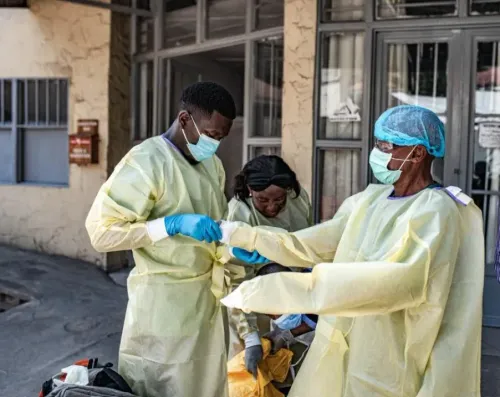
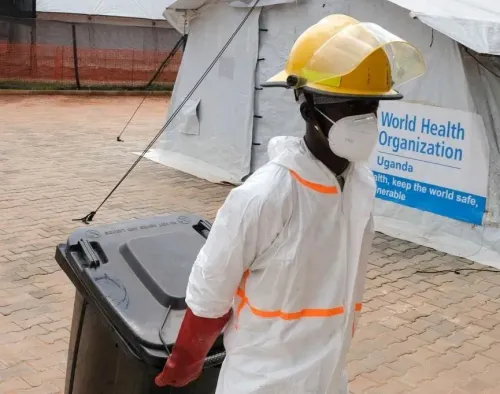
Africa CDC flags hantavirus gaps as Ebola resurfaces in DRC
Synopsis
Africa CDC's continent-wide assessment found that 40% of African nations lack functional hantavirus surveillance — and on the same day, a fresh Ebola outbreak was confirmed in DRC's Ituri Province with 246 suspected cases and 65 deaths. The dual alert is a stark reminder that Africa's disease detection architecture remains critically under-resourced.
Key Takeaways
The Africa CDC warned on 15 May that approximately 40% of African countries lack functional surveillance systems for early hantavirus detection.
Yap Boum II and Tolbert Nyenswah of the Africa CDC called for strengthened laboratory capacity and immediate rollout of the 45-day monitoring protocol for at-risk individuals.
A new Ebola virus disease outbreak was confirmed in Ituri Province , eastern DRC , with 246 suspected cases and 65 deaths recorded.
Preliminary tests by the National Institute of Biomedical Research detected Ebola in 13 of 20 samples tested.
Cases are concentrated in Mongwalu and Rwampara , with additional suspected cases in Bunia .
The Africa Centres for Disease Control and Prevention (Africa CDC) on Thursday, 15 May warned that critical surveillance gaps are leaving a significant portion of the continent exposed to potential undetected hantavirus outbreaks, even as a fresh Ebola outbreak was confirmed in eastern Democratic Republic of the Congo (DRC). The twin alerts underscore the mounting pressure on Africa's disease preparedness architecture.
Hantavirus Surveillance Gaps
Yap Boum II, head of the emergency preparedness and response division at the Africa CDC, told an online media briefing that the agency's recent continental assessment revealed deep deficiencies in early-detection capacity. Approximately 40 per cent of African countries currently lack functional surveillance systems capable of identifying suspected hantavirus cases at an early stage, he said.
Hantaviruses are transmitted by rodents and can cause severe disease in humans through contact with infected animals or their urine, droppings, or saliva. The absence of robust detection systems means outbreaks could go unrecognised until they have already spread.
What Africa CDC Is Doing
Tolbert Nyenswah, director of pandemic prevention, preparedness and response at the Africa CDC, stressed the importance of early case recognition and the timely rollout of the 45-day monitoring protocol for individuals who have been exposed or are at risk. He called for targeted and rigorous infection prevention and control measures to reduce transmission risk.
The Africa CDC said it is actively working to strengthen the capacity of national and regional laboratories to diagnose and confirm hantavirus infections, with a specific focus on molecular diagnostic methods. This laboratory push is seen as foundational to closing the surveillance gap.
Ebola Outbreak Confirmed in DRC's Ituri Province
Compounding the continent's disease burden, health authorities confirmed a new Ebola virus disease outbreak in Ituri Province in eastern DRC. Preliminary tests by the National Institute of Biomedical Research detected the virus in 13 of 20 samples, following consultations with the DRC's Ministry of Health and National Public Health Institute.
As of the latest figures, 246 suspected cases and 65 deaths have been recorded, with the bulk of cases concentrated in Mongwalu and Rwampara. Four deaths have been confirmed among laboratory-confirmed cases. Suspected cases have also been reported in Bunia. Hundreds of suspected cases in total have been flagged across Ituri Province, according to the Africa CDC.
Why This Matters Beyond the Continent
This comes amid a broader pattern of simultaneous multi-pathogen alerts in sub-Saharan Africa, stretching already thin public health infrastructure. Notably, the hantavirus gaps identified by the Africa CDC mirror the pre-outbreak surveillance failures documented ahead of the 2014 West Africa Ebola crisis. The convergence of two separate viral threats — one emerging, one re-emerging — places renewed urgency on international support for Africa's health security frameworks. The Africa CDC's findings are expected to inform upcoming continental preparedness reviews.
Point of View
It is a ticking epidemiological risk. Meanwhile, the DRC's recurring Ebola outbreaks point to a deeper failure: international health security investments have consistently treated African preparedness as a reactive, emergency-mode problem rather than a standing infrastructure one. Until molecular diagnostic capacity is embedded at the district level, not just the national lab, every 'assessment' the Africa CDC publishes will find the same gaps.
NationPress
19 Sept 2026
Frequently Asked Questions
What hantavirus risks has the Africa CDC identified in Africa?
The Africa CDC found that approximately 40% of African countries lack functional surveillance systems capable of early hantavirus detection, leaving a significant portion of the continent vulnerable to undetected outbreaks. The agency is working to strengthen national and regional laboratory capacity using molecular diagnostic methods.
How do humans get infected with hantavirus?
Hantaviruses are carried by rodents and transmitted to humans through contact with infected animals or their urine, droppings, or saliva. There is currently no specific treatment, making early detection and prevention critical.
What is the 45-day monitoring protocol mentioned by Africa CDC?
The 45-day monitoring protocol is a surveillance measure recommended by the Africa CDC for individuals who have been exposed to or are at risk from hantavirus. Timely implementation of this protocol is seen as key to containing potential outbreaks before they spread.
What is the current status of the Ebola outbreak in DRC?
A new Ebola outbreak has been confirmed in Ituri Province in eastern DRC, with 246 suspected cases and 65 deaths recorded as of the latest figures. Preliminary tests detected the virus in 13 of 20 samples, with cases centred in Mongwalu, Rwampara, and Bunia.
Who is most affected by the DRC Ebola outbreak?
The outbreak is primarily affecting communities in Mongwalu and Rwampara in Ituri Province, with four deaths confirmed among laboratory-confirmed cases. Suspected cases have also been reported in Bunia, indicating possible geographic spread within the province.