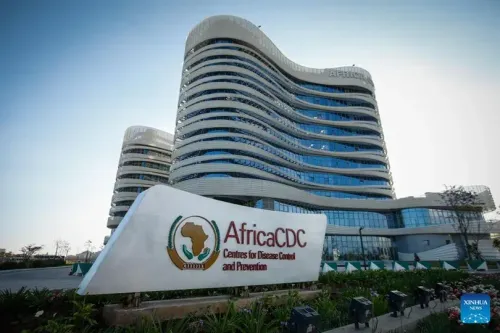
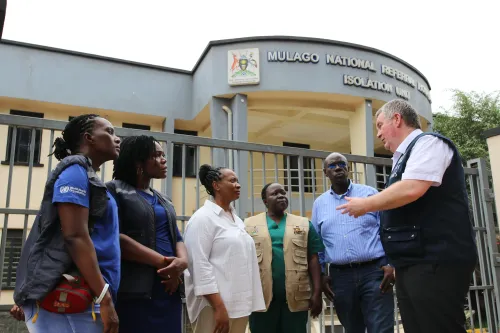
Africa CDC and WHO launch joint Ebola response platform in Uganda
Synopsis
Africa CDC, WHO, and Uganda have launched a unified Ebola response command — the Joint IMST — at Makerere University in Kampala, pooling surveillance, logistics, and lab expertise under a single 'one team, one plan, one budget' framework. With the Bundibugyo strain active and the DRC in the risk zone, this is the continent's most coordinated Ebola response architecture to date.
Key Takeaways
Africa CDC , WHO , and the Ugandan government launched the Joint Continental IMST on 28 June 2025 at Makerere University, Kampala .
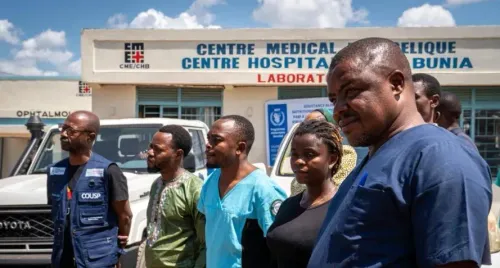
The platform supports the ongoing Bundibugyo Ebola virus disease response in Uganda and the DRC , as well as neighbouring at-risk countries.
The IMST operates on the principles of 'one team, one plan, and one budget' , integrating surveillance, lab systems, case management, and logistics.
Ebola's average case fatality rate is approximately 50% , with historical rates ranging from 25% to 90% .
The 2014–2016 West Africa outbreak was the largest since the virus was discovered in 1976 , with more deaths than all previous outbreaks combined.
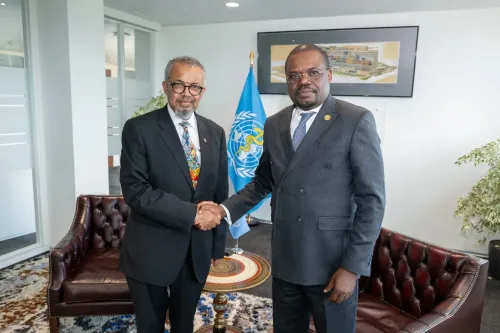
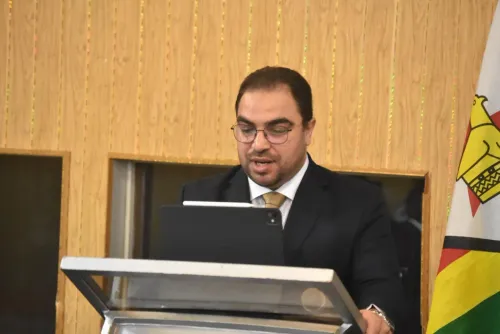
The Africa Centers for Disease Control and Prevention (Africa CDC), the World Health Organization (WHO), and the Ugandan government have officially launched the Joint Continental Incident Management Support Team (IMST) in Kampala to bolster the continent's capacity to respond to the ongoing Bundibugyo Ebola virus disease outbreak. The platform was unveiled on Saturday, 28 June 2025, at Makerere University, marking a significant step in coordinated African health emergency response.
What the IMST Platform Does
According to a statement issued by Africa CDC, the IMST establishes a unified operational platform designed to strengthen Africa's preparedness, coordination, and response to public health emergencies. The team brings together specialists across surveillance, laboratory systems, case management, infection prevention and control, emergency logistics, risk communication, information management, and partner coordination.
Guided by the principles of 'one team, one plan, and one budget', the IMST is designed to deliver integrated technical assistance and multidisciplinary expertise across the affected region.
Countries in the Immediate Response Zone
The IMST will directly support Uganda, the Democratic Republic of the Congo (DRC), and neighbouring at-risk countries through operational coordination. This cross-border focus is particularly critical given that Ebola outbreaks have historically spread across land borders — as seen during the 2014–2016 West Africa outbreak, which began in Guinea before crossing into Sierra Leone and Liberia.
What Africa CDC and WHO Said
'The launch marks a significant milestone in strengthening Africa's public health emergency architecture and reflects a shared commitment by Africa CDC, WHO, and African Union (AU) member states to build faster, more coordinated, and country-led responses to increasingly complex public health threats,' Africa CDC said in its statement.
The agency added that the new platform reinforces regional preparedness and cross-border collaboration as essential pillars of Africa's health security.
Ebola: The Disease and Its Dangers
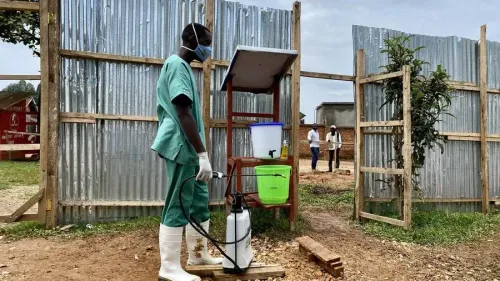
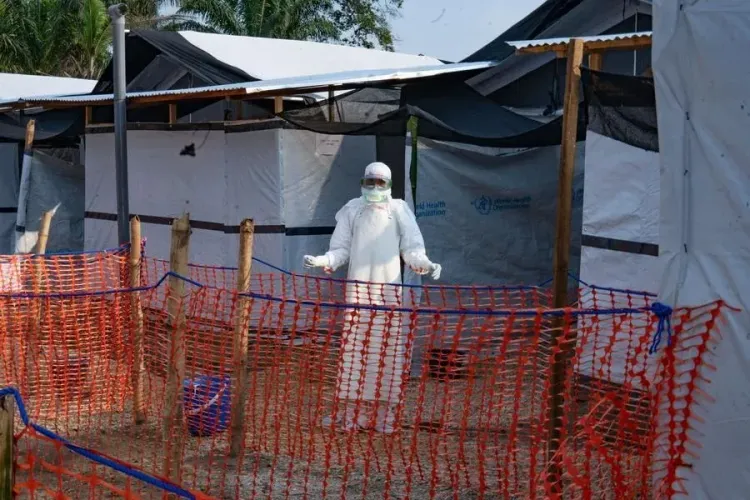
Ebola is a severe, often fatal illness affecting humans and other primates. The virus spreads to people from wild animals — including fruit bats, porcupines, and non-human primates — and subsequently transmits between humans through direct contact with blood, secretions, organs, or other bodily fluids of infected individuals, as well as contaminated surfaces such as bedding and clothing.
The average Ebola case fatality rate is approximately 50%, though historical outbreaks have recorded rates ranging from 25% to 90%. The first outbreaks were recorded in remote villages in Central Africa near tropical rainforests. The 2014–2016 West Africa epidemic remains the largest and most complex since the virus was first identified in 1976, with more cases and deaths than all previous outbreaks combined.
What Comes Next
With the IMST now operational, attention will turn to how swiftly the platform can scale technical support across Uganda and the DRC. The current Bundibugyo strain outbreak underscores the urgency — regional health authorities will be watching whether the 'one budget, one plan' model can translate into faster containment on the ground than previous fragmented response efforts.
Point of View
One plan, one budget' principle directly addresses the coordination failures seen in the 2014–2016 West Africa epidemic. What remains untested is whether this unified architecture can survive the political and logistical friction that typically emerges when multiple sovereigns and agencies share a single operational budget. Uganda and the DRC have different health system capacities and cross-border tensions — the real measure of IMST's value will be its first weeks of field deployment, not its launch ceremony.
NationPress
27 Sept 2026
Frequently Asked Questions
What is the Joint Continental Incident Management Support Team (IMST)?
The Joint Continental IMST is a unified operational platform launched by Africa CDC, WHO, and the Ugandan government on 28 June 2025 to coordinate the Ebola outbreak response across Uganda, the DRC, and neighbouring at-risk countries. It brings together specialists in surveillance, laboratory systems, case management, logistics, and risk communication under a single command framework.
Where was the IMST launched and why in Uganda?
The IMST was launched at Makerere University in Kampala, Uganda, because Uganda is currently experiencing an active Bundibugyo Ebola virus disease outbreak. Uganda and the neighbouring DRC are the primary countries the platform is designed to support.
What is the Bundibugyo Ebola strain?
Bundibugyo is one of the known species of Ebola virus, distinct from the more widely known Zaire strain. Like other Ebola strains, it causes severe haemorrhagic fever with an average fatality rate of around 50%, transmitted through direct contact with bodily fluids of infected individuals.
Which countries are covered by the IMST response?
The IMST directly supports Uganda and the Democratic Republic of the Congo, along with neighbouring countries identified as at-risk. Cross-border coordination is a central pillar of the platform, given Ebola's documented history of spreading across land borders.
How does this Ebola response compare to past outbreaks?
The 2014–2016 West Africa outbreak — the largest since Ebola was first identified in 1976 — exposed the cost of fragmented, delayed responses, spreading from Guinea to Sierra Leone and Liberia. The IMST's 'one team, one plan, one budget' model is a direct institutional response to those coordination failures.