US mobilises $112 million to fight Ebola in DRC and Uganda
Synopsis
The US has committed over $112 million in less than two weeks to fight a fast-moving Ebola outbreak in the DRC and Uganda — deploying CDC disease detectives, funding 50 response clinics, and activating UNICEF, IOM, and World Food Programme. The Bundibugyo strain, difficult terrain, and conflict-weakened health systems make this one of the more complex outbreak responses in recent years.
Key Takeaways
The US has mobilised more than $112 million in bilateral foreign assistance in under two weeks for the Ebola response in the DRC and Uganda .
A new $80 million bilateral commitment was finalised, alongside $50 million via OCHA to establish up to 50 Ebola response clinics .
An additional $300 million through OCHA pooled funds has been directed for broader humanitarian assistance in both countries.
The CDC has deployed 20 disease detectives and 23 field epidemiologists, with 7 more viral haemorrhagic fever experts set to follow.
The outbreak involves the Bundibugyo strain — a less common Ebola species; officials say the risk to the United States currently remains low.
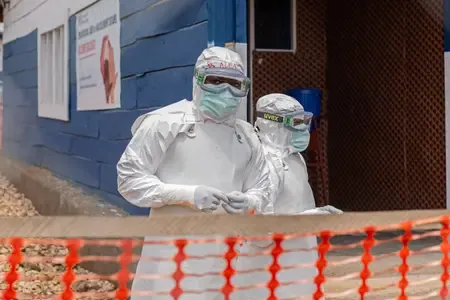
The United States has mobilised more than $112 million in bilateral foreign assistance in under two weeks to combat the fast-spreading Ebola outbreak in the Democratic Republic of the Congo (DRC) and Uganda, the State Department announced on Thursday, 28 May. US health officials cautioned that the outbreak remained 'rapidly evolving and fluid', even as they maintained that the immediate risk to the American public was low.
Key Funding Commitments
The State Department confirmed it had finalised plans to allocate an additional $80 million in bilateral assistance to strengthen on-the-ground response operations. 'With this new $80 million commitment, the Department has mobilised more than $112 million in bilateral foreign assistance for the Ebola response in less than two weeks,' the official statement read.
Beyond bilateral aid, the US committed a further $50 million through the UN Office for the Coordination of Humanitarian Affairs (OCHA) to establish up to 50 Ebola response clinics in affected areas. An additional $300 million through OCHA pooled funds has been directed to the DRC and Uganda for broader humanitarian assistance.
How the Money Will Be Used
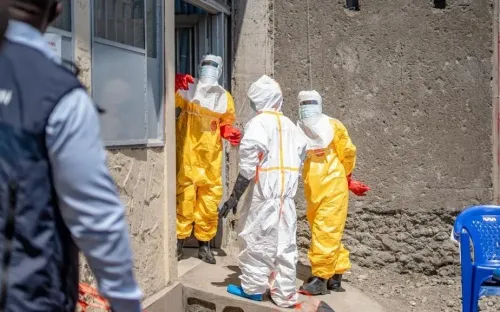
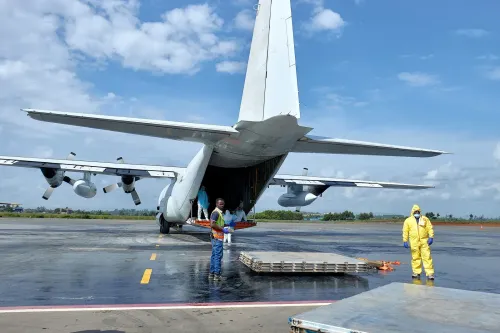
The funding will support procurement and delivery of personal protective equipment (PPE), border screening, surveillance, contact tracing, and diagnostic supplies across affected regions. UNICEF and the World Food Programme will expand PPE procurement and distribution for healthcare workers in high-risk zones.
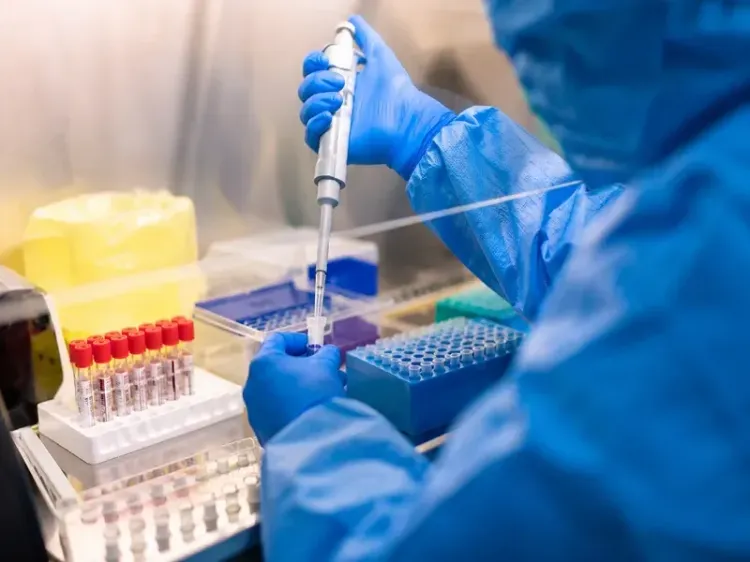
The International Organization for Migration (IOM) will reinforce health screening at airports and key border crossings while broadening public awareness campaigns. Organisations including Interchurch Medical Assistance (IMA) World Health, World Vision, and UNICEF will expand contact tracing and community surveillance to identify those exposed to the virus. FHI 360 will procure and distribute test kits and improve sample transportation for laboratory testing.
CDC Deployment on the Ground
The US Centers for Disease Control and Prevention (CDC) has intensified support operations in both countries. CDC Ebola Response Incident Manager Dr Satish Pillai confirmed that the agency had deployed '20 trained disease detectives to the outbreak zone' and was training '50 community healthcare workers to strengthen local capacity for early reporting.'
'In Uganda, 23 CDC-trained field epidemiologists are supporting response operations,' Dr Pillai said at a media briefing. He added that the CDC was preparing to deploy seven additional viral haemorrhagic fever experts to the region.
Dr Pillai also sought to address public concern over transmission: 'You cannot get Ebola from passing someone in an airport, sitting near someone briefly, or through other casual contact.' He stressed that the US risk remained low due to the country's robust public health monitoring and infection control infrastructure.
About the Outbreak and Its Context
The current outbreak involves the Bundibugyo strain of the Ebola virus — a less common species that has previously caused outbreaks in Uganda and eastern Congo. US officials noted that early testing challenges and difficult transport conditions delayed confirmation of the outbreak in the DRC.
The DRC has faced repeated Ebola outbreaks over the past two decades, driven by weak healthcare infrastructure, armed conflict, and population displacement in its eastern regions. Uganda has similarly experienced several outbreaks in recent years, prompting regional health authorities to maintain surveillance systems along porous borders. State Department-backed responders have already been deployed to dozens of health facilities in Ituri, North Kivu, and South Kivu provinces in eastern Congo.
The State Department has created a dedicated Ebola travel advisory page for Americans travelling abroad. With funding now exceeding $112 million and multilateral partners activated, international attention will focus on whether the scale-up is fast enough to contain a strain known for its ability to spread in conflict-affected, under-resourced settings.
Point of View
Even as officials publicly downplay domestic risk. The Bundibugyo strain is less lethal than Zaire Ebola but historically harder to detect early, and the DRC's eastern provinces remain a near-permanent humanitarian emergency where outbreak response competes with active conflict. What this funding surge cannot easily fix is the trust deficit between communities and health workers in conflict zones — the same factor that prolonged the 2018-2020 Kivu outbreak into the world's second-largest ever. Dollars alone will not close that gap.
NationPress
11 Oct 2026
Frequently Asked Questions
How much has the US committed to the Ebola outbreak in the DRC and Uganda?
The US has mobilised more than $112 million in bilateral foreign assistance in under two weeks, including a new $80 million commitment finalised by the State Department. An additional $50 million via OCHA will fund up to 50 Ebola response clinics, and $300 million more has been directed through OCHA pooled funds for broader humanitarian needs.
What is the Bundibugyo strain of Ebola?
The Bundibugyo strain is a less common species of the Ebola virus that has previously caused outbreaks in Uganda and eastern Congo. It is distinct from the more widely known Zaire strain and can present early detection challenges, which US officials say contributed to delays in confirming the current DRC outbreak.
Is there a risk of Ebola spreading to the United States?
US health officials say the current risk to the United States remains low. CDC Incident Manager Dr Satish Pillai explained that Ebola spreads only through direct contact with body fluids, not casual contact, and that the US has strong public health monitoring and infection control systems in place.
Which organisations are involved in the Ebola response on the ground?
Multiple organisations are active, including UNICEF, the World Food Programme, the International Organization for Migration (IOM), Interchurch Medical Assistance (IMA) World Health, World Vision, and FHI 360. The CDC has also deployed 20 disease detectives and 23 field epidemiologists across the DRC and Uganda.
Why does the DRC keep experiencing Ebola outbreaks?
The DRC has faced repeated Ebola outbreaks over two decades due to weak healthcare infrastructure, ongoing armed conflict, and large-scale population displacement in its eastern regions. These conditions make surveillance, contact tracing, and community engagement significantly harder to sustain.