US mobilises $13 million, travel ban to contain DRC-Uganda Ebola outbreak

Synopsis
Washington activated a full-scale Ebola containment response within 48 hours of confirmed cases in the DRC and Uganda — imposing a Title 42 travel ban on three African nations, rushing $13 million in emergency funds, and tapping a $250 million OCHA earmark. The speed and scope signal that US officials are treating this as a genuine pre-pandemic threat, not a regional health footnote.
Key Takeaways
The US activated an interagency Ebola response within 24 hours of confirming cases on 15 May in the DRC and Uganda .
A Title 42 travel ban issued on 18 May bars foreign nationals who visited the DRC , Uganda , or South Sudan in the past 21 days from entering the US.
Washington mobilised an initial $13 million in foreign assistance within 48 hours for surveillance, lab capacity, border screening, and clinical care.
A separate $250 million from a $1.8 billion OCHA funding announcement on 14 May is earmarked for the DRC and Uganda .
The US State Department is coordinating with the EU , UK , and UN to lead a multilateral donor response.
US embassies in the DRC , Rwanda , South Sudan , and Uganda have formed monitoring groups for US citizens in the region.
The United States has launched a sweeping diplomatic, humanitarian and public health response to the Ebola outbreak in the Democratic Republic of the Congo (DRC) and Uganda, mobilising $13 million in emergency funding, imposing travel restrictions, and coordinating with international partners to prevent the disease from spreading further. The response was activated within 48 hours of confirmed cases being reported in the region.
Immediate Response Measures
According to the US Department of State, an interagency coordination cell and incident management system was established in Washington within 24 hours of case confirmation on 15 May. A daily leadership-level meeting has been convened to keep the response at the top of the government's agenda. American embassies in the DRC, Rwanda, South Sudan, and Uganda have each formed dedicated monitoring groups to track developments and maintain contact with US citizens in the region.
Travel Ban and Border Controls
Working in close coordination with the US Centers for Disease Control and Prevention (CDC), the State Department said a Title 42 order was issued on 18 May barring entry to the United States for foreign nationals who have visited the DRC, Uganda, or South Sudan within the previous 21 days. The Department of Homeland Security is implementing the order globally, alongside quarantine and isolation guidance from the CDC. Officials also noted that the US is working with the CDC and the US military on the 'potential repatriation of affected Americans, based on assessed exposure and health needs.'
Emergency Funding and What It Covers
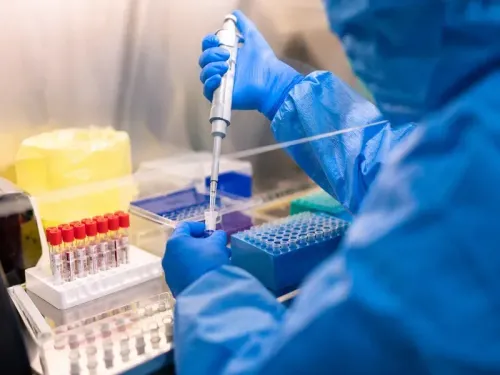
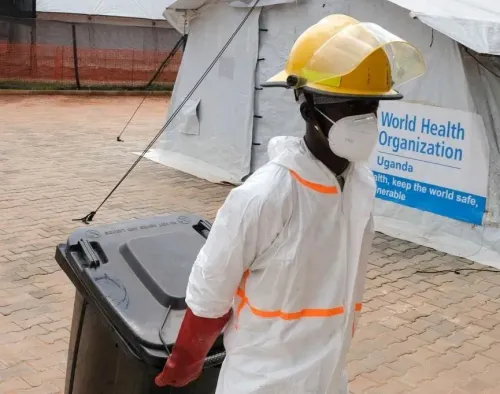
The initial $13 million in foreign assistance — mobilised within 48 hours of activating the response plan — will fund surveillance systems, laboratory capacity, risk communication, safe burials, border screening, and clinical case management in affected countries. The State Department said additional bilateral assistance is being prepared as officials gain a clearer picture of the scale of the crisis. Separately, the US announced on 14 May that $1.8 billion in additional funding for UN Office for the Coordination of Humanitarian Affairs (OCHA) pooled funds includes $250 million earmarked specifically for the DRC and Uganda.
International Coordination
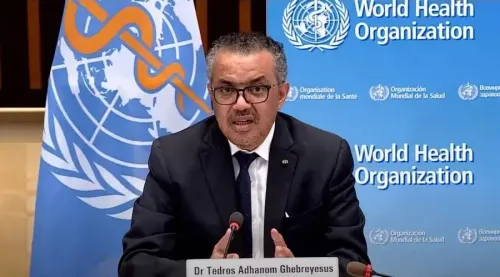
Washington is leading donor coordination efforts with the European Union, the United Kingdom, and other international partners to ensure what officials described as a 'coordinated and effective response.' Senior State Department officials have already spoken with UN Secretariat leadership and humanitarian coordinators in affected countries. The State Department said the response builds on existing bilateral health memoranda of understanding signed with both the DRC and Uganda under the America First Global Health Strategy.
Why the Ebola Threat Is Taken Seriously
Health experts have long warned that Ebola outbreaks in Central and East Africa carry significant global health risk, given porous borders, fragile healthcare systems, and limited medical infrastructure in conflict-affected regions. Previous outbreaks in the DRC have killed thousands and triggered large-scale international emergency operations. This comes amid heightened global vigilance over zoonotic disease transmission following the experience of the COVID-19 pandemic, making early containment efforts a diplomatic and public health priority for major donor nations.
Further details on the scale of confirmed cases and the trajectory of the outbreak are expected as international surveillance efforts intensify in the coming days.
Point of View
A Title 42 travel ban within three days — reflects a post-COVID recalibration of how seriously rich nations treat early outbreak signals. But the travel ban on DRC, Uganda, and South Sudan nationals raises a familiar tension: containment measures that restrict movement can also suppress reporting, as affected communities fear isolation over treatment. The $13 million emergency tranche is modest relative to the DRC's healthcare deficit; the real test is whether the $250 million OCHA earmark is disbursed quickly and reaches frontline responders rather than being absorbed in coordination overhead. Previous DRC outbreaks have shown that international pledges and on-the-ground delivery are two very different things.
NationPress
23 Sept 2026
Frequently Asked Questions
What is the Ebola outbreak the US is responding to?
Confirmed Ebola cases were reported in the Democratic Republic of the Congo (DRC) and Uganda, with the US learning of them earlier in May 2025 and formally activating its response on 15 May. Ebola is a severe and often fatal haemorrhagic fever; previous DRC outbreaks have killed thousands and required large-scale international operations.
What does the US Title 42 travel ban on DRC, Uganda and South Sudan mean?
A Title 42 order issued on 18 May bars foreign nationals who have visited the DRC, Uganda, or South Sudan within the previous 21 days from entering the United States. The Department of Homeland Security is implementing the order globally, alongside CDC quarantine and isolation guidance.
How much emergency funding has the US committed to the Ebola response?
The US mobilised an initial $13 million in foreign assistance within 48 hours of activating its response plan, covering surveillance, laboratory capacity, border screening, safe burials, and clinical case management. An additional $250 million from a broader $1.8 billion OCHA funding announcement is earmarked for the DRC and Uganda.
Which countries are involved in the international Ebola response?
The US State Department is leading donor coordination with the European Union, the United Kingdom, and other international partners. The UN Secretariat and humanitarian coordinators in affected countries have also been engaged at a senior level.
Why do Ebola outbreaks in Central Africa pose a global risk?
Health experts warn that porous borders, fragile healthcare systems, and limited medical infrastructure in conflict-affected regions like the DRC make containment difficult and cross-border spread more likely. Previous DRC outbreaks have killed thousands and required sustained international emergency responses.