South Sudan urges end to Ebola travel bans as all 7 suspected cases test negative
Synopsis
South Sudan has zero confirmed Ebola cases — yet its citizens are reportedly dying because travel bans are blocking access to medical care abroad. With WHO explicitly opposing border closures and all seven suspected cases testing negative, Juba is making a pointed case: the cure here may be causing more harm than the disease.
Key Takeaways
South Sudan formally urged foreign governments on 26 June to lift Ebola-related travel and visa restrictions on its citizens.
All seven suspected Ebola cases in South Sudan, including four in Juba , have tested negative .
WHO confirmed South Sudan is Ebola-free and stated it does not recommend border closures or travel restrictions.
The Africa CDC has appealed for 1.4 billion US dollars to fund the regional Ebola response.
A total of 1,138 confirmed Bundibugyo Ebola cases and 293 deaths have been recorded across the DRC and Uganda , with a case fatality rate of 25.75 per cent .
136 patients have recovered from the disease so far across the two affected countries.
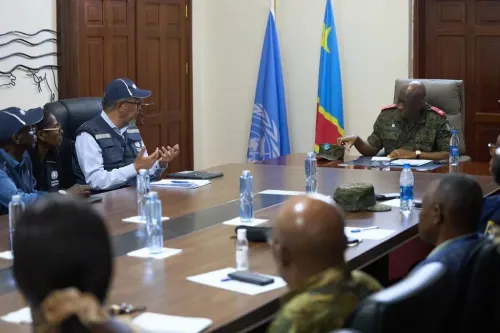
South Sudan on Friday, 26 June formally called on foreign governments to lift Ebola-related travel and visa restrictions imposed on its citizens, warning that the measures are preventing people from accessing life-saving medical care and education abroad. The appeal was made at a joint press conference with the World Health Organisation (WHO) in Juba, the country's capital.
The Human Cost of Travel Restrictions
Francis Oromo, Undersecretary in South Sudan's Ministry of Health, made the government's position unambiguous. 'There is no Ebola here. No one is dying here. But people are now dying because they are unable to travel abroad for medical treatment,' he said.
Oromo stressed that the restrictions are causing collateral harm to South Sudanese citizens who depend on international travel for healthcare and higher education — populations with few domestic alternatives.
South Sudan's Surveillance Record
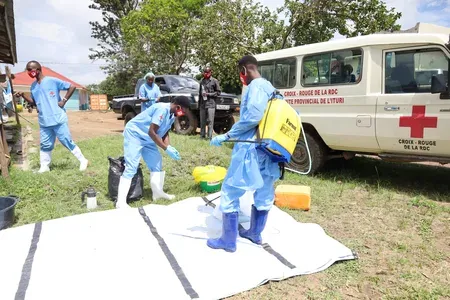
Health authorities confirmed that all seven suspected Ebola cases identified nationwide — including four in Juba — have tested negative. The Ministry of Health noted that the country activated its emergency response plan immediately after outbreaks were reported in neighbouring countries, deploying response teams to high-risk states, reinforcing disease surveillance networks, and expanding isolation capacity.
South Sudan continues to face elevated risk owing to significant cross-border movement and its geographic proximity to affected areas. Health authorities are coordinating with neighbouring countries, regional health bodies, and international partners to strengthen information-sharing and surveillance mechanisms.
WHO Backs South Sudan's Ebola-Free Status
Humphrey Karamagi, WHO Representative in South Sudan, reaffirmed that the country remains Ebola-free. He noted that the detection and investigation of suspected cases demonstrates that the national surveillance system is functioning effectively. 'From a scientific point of view, WHO does not recommend border closures or travel restrictions,' Karamagi stated.
The WHO's position aligns with established international health regulations, which caution against travel bans as a disease-control measure, citing their limited epidemiological benefit and significant socioeconomic harm.
Regional Ebola Outbreak: Scale and Funding Gap
The broader regional picture remains serious. The Africa Centres for Disease Control and Prevention (Africa CDC) has appealed for 1.4 billion US dollars to fund Ebola outbreak response efforts across the region.
During an online press briefing on Thursday, Africa CDC Director General Jean Kaseya disclosed that a total of 1,138 confirmed Bundibugyo Ebola cases and 293 deaths have been recorded across the Democratic Republic of the Congo (DRC) and Uganda — a case fatality rate of approximately 25.75 per cent. Of these, 20 confirmed cases and two deaths were recorded in Uganda. So far, 136 patients have recovered from the disease.
What Comes Next
With the DRC-Uganda outbreak still active and cross-border movement a persistent risk factor, South Sudan's ability to maintain its Ebola-free status will depend on sustained surveillance and regional cooperation. The government's appeal for lifting travel restrictions is likely to intensify as the humanitarian costs of the bans become more visible — and as WHO's scientific guidance against such measures gains wider international acknowledgement.
Point of View
And here the evidence is stark — a country with zero confirmed cases is watching its citizens die not from Ebola, but from the inability to reach hospitals abroad. The DRC-Uganda outbreak is real and serious, but conflating geographic proximity with active transmission is a policy error with a human cost. Foreign governments maintaining these restrictions should be asked to justify them against WHO's scientific position — and against the documented harm they are causing.
NationPress
25 Sept 2026
Frequently Asked Questions
Does South Sudan currently have any confirmed Ebola cases?
No. South Sudan has confirmed zero Ebola cases. All seven suspected cases identified nationwide, including four in Juba, have tested negative, and the WHO has reaffirmed that the country remains Ebola-free as of 26 June.
Why is South Sudan calling for the removal of Ebola travel restrictions?
South Sudan's Ministry of Health says the travel and visa bans imposed by foreign governments are preventing South Sudanese citizens from travelling abroad for medical treatment and education, with officials stating people are dying as a result of being unable to access healthcare overseas.
What is WHO's position on Ebola-related travel bans?
WHO does not recommend border closures or travel restrictions as an Ebola control measure. WHO Representative Humphrey Karamagi stated that the detection and investigation of suspected cases in South Sudan shows the national surveillance system is working effectively.
How severe is the Ebola outbreak in the DRC and Uganda?
As of the Africa CDC briefing on Thursday, 1,138 confirmed Bundibugyo Ebola cases and 293 deaths have been recorded across the DRC and Uganda, representing a case fatality rate of approximately 25.75 per cent. Uganda accounts for 20 confirmed cases and two deaths. A total of 136 patients have recovered.
How much funding has the Africa CDC requested for the Ebola response?
The Africa CDC has appealed for 1.4 billion US dollars to finance Ebola outbreak response efforts across the region, as the combined DRC-Uganda case count surpassed 1,130 confirmed infections.