DRC Ebola cases reach 363 with 62 deaths; Uganda logs four recoveries
Synopsis
The DRC's Ebola toll has reached 363 cases and 62 deaths, with the WHO warning that blanket travel bans are counterproductive and that misinformation is functioning as a second outbreak. Uganda's four recoveries offer a cautious signal of progress, but cross-border transmission has already put three countries on alert.
Key Takeaways
DRC has recorded 363 confirmed Ebola cases and 62 deaths as of 4 June .
The outbreak, caused by the Bundibugyo strain , was declared in the DRC and Uganda on 15 May and has been classified a WHO public health emergency of international concern .
Uganda confirmed 15 cases — including 11 imported and 4 health worker infections — and has discharged four patients .
620 contacts are being monitored in Uganda; 270 have completed the 21-day observation period .
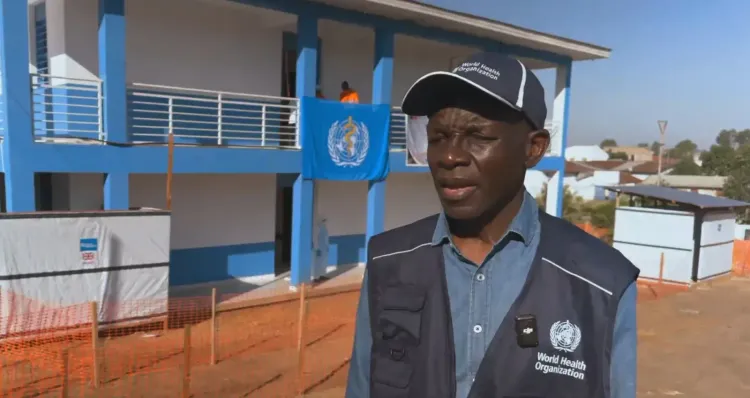
WHO Regional Director Mohamed Janabi warned that blanket travel bans and misinformation are hampering the response.
The DRC is decentralising its response to the health-zone level to accelerate case detection and containment.
Confirmed Ebola cases in the Democratic Republic of the Congo (DRC) have climbed to 363, including 62 deaths, according to figures released by the DRC government, while Uganda on Thursday, 4 June reported four patient recoveries. The figures were disclosed at an online press briefing convened by the World Health Organisation (WHO) Regional Office for Africa, bringing together senior WHO officials and government representatives from the DRC, Uganda, and South Sudan.
Outbreak Background
The current outbreak, caused by the Bundibugyo strain of the Ebola virus, was officially declared in both the DRC and Uganda on 15 May. The WHO subsequently designated it a public health emergency of international concern — one of its highest alert classifications. Six patients have been successfully treated and discharged in the DRC, in addition to the recoveries recorded in Uganda.
Uganda's Situation and Response Capacity
Uganda's Ministry of Health Permanent Secretary Diana Atwine confirmed that the country had recorded 15 Ebola cases in total — 11 imported cases and four infections among health workers who treated the first patient. 'Out of those, we have also discharged four,' she said. All patients who subsequently tested positive had already been placed in quarantine as identified contacts, enabling health authorities to monitor them before and after diagnosis.
Uganda has tracked 620 contacts, of whom 270 have completed the mandatory 21-day observation period and been cleared from follow-up. The remainder are still under active monitoring. Atwine noted that Uganda's laboratory systems, strengthened through previous outbreaks, can now return results within approximately four hours. She also stressed that Uganda had never exported an Ebola case beyond its borders during past outbreaks.
DRC Expands Diagnostic Capacity
DRC Health Minister Roger Kamba said expanded diagnostic capacity was helping authorities generate more accurate case counts and respond faster in affected areas. 'What is important now is to have a good diagnosis,' he said, adding that testing had moved closer to the epicentre, enabling suspected cases to be confirmed more rapidly. The WHO said the DRC was decentralising its response to the health-zone level, reinforcing local coordination mechanisms, rapid response teams, and alert systems.
WHO Warns Against Travel Bans and Misinformation
WHO Regional Director for Africa Mohamed Janabi acknowledged early setbacks but signalled improving momentum. 'The virus initially moved ahead of us. But we are catching up. We are already seeing progress,' he told the briefing. Janabi also warned that health authorities were effectively fighting 'two outbreaks' — Ebola itself and the false information surrounding the disease.
He criticised broad travel restrictions and border closures, stating plainly: 'Ebola is not an airborne disease. Blanket travel bans do not stop Ebola.' He warned that such measures could disrupt supply chains, weaken surveillance, and discourage transparency. Instead, he urged governments to strengthen screening at official border crossings rather than push travellers toward informal routes where health checks are harder to enforce.
Janabi highlighted that the first case identified in Uganda had originated in the DRC, with the patient crossing the border to seek care at a nearer health facility — underscoring the outbreak's cross-border character. 'This outbreak reminds us that regional integration is not an option. It is essential,' he said. With decentralisation efforts under way and contact tracing expanding, health authorities are expected to issue updated case counts in the coming days.
Point of View
Degrading the very surveillance that outbreak control depends on — as seen in the 2014–16 West Africa epidemic. The Bundibugyo strain is less lethal than Zaire Ebola but the cross-border dynamic between DRC and Uganda, two countries with porous frontiers and high population mobility, creates a containment challenge that case counts alone do not capture. Uganda's four-hour lab turnaround is a genuine capability advantage; the question is whether the DRC can replicate that speed at the health-zone level before the case curve steepens further.
NationPress
27 Sept 2026
Frequently Asked Questions
How many Ebola cases has the DRC recorded so far?
The DRC has confirmed 363 Ebola cases , including 62 deaths , according to figures released by the DRC government as of 4 June . Six patients have been treated and discharged in the DRC.
What strain of Ebola is causing the current outbreak?
The outbreak is caused by the Bundibugyo strain of the Ebola virus, which was first identified in Uganda in 2007. It is considered less lethal than the Zaire strain responsible for the 2014–16 West Africa epidemic.
Why has the WHO declared a public health emergency of international concern?
The WHO designated the DRC-Uganda Ebola outbreak a public health emergency of international concern due to its cross-border spread and the involvement of multiple countries. It is the organisation's highest level of alert, triggering coordinated international response measures.
What is Uganda's current Ebola situation?
Uganda has confirmed 15 Ebola cases — 11 imported and 4 among health workers — and has discharged four patients. A total of 620 contacts are under monitoring, with 270 having completed the 21-day observation period.
Why is the WHO opposing travel bans on Ebola-affected countries?
WHO Regional Director Mohamed Janabi argued that blanket travel bans do not stop Ebola, which is not airborne, and risk disrupting supply chains, weakening surveillance, and pushing travellers toward unmonitored informal border crossings. He called instead for strengthened screening at official entry points.