DR Congo Ebola cases cross 10,000 as outbreak spreads to 5 countries
Synopsis
The DRC's Ebola crisis has crossed 10,000 confirmed cases with nearly half of patients dead — and it is no longer a single-country emergency. The Bundibugyo strain, unlike the Zaire variant, has no approved vaccine or treatment, making this the hardest outbreak to fight the DRC has ever faced and the second-deadliest Ebola crisis in recorded history.
Key Takeaways
The DRC has confirmed 10,060 Ebola cases and 4,887 deaths as of 25 October 2026 , a case fatality rate of 48.6% .
The outbreak, declared on 15 May 2026 , is the largest and deadliest ever recorded in the DRC and the second-largest globally .
The causative agent is the Bundibugyo Ebola virus , for which there is no approved vaccine or specific treatment .
The outbreak has spread to five countries — Uganda , Kenya , Nigeria , and France (one imported case) in addition to the DRC.
Ituri province in eastern DRC accounts for 71.7% of all confirmed cases.
Kenya discharged its first 20 contacts after the 21-day monitoring period ; the remaining 98 are due for release from 3 November .
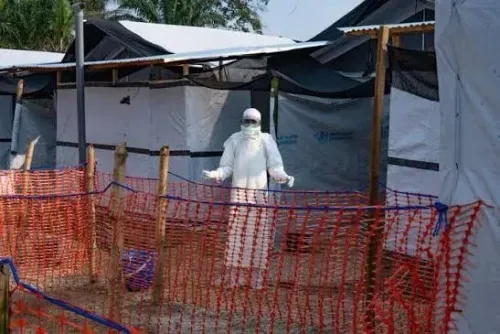
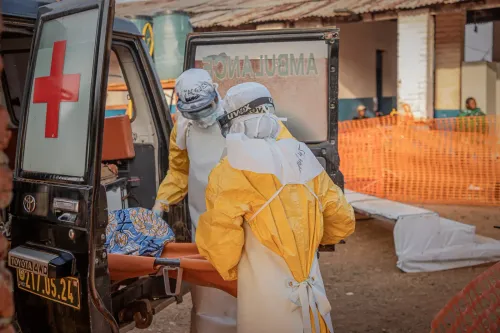
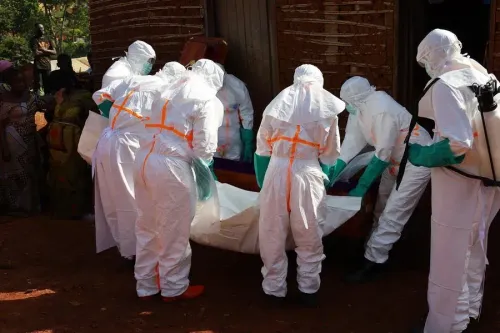
The Democratic Republic of the Congo (DRC) has recorded more than 10,000 confirmed Ebola cases since the outbreak began in May 2026, with health authorities reporting a total of 10,060 confirmed cases and 4,887 deaths as of 25 October. The case fatality rate stands at a staggering 48.6 per cent, underscoring the severity of a crisis that has now spread beyond the DRC's borders to five countries.
Scale and Spread of the Outbreak
The outbreak has cut across 66 health zones in eight of the DRC's 26 provinces, according to data released by the country's health ministry. The eastern province of Ituri remains the epicentre, accounting for 71.7 per cent of all confirmed cases. The current outbreak was formally declared on 15 May 2026 and has since spread to Uganda, Kenya, and Nigeria in Africa, while France has reported one imported case.
This outbreak has now become the largest and deadliest ever recorded in the DRC and the second-largest Ebola outbreak globally, surpassed only by the 2014–2016 West Africa epidemic that killed more than 11,000 people.
Why This Strain Is Different
Unlike the more widely known Zaire strain of Ebola, the current outbreak is caused by the Bundibugyo Ebola virus, for which there is no approved vaccine or specific treatment. This absence of established medical countermeasures is a critical factor behind the high fatality rate and the difficulty in containing the spread across borders.
Notably, the Bundibugyo strain was first identified in Uganda in 2007 and has historically been less studied and less funded than the Zaire strain, leaving global health systems with fewer tools to respond.
Kenya's Containment Efforts Show Early Signs of Progress
In a cautiously encouraging development, Kenya's Ministry of Health confirmed on Monday that the first 20 Ebola contacts had been released from quarantine after completing the mandatory 21-day monitoring period without developing symptoms. Patrick Amoth, Director-General for Health at the ministry, stated in an official communication that each of the 20 individuals had been thoroughly evaluated against strict discharge criteria.
'They do not pose any risk to their families, colleagues or neighbours, and we ask communities to welcome them back home warmly,' Amoth said.
He added that the remaining 98 contacts are scheduled for discharge in four phases beginning 3 November, subject to individual health assessments. Amoth described the outcome as evidence that 'early identification, quarantine and close monitoring are working.'
Global Health Context and What Comes Next
The scale of this outbreak has renewed calls for accelerated research into Bundibugyo-specific medical countermeasures, including vaccine candidates that have stalled in clinical trials. The World Health Organization (WHO) and international health partners are supporting the DRC government's response, but the spread to multiple countries — including a European imported case — has raised concerns about airport screening protocols and cross-border health surveillance in the region.
With nearly 100 contacts still under monitoring in Kenya alone and the DRC epicentre in Ituri continuing to register new cases, the coming weeks will be decisive in determining whether current containment strategies can stem the outbreak's momentum.
Point of View
Yet research into countermeasures remained underfunded for nearly two decades while the Zaire strain absorbed the bulk of attention and resources. The spread to Uganda, Kenya, Nigeria and France should end any illusion that this is a DRC-only crisis. With the 2014–2016 West Africa epidemic having killed over 11,000 people and almost overwhelmed international response capacity, the world's failure to build a Bundibugyo vaccine in the intervening decade deserves more scrutiny than it is currently receiving.
NationPress
27 Oct 2026
Frequently Asked Questions
How many Ebola cases has the DRC reported in the 2026 outbreak?
The DRC has reported 10,060 confirmed cases and 4,887 deaths as of 25 October 2026, a case fatality rate of 48.6%. The outbreak was declared on 15 May 2026 and has since spread to five countries.
What makes the Bundibugyo Ebola virus different from the Zaire strain?
The Bundibugyo Ebola virus has no approved vaccine or specific treatment, unlike the more common Zaire strain for which vaccines exist. First identified in Uganda in 2007, it has historically received less research funding, leaving health systems with fewer tools to counter it.
Which countries has the 2026 Ebola outbreak spread to?
Beyond the DRC, the outbreak has spread to Uganda, Kenya, and Nigeria in Africa, and France has reported one imported case, bringing the total to five affected countries.
What is happening with Ebola contacts in Kenya?
Kenya's Ministry of Health confirmed that the first 20 Ebola contacts completed the mandatory 21-day monitoring period without developing symptoms and were discharged. The remaining 98 contacts are scheduled for release in four phases beginning 3 November, subject to individual health assessments.
How does this outbreak compare to previous Ebola crises?
The 2026 DRC outbreak is now the largest and deadliest Ebola outbreak ever recorded in the DRC and the second-largest globally, surpassed only by the 2014–2016 West Africa epidemic that killed more than 11,000 people.