Ebola risk in Congo upgraded to 'very high' by WHO amid 626 cases
Synopsis
The WHO has escalated its Ebola risk assessment for the DRC to 'very high' nationally, with 626 suspected cases and 159 probable deaths recorded in just days. The virus has already crossed into Uganda, Africa CDC has deployed teams and committed $1 million, and South Africa has pledged $2.5 million — but with North Kivu and South Kivu now affected, the spectre of a repeat of the devastating 2018–2020 outbreak looms large.
Key Takeaways
WHO upgraded the Ebola risk in the DRC to 'very high' at the national level on 22 May .
626 suspected cases and 159 probable deaths recorded since the outbreak was declared on 15 May — the DRC's 17th Ebola outbreak.
The virus has spread from Ituri Province to North Kivu and South Kivu ; two confirmed cases reported in Uganda .
Africa CDC committed $1 million in immediate funding and deployed an eight-member team to Bunia; South Africa pledged $2.5 million .
A high-level cross-border coordination meeting involving Uganda , DRC , and South Sudan was convened by Africa CDC from Friday to Saturday .
Ebola fatality rates range from 50% to 89% depending on viral subtype, according to the WHO .
The World Health Organization (WHO) on Friday, 22 May elevated the public health risk from the Ebola outbreak in the Democratic Republic of Congo (DRC) from 'high' to 'very high' at the national level, marking a significant escalation in the global health body's assessment of the fast-spreading crisis. The outbreak, the DRC's 17th, has recorded 626 suspected cases and 159 probable deaths since it was officially declared on 15 May.
WHO's Revised Risk Assessment
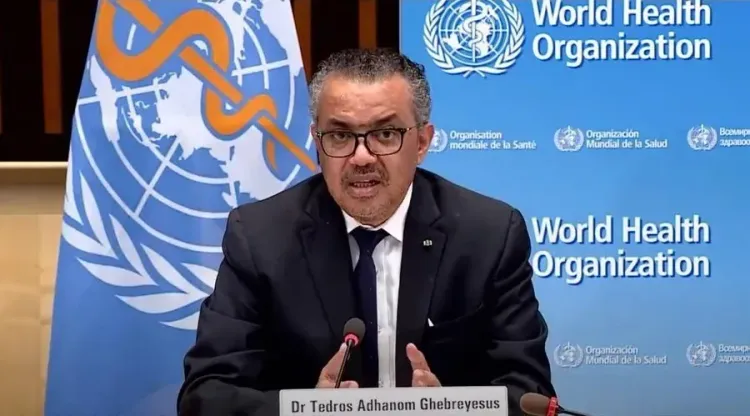
WHO Director-General Tedros Adhanom Ghebreyesus confirmed the revised assessment at a press conference, stating: 'We are revising our risk assessment of Ebola to very high at the national level, high at the regional level, and low at global level.' The upgrade signals intensifying concern over the outbreak's trajectory within the DRC and its potential to spread further across the region.
Scale and Spread of the Outbreak
The outbreak was initially reported in Ituri Province but has since spread to North Kivu and South Kivu. Critically, two confirmed cases have also been detected in neighbouring Uganda, raising cross-border alarm. The figures were released on Thursday by DRC Health Minister Roger Kamba, underscoring the speed at which the virus has moved across provinces.
This is the DRC's 17th Ebola outbreak — a grim reminder that the country has battled the virus more times than any other nation. The 2018–2020 outbreak in North Kivu and Ituri was the second-largest in history, killing over 2,200 people, making the current geographic overlap particularly worrying for health authorities.
Africa CDC Mobilises Resources and Regional Coordination
The Africa Centers for Disease Control and Prevention (Africa CDC), the specialised healthcare agency of the African Union, called for enhanced solidarity to rapidly contain the outbreak. In a statement released on Thursday, the agency stressed that containing outbreaks 'requires speed, coordination, and sustained support for the frontline responders and communities bearing the greatest burden.'
Africa CDC announced an immediate financial commitment of $1 million and deployed an eight-member multidisciplinary team to Bunia in the DRC's Ituri Province. The agency also welcomed South Africa's contribution of $2.5 million to support Ebola response efforts, and recognised frontline health workers for their 'commitment to ending the outbreak and protecting communities.'
At the request of the Ugandan government, Africa CDC is convening a high-level cross-border coordination meeting from Friday to Saturday, bringing together Uganda, the DRC, and South Sudan to strengthen regional preparedness and response.
What Is Ebola and Why Is It Dangerous
Ebola virus is highly contagious and causes symptoms including fever, vomiting, diarrhoea, generalised pain or malaise, and — in severe cases — internal and external bleeding. According to the WHO, Ebola fatality rates range from 50% to 89% depending on the viral subtype, making it one of the deadliest known pathogens.
What Happens Next
With the risk level now at 'very high' nationally and confirmed cases crossing into Uganda, the coming days will be critical for containment. The cross-border coordination meeting convened by Africa CDC is expected to produce a unified regional response framework. Health authorities are watching North Kivu and South Kivu closely, given their dense populations and history as epicentres of previous outbreaks.
Point of View
Which became the second-deadliest Ebola crisis on record. The confirmation of cases in Uganda adds a cross-border dimension that complicates containment significantly. Africa CDC's $1 million commitment and eight-person deployment are necessary first steps, but the 2018 outbreak ultimately required over $1 billion in international support. The real question is whether the global response will be fast enough this time — or whether the world will again watch a manageable outbreak become a catastrophe.
NationPress
20 Sept 2026
Frequently Asked Questions
Why has WHO upgraded the Ebola risk in DRC to 'very high'?
The WHO upgraded the Ebola risk in the DRC to 'very high' at the national level on 22 May after 626 suspected cases and 159 probable deaths were recorded within days of the outbreak being declared on 15 May. The rapid spread across multiple provinces and confirmed cases in Uganda drove the reassessment.
How many Ebola cases and deaths have been recorded in DRC in 2025?
As of figures released on Thursday by DRC Health Minister Roger Kamba, 626 suspected cases and 159 probable deaths have been recorded since the DRC declared its 17th Ebola outbreak on 15 May 2025.
Has Ebola spread outside the DRC?
Yes. Two confirmed Ebola cases have been reported in Uganda, prompting Africa CDC to convene a cross-border coordination meeting involving Uganda, the DRC, and South Sudan to strengthen regional preparedness and response.
What is Africa CDC doing to contain the Ebola outbreak?
Africa CDC has committed $1 million in immediate financial support, deployed an eight-member multidisciplinary team to Bunia in Ituri Province, and is convening a high-level cross-border coordination meeting. It also welcomed South Africa's $2.5 million contribution to the response effort.
How deadly is Ebola virus?
Ebola is one of the world's most lethal pathogens, with fatality rates ranging from 50% to 89% depending on the viral subtype, according to the WHO. Symptoms include fever, vomiting, diarrhoea, and in severe cases internal and external bleeding.