Generative AI Misuse Influences Bangladesh's Election Results: New Findings
Synopsis
A new report reveals alarming instances of generative AI misuse and narrative manipulation during Bangladesh’s 13th National Parliamentary Election on February 12, raising concerns over electoral integrity and the treatment of female candidates.
Key Takeaways
Generative AI significantly influenced the electoral landscape in Bangladesh.
Female candidates were disproportionately targeted with online abuse.
Social media played a crucial role in narrative manipulation.
The exclusion of the Awami League led to voter obstruction efforts.
Urgent reforms in trade are needed to secure Bangladesh's economic future.
New Delhi, March 2 (NationPress) The recent 13th National Parliamentary Election in Bangladesh, held on February 12, was marred by extensive misuse of generative AI, manipulation of narratives, and social media-induced voter obstruction aimed at influencing election results, as reported by a new study.
The report, published by The Daily Star and sourced from the non-profit organization Activate Rights, detailed how generative AI was employed to create explicit content targeting female candidates, alongside fabricating voices from minority groups urging votes for specific parties to stave off potential threats.
The findings indicated that AI-generated minority figures were depicted as being in peril or warning that failure to support Jamaat would result in being sent to India.
Data analysis spanning December 11, 2025, to February 16, 2026, revealed that coordinated narrative manipulation was a systemic aspect of the February 12 election.
It was highlighted that female candidates, who made up just four percent of the participants, faced disproportionately high levels of online harassment.
Moreover, extremist Islamist accounts on social media sought to undermine the legitimacy of democratic engagement, branding democracy as fundamentally at odds with Islam.
The report also disclosed that the Awami League was excluded from the election due to a ban on its political engagements, leading to a coordinated boycott on social media that manifested as direct obstruction, hindering voters' access to polling stations.
Additionally, the election saw instances of selectively edited videos of political figures being used out of context, resulting in accusations of blasphemy or anti-Islamic sentiments on social platforms, according to the report.
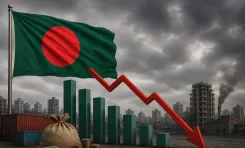
Another recent report indicated that without significant reforms in trade tariffs and facilitation, Bangladesh risks lagging behind peer nations and competing economies within five years.
With Bangladesh's imminent graduation from the UN's Least Developed Country (LDC) status, the imperative for improved trade facilitation has intensified as the nation strives to maintain preferential market access through key partnerships, as noted by an expert.
aar/na
Point of View
It is imperative to approach the report with an unbiased lens, recognizing the significant implications of AI misuse in electoral processes while advocating for women's rights and democratic integrity.
NationPress
19 Sept 2026
Frequently Asked Questions
What were the main findings of the report on Bangladesh's elections?
The report highlighted extensive misuse of generative AI, narrative manipulation, and voter obstruction aimed at influencing the electoral outcomes during the February 12 elections.
How were female candidates affected during the election?
Female candidates faced disproportionately high levels of online abuse, despite representing only four percent of the contestants.
What role did social media play in the electoral process?
Social media was used to disseminate manipulated narratives and obstruct voters, particularly targeting the Awami League, which faced a ban on its political activities.
What implications does this report have for future elections?
The findings underscore a critical need for reforms to ensure electoral integrity and protect candidates from online harassment.
What does the report suggest about Bangladesh's economic future?
Another report warns that without significant reforms in trade policies, Bangladesh may struggle to compete with its peers as it prepares to graduate from the LDC category.