Modi at SCO Summit: All wars must end at dialogue table, not battlefield
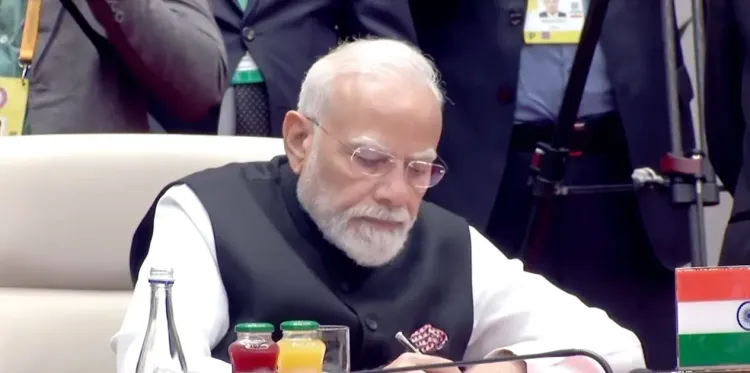
Synopsis
At the SCO Summit in Bishkek, Modi delivered one of his sharpest multilateral statements on conflict resolution — warning that the West Asia crisis is already battering Global South energy and trade, and that terrorism cannot be a ‘strategic asset’ for any nation. With India, Pakistan, and China all in the room, the subtext was as significant as the text.
Key Takeaways
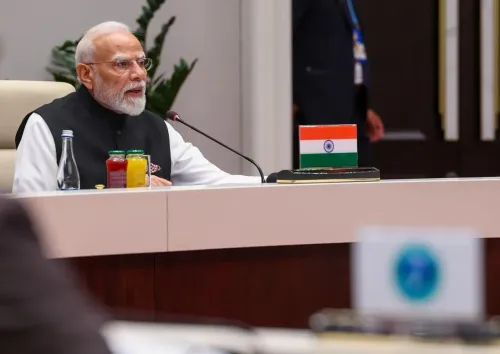
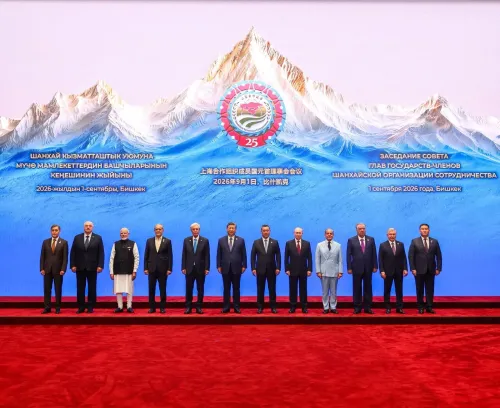
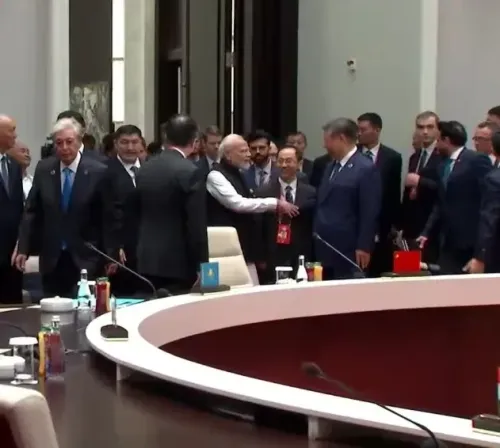
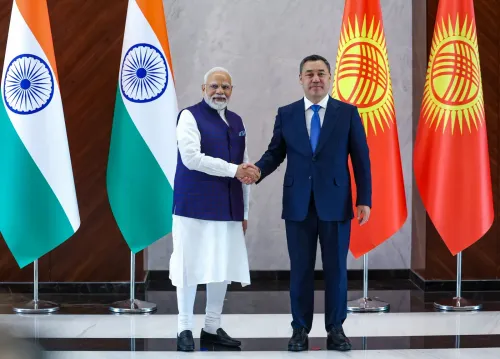
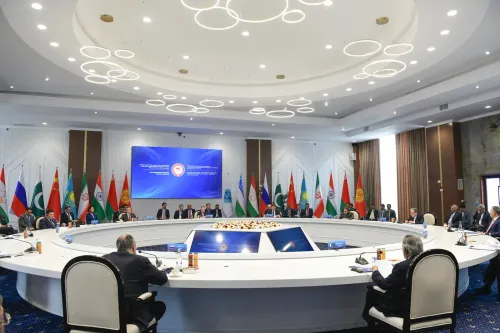
PM Narendra Modi addressed the 26th SCO Council of Heads of State in Bishkek, Kyrgyzstan on Tuesday, 1 September .
Modi called for resolving all conflicts — including the West Asia crisis — through dialogue and diplomacy , not on the battlefield.
He outlined three pillars of India’s SCO approach: Security , Connectivity , and Opportunity .
Modi warned that countries using terrorism as a policy tool must receive a “strong message” — there can be no double standards on terrorism.
He flagged drug trafficking as a threat to youth and regional security, welcoming new SCO centres on organised crime and narcotics.
India reaffirmed its commitment to development and humanitarian assistance for the people of Afghanistan .
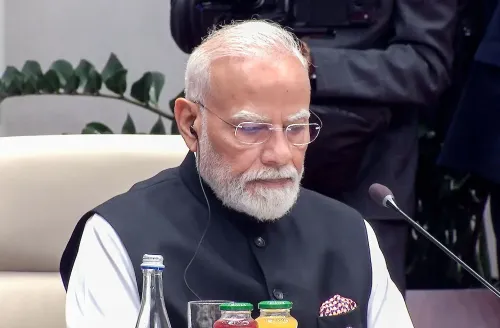
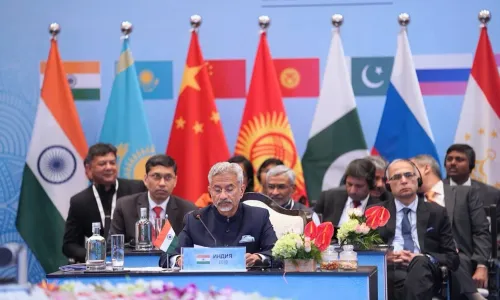
Prime Minister Narendra Modi on Tuesday made India's position unambiguous at the 26th Meeting of the Council of Heads of State of the Shanghai Cooperation Organisation (SCO) in Bishkek, Kyrgyzstan: every conflict — including the ongoing crisis in West Asia — must be resolved through dialogue and diplomacy, not armed confrontation. The address marked one of Modi's most pointed multilateral statements on global conflict resolution in recent months.
Key Developments at the SCO Address
Speaking before heads of state from across the Eurasian region, Modi underscored that the West Asia conflict has ceased to be a regional matter. “The crisis in West Asia has shown that conflict in one region is not confined to that region. It impacts the entire world’s energy security, maritime trade, and supply chains. Countries in the Global South bear the brunt of this,” he said. The statement carries particular weight as India chairs key multilateral dialogues and positions itself as a bridge between the Global South and major powers.
India’s Three Pillars: Security, Connectivity, Opportunity
Modi outlined three core pillars of India’s approach to the SCO — Security, Connectivity, and Opportunity. On connectivity, he expressed India’s support for efforts that link markets and open trade routes, while drawing a firm line: “Respect for the sovereignty and territorial integrity of all countries is essential in these efforts. This is also the core spirit of the SCO Charter.” The caveat is widely read as a reference to China’s Belt and Road Initiative, which India has consistently declined to endorse.
Zero Tolerance on Terrorism, Drug Trafficking
Modi called for dismantling the “entire ecosystem” of terrorist financing, recruitment, radicalisation, and safe havens, warning that there can be “no room for double standards” on terrorism. “Those countries which make terrorism a tool of their policy, provide shelter and support to terrorists, will have to be given a strong message that terrorism cannot be a strategic asset for anyone,” he said — remarks that, in the SCO context, are routinely parsed as directed at Pakistan. He also flagged drug trafficking as a serious threat to the younger generation and to regional security, welcoming newly established SCO centres addressing organised crime, information security, and narcotics as a “positive step.”
Afghanistan and the Road Ahead
The Prime Minister reaffirmed that India has been and will continue to contribute to the development and humanitarian assistance of the people of Afghanistan. Reflecting on the SCO’s 25-year history of dialogue and cooperation across the Eurasian region, Modi set an ambitious tone for the next quarter-century: “Now, in the coming twenty-five years, our goal must be to translate this cooperation into tangible results.”
With the SCO grouping accounting for nearly 40% of the world’s population and a significant share of global energy resources, India’s call for dialogue over conflict lands in a forum where geopolitical fault lines — between members India and Pakistan, and between China and Western-aligned states — run deep. How the bloc responds to Modi’s push for practical coordination will be closely watched in the weeks ahead.
Point of View
Now dressed in SCO Charter language. The ‘no double standards on terrorism’ line, delivered with Pakistan in the room, is a formula India has deployed at every multilateral forum since Pulwama — its repetition signals that New Delhi sees no progress on Islamabad’s posture. What is newer is the explicit linkage between the West Asia crisis and Global South economic vulnerability: Modi is positioning India not just as a rule-setter but as a spokesperson for developing nations caught in conflicts they did not start. Whether that framing translates into concrete SCO outcomes — or remains rhetorical — is the real test of this summit.
NationPress
1 Sept 2026
Frequently Asked Questions
What did PM Modi say at the SCO Summit in Bishkek?
PM Modi called for resolving all conflicts through dialogue and diplomacy rather than war, highlighted the global economic impact of the West Asia crisis, and urged SCO members to adopt a zero-tolerance stance on terrorism with no double standards. He addressed the 26th SCO Council of Heads of State in Bishkek, Kyrgyzstan on 1 September.
Why did Modi raise the West Asia conflict at the SCO Summit?
Modi argued that the West Asia crisis is no longer a regional issue — it is disrupting global energy security, maritime trade, and supply chains, with countries in the Global South bearing the heaviest burden. He used the point to reinforce India’s broader call for dialogue over armed conflict.
What did Modi say about terrorism at the SCO Summit?
Modi called for dismantling the entire ecosystem of terrorist financing, recruitment, radicalisation, and safe havens. He warned that countries which use terrorism as a policy tool or shelter terrorists must receive a strong message, and stressed there can be no double standards on the issue.
What is India’s position on connectivity within the SCO?
India supports connectivity efforts that link markets and facilitate trade, but insists that respect for the sovereignty and territorial integrity of all countries is non-negotiable — a condition Modi described as the core spirit of the SCO Charter.
What did Modi say about Afghanistan at the SCO Summit?
Modi reaffirmed that India has been and will continue to contribute to the development and humanitarian assistance of the Afghan people, signalling India’s sustained engagement with Afghanistan outside of any formal diplomatic recognition of its current government.