Fauci invokes Fifth Amendment at Senate Covid origins hearing
Synopsis
Anthony Fauci appeared before a Senate committee under subpoena and refused to answer virtually every question, invoking the Fifth Amendment. Chairman Rand Paul has now threatened a contempt vote — turning a pandemic accountability hearing into Washington's sharpest post-Covid political flashpoint yet.
Key Takeaways
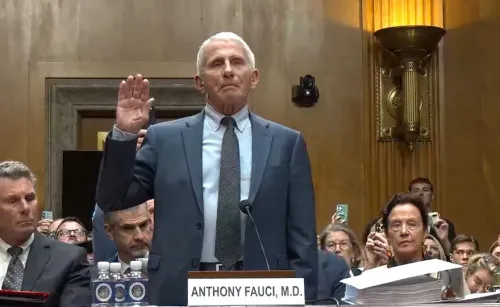
Anthony Fauci invoked the Fifth Amendment in response to nearly every question at a Senate Homeland Security and Governmental Affairs Committee hearing on 30 July .
Committee Chairman Senator Rand Paul accused Fauci of funding 'dangerous gain-of-function research' at the Wuhan Institute of Virology .
Paul announced the committee will vote the following week on a resolution to recommend holding Fauci in contempt of Congress .
Fauci appeared under subpoena and cited advice of counsel for his repeated refusals to answer.
Ranking Member Senator Gary Peters called the hearing politically motivated and a departure from bipartisan tradition.
No international consensus on the origin of SARS-CoV-2 has been reached, with intelligence agencies divided between laboratory and natural-origin theories.
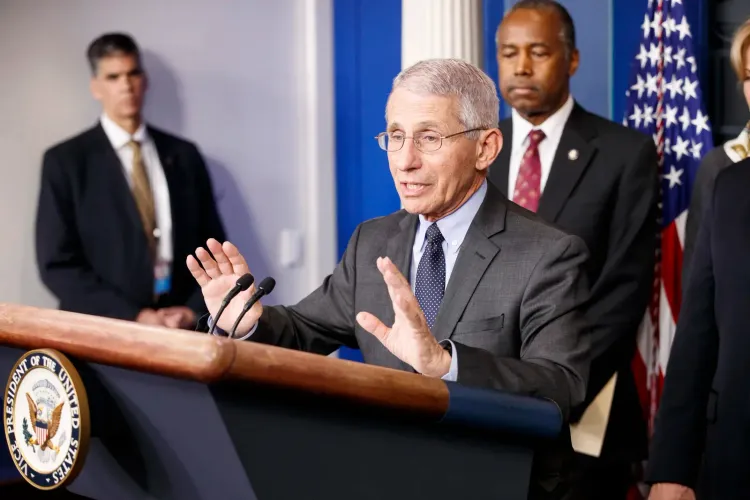
Former top US infectious disease official Anthony Fauci repeatedly invoked his Fifth Amendment right against self-incrimination before a sharply divided Senate Homeland Security and Governmental Affairs Committee on Wednesday, as Republican lawmakers revived allegations over US-funded coronavirus research at China's Wuhan Institute of Virology and pressed for answers on the origins of the Covid-19 pandemic.
How the Hearing Unfolded
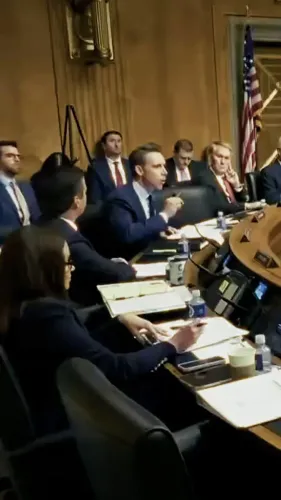
The session quickly turned into a fierce partisan confrontation. Committee Chairman Senator Rand Paul accused Fauci of helping fund 'dangerous gain-of-function research' in Wuhan and later announced the committee would consider holding him in contempt of Congress for refusing to answer questions despite appearing under subpoena.
Fauci, who led the National Institute of Allergy and Infectious Diseases (NIAID) for nearly four decades, opened by noting he had testified before Congress 'well over 200 times' during his career. He said Paul's repeated calls for his prosecution left him with 'the only conclusion' that the hearing was designed to pressure him into saying 'something, anything' to support those efforts.
'Under the advice of my attorneys, I will invoke my right under the Fifth Amendment of the Constitution to refrain from answering your questions,' Fauci said at the outset.
Fifth Amendment Invoked Across Hours of Questioning
Throughout several hours of questioning, Fauci responded to virtually every query with the same statement: 'On the advice of counsel, I respectfully decline to answer based upon my rights under the Fifth Amendment of the Constitution.'
Paul questioned Fauci extensively about US funding for coronavirus research in Wuhan, the laboratory-origin theory, gain-of-function research, federal record-keeping, and a presidential pardon issued to Fauci before the previous administration left office. The Kentucky Republican argued that intelligence agencies — including the CIA, FBI, and Department of Energy — had concluded that a laboratory origin was more likely than a natural one, and pressed Fauci to explain decisions made during his tenure.
Contempt Vote Threatened
After Fauci repeatedly declined to answer, Paul announced the committee would vote the following week on a resolution recommending he be held in contempt of Congress. 'We had hoped to hear testimony from Anthony Fauci today. We haven't,' Paul said at the close of the hearing. 'I really did want to hear from Doctor Fauci. I wanted to hear perhaps an apology.'
Democrats Push Back
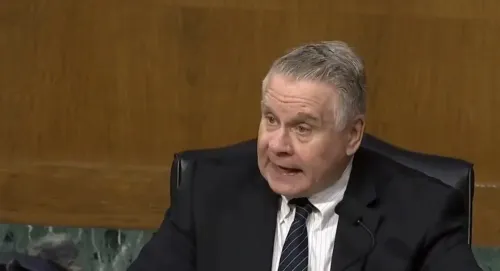
Democrats on the committee strongly criticised the proceedings as politically motivated. Ranking Member Senator Gary Peters said the hearing represented 'a sharp departure' from the committee's bipartisan tradition and accused Republicans of pursuing 'a predetermined conclusion.' He argued Congress should instead focus on preparing for future pandemics and strengthening public health infrastructure.
Several Democratic senators praised Fauci's decades of public service and defended his decision to invoke constitutional protections. Republicans countered that his refusal prevented the committee from examining decisions made during the pandemic.
Broader Context: Covid Origins Still Unresolved
The hearing underscored how deeply divided Washington remains over the US response to Covid-19, more than six years after the pandemic began. Questions surrounding the origins of SARS-CoV-2, the role of the Wuhan Institute of Virology, and the risks of gain-of-function research continue to be debated by governments, intelligence agencies, and scientists worldwide. Notably, no international consensus has been reached on the virus's origin. With a contempt vote looming and partisan lines hardening, the political reckoning over pandemic-era decisions is far from over.
Point of View
The US has no authoritative, bipartisan account of how pandemic-era decisions were made, who authorised what in Wuhan-linked funding, and whether oversight mechanisms worked. That vacuum is what makes these hearings so explosive. A contempt referral will not produce answers either — it will produce more litigation and more heat. What is missing, and what neither side is offering, is an independent, evidence-led inquiry with subpoena power and scientific credibility. Until that exists, every Senate session on Covid origins will be a performance, not a reckoning.
NationPress
30 Jul 2026
Frequently Asked Questions
Why did Anthony Fauci invoke the Fifth Amendment at the Senate hearing?
Fauci invoked his Fifth Amendment right against self-incrimination on the advice of his attorneys, citing what he described as a hearing designed to pressure him into statements that could be used against him in potential prosecution. He stated that Senator Rand Paul's repeated calls for his prosecution left him no other conclusion about the hearing's intent.
What is gain-of-function research and why is it controversial?
Gain-of-function research involves modifying pathogens to study how they might evolve, including potentially becoming more transmissible or virulent. It is controversial because critics argue such experiments carry the risk of a laboratory accident that could trigger an outbreak. Senator Rand Paul has alleged that US government funds supported this type of research at the Wuhan Institute of Virology, a claim that has been disputed and remains unresolved.
What is the contempt of Congress threat against Fauci?
Senator Rand Paul announced that the Senate Homeland Security and Governmental Affairs Committee would vote the following week on a resolution recommending Fauci be held in contempt of Congress for refusing to answer questions despite appearing under subpoena. A contempt finding would be referred to the Justice Department for potential enforcement.
What did Democrats say about the hearing?
Ranking Member Senator Gary Peters called the hearing a sharp departure from the committee's bipartisan tradition and accused Republicans of pursuing a predetermined conclusion. Several Democratic senators defended Fauci's right to invoke constitutional protections and argued the committee's time would be better spent preparing for future pandemics.
Has the origin of Covid-19 been officially determined?
No international consensus has been reached on the origin of SARS-CoV-2. US intelligence agencies including the CIA, FBI, and Department of Energy have leaned toward a laboratory-origin hypothesis, but the assessment is not unanimous and no definitive public evidence has been released. Scientists and governments worldwide continue to debate the question.