APEC 2026: South Korea, China push trade openness at Shenzhen summit
Synopsis
With trade barriers rising globally, South Korean President Lee Jae Myung used the APEC CEO Summit stage in Shenzhen to make a pointed case for openness — and China's Xi Jinping backed the theme at a formal banquet, previewing Thursday's leaders' session as a push for 'mutual openness and innovation-driven growth.' The optics of two major economies aligning on free trade, however, will face scrutiny given each side's own protective instincts.
Key Takeaways
South Korean President Lee Jae Myung addressed the APEC CEO Summit in Shenzhen on 18 November 2026 , urging the bloc's 21 member economies to stay committed to trade openness.
Lee cited the AI revolution , climate change, and demographic shifts as forces demanding new growth engines and stable supply chains.
Chinese President Xi Jinping hosted a formal banquet in Shenzhen, calling the city a 'microcosm of China's reform and opening up.' Xi previewed Thursday's APEC Leaders' Meeting as focused on mutual openness, innovation-driven growth, and cross-sector cooperation.
The summit unfolds amid rising global trade barriers, raising questions about APEC's ability to enforce its non-binding openness commitments.
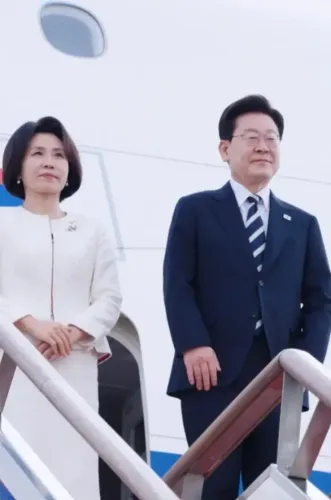
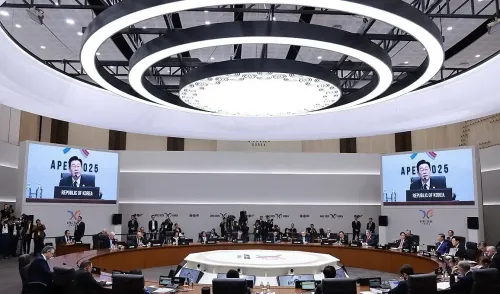
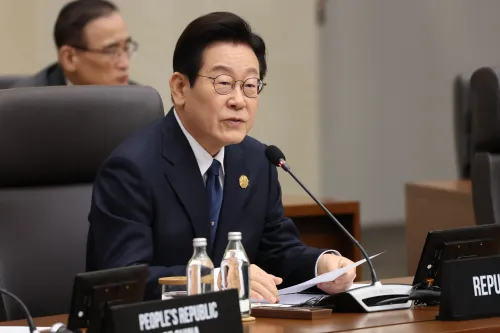
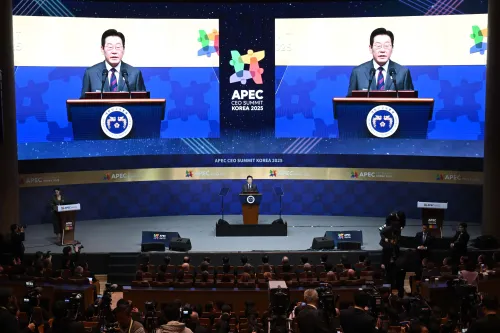
South Korean President Lee Jae Myung on Wednesday, 18 November called on Asia-Pacific Economic Cooperation (APEC) member economies to hold firm on trade openness even as protectionist pressures mount globally. Speaking at the APEC CEO Summit in Shenzhen, Guangdong Province, China, Lee urged the bloc's 21 member economies to deepen trade and investment ties as a bulwark against slowing global growth.
Lee's Call for Inclusive Growth
President Lee told business leaders that forces including the Artificial Intelligence (AI) revolution, the climate crisis, and demographic shifts are fundamentally reshaping industrial landscapes and demanding new engines of growth. He argued that expanding trade and investment within the APEC region remains the most urgent priority for creating fresh commercial opportunities.
Lee stressed that the benefits of the AI revolution must be shared broadly, calling for 'inclusive innovation' and stronger multilateral cooperation to stabilise supply chains and industrial foundations. 'The future is something we create together by embracing new possibilities,' he said, urging all parties to make APEC a platform for cultivating greater shared prosperity.
Xi Jinping Hosts Leaders at Shenzhen Banquet
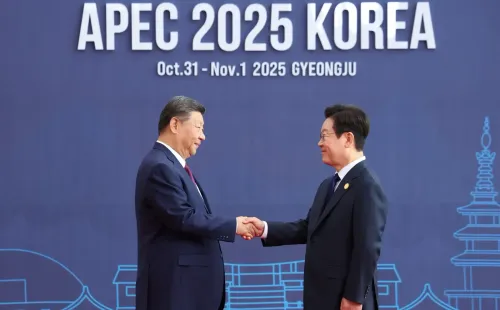
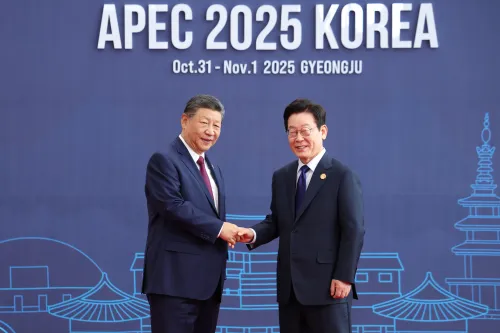
Chinese President Xi Jinping and his wife, Peng Liyuan, hosted a formal banquet in Shenzhen on Wednesday evening to welcome heads of state and representatives attending the economic leaders' meeting. 'I wish to extend, on behalf of the Chinese government and the Chinese people, our warmest welcome to all distinguished guests,' Xi said in his toast.
Xi framed Shenzhen's economic transformation as a 'microcosm of China's reform and opening up' and an example of productive Asia-Pacific cooperation. He previewed Thursday's leaders' session, saying participants would 'discuss steps to expand mutual openness, explore pathways to innovation-driven growth, extend opportunities for result-oriented cooperation across various fields.'
Shenzhen as a Symbol of Tech-Driven Transformation
President Lee specifically cited Shenzhen as a 'vivid testament' to how future technologies can transform daily life, noting that innovations once considered distant are already embedded in the city's everyday reality. The choice of Shenzhen as the APEC host city carries symbolic weight: the city built its identity on export manufacturing and is now a global hub for consumer electronics, EVs and AI hardware.
Context: Rising Trade Barriers Cloud APEC Agenda
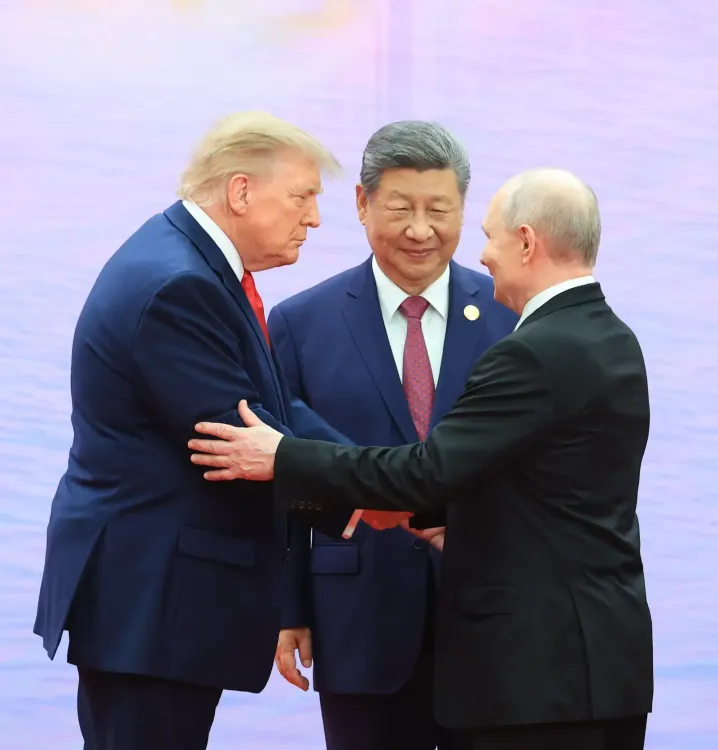
This year's summit takes place against a backdrop of heightened global trade tensions, including tariff escalations involving major economies. Critics argue that APEC's consensus-based, non-binding structure limits its ability to enforce the openness principles its members champion. Notably, the gathering comes as geopolitical fault lines between the United States and China continue to shape regional trade architecture, with APEC serving as one of the few forums where leaders from both sides regularly share the same stage.
Thursday's formal leaders' meeting is expected to produce a joint statement on trade facilitation and digital economy cooperation, though analysts caution that bridging substantive differences will remain a challenge.
Point of View
While China's own industrial subsidies and market-access restrictions remain flashpoints for trading partners. APEC's consensus model means the summit will almost certainly produce a communiqué affirming free trade, yet impose no binding mechanism to deliver it. The real signal to watch is not the joint statement but whether Thursday's bilateral sidelines produce any concrete movement on the issues — tariffs, digital trade rules, critical mineral supply chains — that actually determine whether the Asia-Pacific stays open or fragments further. Shenzhen's symbolism is real, but symbolism alone does not lower a tariff wall.
NationPress
18 Nov 2026
Frequently Asked Questions
What did South Korean President Lee Jae Myung say at the APEC CEO Summit?
President Lee urged the 21 APEC member economies not to waver on trade openness even as global protectionism rises, calling for inclusive AI-driven innovation and stronger supply chain cooperation. He made the remarks during his speech at the APEC CEO Summit in Shenzhen on 18 November 2026.
What is the APEC Leaders' Meeting and when is it taking place?
The APEC Economic Leaders' Meeting is the annual summit of heads of state from the bloc's 21 member economies, scheduled for Thursday, 19 November 2026 in Shenzhen, China. It is expected to address trade facilitation, digital economy rules, and innovation-driven growth.
Why is Shenzhen hosting APEC 2026?
China holds the APEC chair in 2026, and Shenzhen was chosen as the host city partly for its symbolic value as a showcase of technology-driven economic transformation and China's decades of reform and opening up.
What did Xi Jinping say at the APEC banquet?
President Xi welcomed leaders on behalf of the Chinese government and people, described Shenzhen as a microcosm of China's reform era, and said Thursday's session would focus on expanding mutual openness and exploring pathways to innovation-driven growth.
How does APEC address rising trade barriers?
APEC operates on a voluntary, consensus-based model with no binding enforcement mechanism, which critics argue limits its effectiveness when member economies adopt protectionist measures. The 2026 summit is expected to reaffirm free-trade principles in a joint communiqué, but substantive follow-through depends on bilateral decisions outside the forum.