Will Australia Need to Triple Its Electricity Generation and Storage by 2050?
Click to start listening
Synopsis
A recent report reveals that to meet future energy demands, Australia must drastically increase its electricity generation and storage capacity by 2050. This ambitious plan requires significant investment and infrastructure expansion.
Key Takeaways
- Triple capacity needed by 2050.
- Grid-scale wind and solar to increase fivefold.
- Electricity storage projected to escalate significantly.
- Investment in new transmission lines essential.
- Decline in coal-fired power generation expected.
Canberra, Dec 10 (NationPress) A recent report indicates that Australia must triple its electricity generation and storage capacity by 2050 to meet growing demand. The energy market operator unveiled the draft of the 2026 Integrated System Plan (ISP) on Wednesday, revealing that total capacity must expand from the current 92 gigawatts (GW) to 190 GW by 2035 and further to 297 GW by 2050.
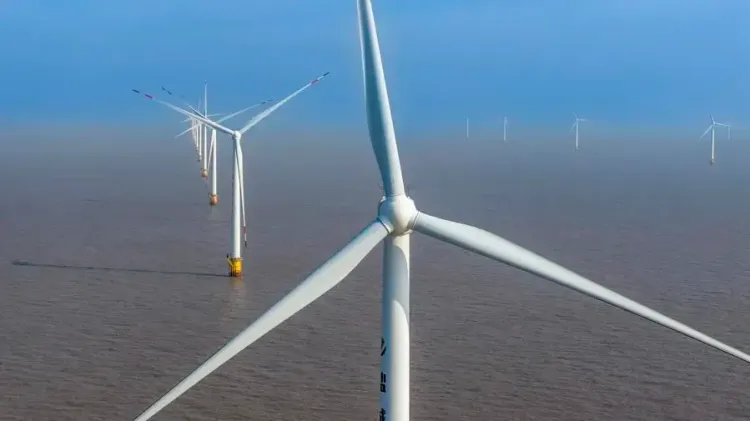
The ISP serves as a strategic plan for the cost-effective and efficient evolution of the National Electricity Market and is revised biennially. It forecasts that grid-scale wind and solar generation capacity will surge fivefold, increasing from 23 GW today to 120 GW by 2050, as reported by Xinhua news agency.
During this period, electricity storage capacity—including batteries, virtual power plants, and pumped hydro—is expected to grow from 12 GW to 55 GW. Additionally, the capacity of distributed solar photovoltaic systems (like rooftop installations) is predicted to rise from 25 GW to 87 GW.
The report highlights that approximately 6,000 kilometers of new transmission lines will be essential by 2050, marking a 13.6 percent expansion of the existing network.
It estimates the annual capital expenditure required until 2050 for grid-scale generation, storage, transmission, and distribution to be around 128 billion Australian dollars (approximately 85 billion US dollars) along the least-cost optimal development path.
Investments in transmission, estimated at about 9 billion Australian dollars, could save consumers approximately 22 billion Australian dollars in avoided costs while delivering emissions reductions valued at 2 billion Australian dollars.
Furthermore, the report predicts a decline in the generation capacity of Australia's coal-fired power stations from the current 21 GW to 7 GW by 2035 and eventually to 0 GW by 2050.
Point of View
It is crucial to recognize the significant implications of the report on Australia's energy future. The findings not only highlight the urgency of transitioning to renewable energy but also emphasize the need for strategic investment in infrastructure to support this shift. The nation must embrace this challenge to ensure a sustainable energy future.
NationPress
11/12/2025
Frequently Asked Questions
What is the basis for the projected increase in electricity generation?
The projections are based on the growing energy demands and the shift towards renewable energy sources outlined in the Integrated System Plan.
How much will the necessary investments cost?
The report estimates that an investment of around 128 billion Australian dollars will be needed by 2050 for the required energy infrastructure.
What role will renewable energy play in this transition?
Renewable energy, particularly wind and solar, is expected to constitute a significant portion of the increased generation capacity, with wind and solar projected to rise from 23 GW to 120 GW by 2050.