Australia should make India hub of South Asia infra push: Lowy Institute
Synopsis
A Lowy Institute report is pushing Australia to stop treating India as just a bilateral partner and start using it as the anchor for all of South Asia's infrastructure and clean energy future — reviving the tested $32 million SARIC programme rather than launching yet another grand fund that lacks a credible pipeline.
Key Takeaways
The Lowy Institute has urged Australia to place India at the centre of its South Asia regional infrastructure and energy strategy.
The report calls for a second phase of the Australia-India Comprehensive Strategic Partnership , complementing the existing Renewable Energy Partnership .
SARIC was a $32 million (Australian dollar) programme running from 2019 to 2024 across six South Asian nations, funded by Australia with the World Bank and IFC .
Under the proposed model, India would lead technical coordination while Australia funds feasibility studies and regulatory design; multilateral banks would finance final projects.
Priority areas include electricity trading, compatible grid rules, shared energy storage, and clean-energy transport corridors around the Bay of Bengal .
The report recommends starting with cross-border projects in the Bangladesh-Bhutan-India-Nepal subregion.
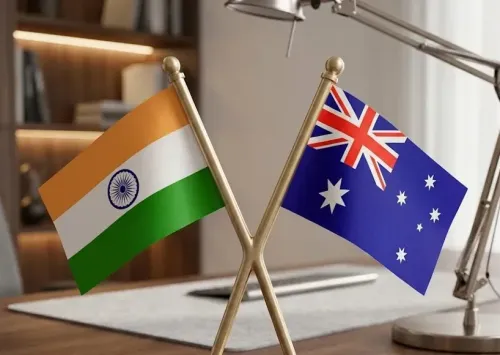
A new report by the Lowy Institute, an Australia-based policy think tank, has urged Canberra to place India at the centre of its South Asia regional strategy — arguing that doing so would unlock deeper trade, energy, and infrastructure integration across the subcontinent. The report, released ahead of India's Independence Day on 14 August, calls for a second phase of the Australia-India Comprehensive Strategic Partnership that complements the existing bilateral Renewable Energy Partnership.
The Case for an India-Anchored Strategy
The Lowy Institute describes India as the economic heavyweight and geographic centrepiece of South Asia, urging Australia to treat New Delhi not merely as a bilateral partner but as the central node in the region's infrastructure future. The report argues that the successor programme should place India at the heart of the South Asia Regional Infrastructure Connectivity (SARIC) initiative, driving gains across solar supply chains, hydrogen, energy storage, investment, and workforce skills.
"A renewed SARIC should establish an India-anchored project-preparation window. Participating governments could nominate cross-border projects, beginning with the Bangladesh-Bhutan-India-Nepal subregion," the report stated.
What SARIC Is and What It Achieved
Funded by Australia and delivered in partnership with the World Bank and the International Finance Corporation (IFC), SARIC was a $32 million (Australian dollar) programme that operated from 2019 to 2024 across Bangladesh, Bhutan, India, Maldives, Nepal and Sri Lanka. It helped governments prepare transport and energy projects capable of attracting public or private finance, and ran professional training for project implementation.
The think tank's position is clear: Australia does not need a new grand infrastructure fund — it needs to renew a tested instrument. The report noted, "India can provide the scale, geography and leadership, while SARIC can provide the institutional machinery."
Proposed Division of Roles
Under the proposed framework, India would lead technical coordination, leveraging its grid and transport systems, while Australia would fund feasibility studies, regulatory design, procurement frameworks, and environmental and social safeguards. Following the project preparation stage, the World Bank, IFC, and other multilateral development banks would step in to finance approved projects.
The report also highlighted electricity trading as a priority area, suggesting that a renewed SARIC could help develop compatible grid rules, bankable power-purchase agreements, and shared storage and balancing arrangements across the region. It could subsequently support transport corridors for clean-energy equipment around the Bay of Bengal.
Bilateral Ties as the Foundation
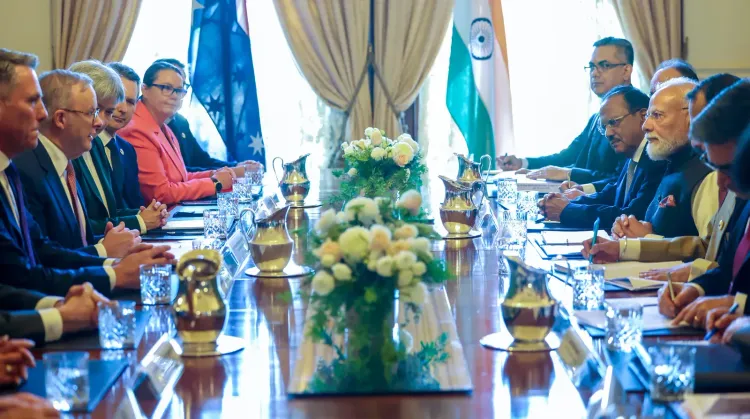
Australia's Comprehensive Strategic Partnership with India has already elevated bilateral trade, defence ties, and renewable energy collaboration to record levels. The Lowy Institute argues that this strong bilateral foundation makes India the natural anchor for any broader regional architecture — a logic that aligns with India's own ambitions to lead South Asia's clean energy transition.
Whether Canberra acts on the recommendation will depend on political will and budget priorities, but the report gives Australia's policymakers a concrete, phased roadmap to build on an instrument that has already demonstrated results on the ground.
Point of View
Particularly in cross-border energy trading. Australia's own appetite for funding regional multilateralism has fluctuated with domestic politics. The report's most credible insight is its insistence on renewing a tested instrument rather than launching a new fund — a lesson that donor fatigue and pipeline credibility matter more than headline commitments. Whether New Delhi, which guards its strategic autonomy fiercely, will accept a framework co-designed by Canberra and the World Bank is a question the report leaves unanswered.
NationPress
14 Aug 2026
Frequently Asked Questions
What does the Lowy Institute report recommend for Australia and India?
The Lowy Institute report recommends that Australia place India at the centre of its South Asia regional strategy, reviving the SARIC programme in a second phase that complements the bilateral Renewable Energy Partnership. It argues India should serve as the anchor for cross-border energy and infrastructure projects across the subcontinent.
What is SARIC and why does it matter?
SARIC — the South Asia Regional Infrastructure Connectivity programme — was a $32 million (Australian dollar) initiative funded by Australia and delivered with the World Bank and IFC from 2019 to 2024. It helped governments in Bangladesh, Bhutan, India, Maldives, Nepal, and Sri Lanka prepare transport and energy projects for public or private financing, and trained officials in project implementation.
What role would India play under the proposed framework?
India would lead technical coordination, leveraging its grid and transport systems to anchor cross-border projects. Australia would fund feasibility studies, regulatory design, and procurement frameworks, while multilateral lenders such as the World Bank and IFC would finance approved projects after the preparation stage.
Which subregion would the renewed SARIC prioritise first?
The report recommends starting with the Bangladesh-Bhutan-India-Nepal subregion, where cross-border energy and transport linkages are most developed and where a project-preparation window could yield early results.
How does this fit into Australia's existing relationship with India?
Australia's Comprehensive Strategic Partnership with India has already brought bilateral trade, defence cooperation, and renewable energy collaboration to record levels. The Lowy Institute argues this strong foundation makes India the natural anchor for a broader South Asian regional architecture, extending the partnership's gains beyond the bilateral level.