West must take India more seriously as China counterweight: Lowy Institute
Synopsis
A Lowy Institute analysis lays bare a decades-long Western strategic failure: 30 years of capital flowing into China built a strategic adversary, while India — the only country with the scale to serve as a genuine industrial counterweight — received rhetoric without investment. The piece argues that 'China plus one' nudges are no substitute for structural policy shifts, and that demanding alignment from India while having enabled China's rise is a compounded contradiction the West has yet to honestly confront.
Key Takeaways
The Lowy Institute , an Australian think tank, argues the West has failed to match its recognition of India's strategic importance with capital investment.
Western capital has flowed into China for over 30 years , reportedly creating a strategic adversary rather than a partner.
India is described as the only country with the continental scale to serve as a genuine industrial alternative to China .
The 'China plus one' corporate strategy is criticised as insufficient — existing incentives still structurally favour China due to superior infrastructure.
PM Narendra Modi has pursued industrial transformation for over a decade, with results described as 'promising but uneven.' Australia is urged to integrate critical minerals, energy, and defence cooperation into a broader industrial strategy with India .
Western governments have long acknowledged India's indispensable role in shaping the 21st-century global order, yet they have failed to back that recognition with commensurate capital investment — a gap that has instead funnelled decades of Western money into China, creating a strategic adversary, according to an analysis published by the Lowy Institute, an Australian think tank. The article, authored by Stephanie Campbell, argues that correcting this compounded strategic error now requires far more than incremental corporate decisions.
India's Scale — and Its Limits
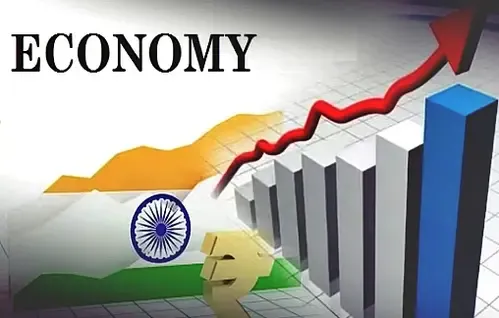
The Lowy Institute analysis is unambiguous on one point: India is not yet the anchor of an industrial alternative capable of balancing China. However, it is described as the only country with the continental scale to become one. While nations such as Vietnam, Mexico, and Indonesia can absorb specific industries and create valuable supply-chain redundancy, none can replicate the breadth of industrial capacity that India, at its potential, could offer.
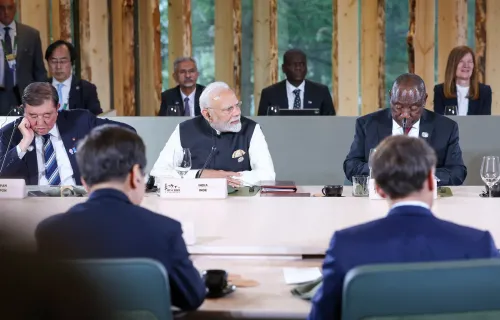
The piece notes that Prime Minister Narendra Modi has spent more than a decade attempting to convert India's demographic and geopolitical heft into industrial power, with results described as 'promising but uneven.' Crucially, the article argues that domestic reform alone cannot propel India into a second centre of industrial gravity — external structural support is equally necessary.
The 'China Plus One' Trap
The analysis is sharply critical of the West's current approach, which relies on nudging companies to adopt a 'China plus one' sourcing strategy. The problem, Campbell argues, is that the underlying incentives still favour China, which possesses superior infrastructure — power grids, ports, logistics networks — that rising industrial powers are still in the process of building.
'The policy failure is to mistake the accumulation of fragmented corporate decisions for strategic rebalancing. Governments now ask firms to bear the cost of reversing a concentration created by decades of collective investment and reinforced by Western policy,' the article states. Building a genuine alternative, it contends, requires governments to alter the conditions under which private investment becomes commercially rational at scale — not merely to direct individual investments.
A Strategic Double Standard
One of the article's sharpest observations concerns the asymmetry in what the West has demanded from its partners versus its adversaries. 'The relevant choice is between a strategically autonomous India and continued industrial dependence on a strategic competitor. The West is demanding greater alignment from the country it needs to strengthen than it demanded from the adversary it allowed itself to depend upon,' Campbell writes.
This framing positions Western capitals' frustration with India's strategic autonomy as a misreading of priorities — one that risks perpetuating the very dependence it seeks to escape.
Australia's Role and the Path Forward
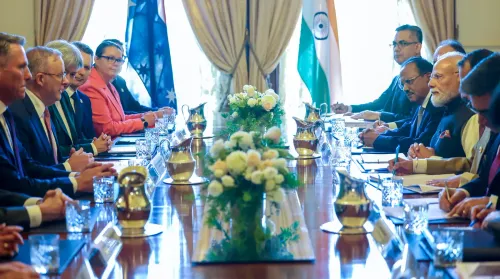
The article specifically examines what Australia can contribute, acknowledging the limits of its financial capacity while identifying concrete levers. Canberra, it argues, can integrate critical minerals, energy cooperation, and defence ties into a broader industrial strategy with New Delhi. The analysis concedes that India will remain strategically autonomous and, from the perspective of Western capitals, an 'imperfect partner' — but concludes that this imperfection is considerably less dangerous than continued industrial dependence on China.
As geopolitical competition between the West and China intensifies, the pressure on governments to move beyond corporate nudges toward structural investment commitments is likely to grow sharper.
Point of View
And the bill is now due. The 'China plus one' framing is essentially asking private firms to subsidise a geopolitical correction that governments created — an accountability inversion that rarely works at scale. More pointed still is the observation that the West is demanding strategic alignment from India that it never demanded from China during the years it was building that dependency. If New Delhi reads that asymmetry clearly — and it does — it has every rational incentive to preserve its autonomy rather than lock into a Western framework that has historically underinvested in it. The real question is whether Western capitals can offer India structural economic partnership, not just rhetorical elevation.
NationPress
14 Sept 2026
Frequently Asked Questions
What does the Lowy Institute report say about India and China?
The Lowy Institute analysis argues that Western governments have spent 30 years directing capital into China while treating India as strategically important in words only. It warns this has created a strategic adversary in China, and calls on the West to make structural investment commitments to India — the only country with the scale to serve as a genuine industrial counterweight.
Who authored the Lowy Institute article on India and China?
The article was written by Stephanie Campbell, published by the Lowy Institute, an Australian think tank. It examines Western investment patterns, India's industrial trajectory, and the strategic implications of continued dependence on China.
Why is the 'China plus one' strategy considered insufficient?
According to the analysis, 'China plus one' relies on incremental corporate decisions rather than structural policy change. Companies still face incentives that favour China — including superior infrastructure such as power grids and ports — making voluntary diversification commercially irrational at scale without government intervention.
What role does Australia play in India's industrial future, according to the report?
The article argues that while Australia cannot finance India's industrial transformation, it can integrate critical minerals, energy cooperation, and defence ties into a broader industrial strategy with India. This is framed as a practical contribution within Canberra's means.
Is India ready to be a full alternative to China industrially?
Not yet, according to the Lowy Institute analysis. India is described as the only country with the continental scale to eventually serve as a genuine industrial alternative, but it is not yet that anchor. PM Modi's decade-long push for industrial transformation has yielded promising but uneven results, and external structural support from the West is considered essential.