Is India Becoming a Viable Third Pole in a Fragmented Global Economy?
Synopsis
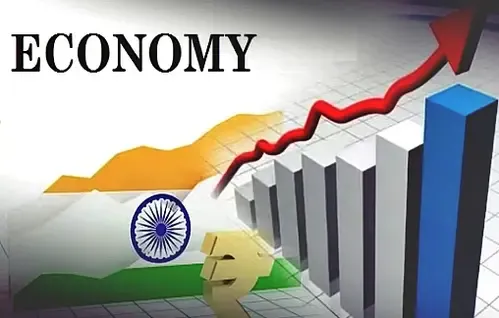
As global tensions rise, Europe and Canada are increasingly relying on India as a strategic partner. This article explores India's emerging role as a vital third pole in a fragmented global economy, highlighting its advantages over China and the US, and its potential to bridge the Atlantic divide.
Key Takeaways
India is emerging as a key strategic partner for Europe and Canada amidst global tensions.
It offers a democratic alternative to China's authoritarian model, appealing to Western values.
India's manufacturing sector is rapidly expanding, attracting global investments.
Protectionist tendencies and bureaucratic challenges may hinder India's global role.
India's flexibility allows it to engage with multiple global players without full commitments.
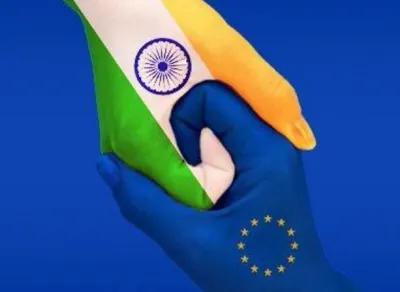
New Delhi, Feb 11 (NationPress) As tensions escalate among the United States, China, and Russia, Europe and Canada are increasingly compelled to strengthen their connections with India, as highlighted in an article from the Washington-based online platform 'The National Interest'.
The article asserts, "Caught between de-risking from China and hedging against American unpredictability, Europe has turned to India as a strategic alternative. India provides scale without the geopolitical and normative burdens associated with China. It is not a stand-in for the US security framework, nor a duplicate of China's manufacturing landscape, but it stands as a viable third pole in an ever-fragmenting global economy," as penned by Dr. Jianli Yang.
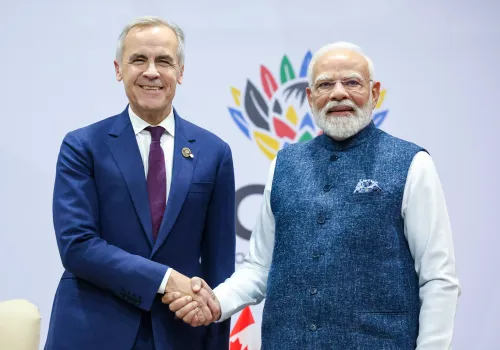
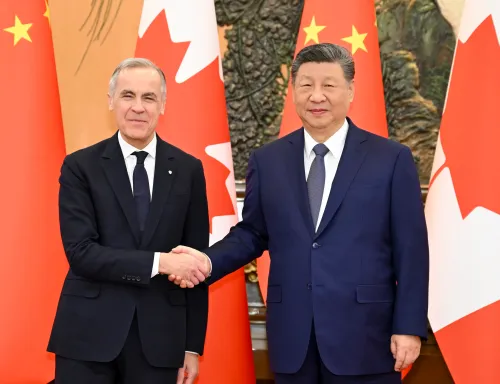
Similarly, Canada finds itself in a parallel situation to Europe, as evidenced by Prime Minister Mark Carney’s careful outreach to China aimed at diversifying partnerships and mitigating risks from the USA. This approach allows Canada to maintain a strategic position between Washington and Beijing.
Despite recent tensions in Canada-India relations, primarily due to diplomatic and security conflicts, Ottawa may realistically adopt a similar stance to Europe and view India as a pragmatic hedge.
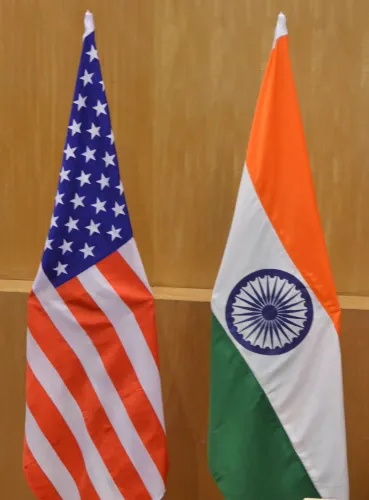
With Europe and India formalizing a trade agreement, the USA and India reaching a preliminary framework, and Canada potentially aligning with these efforts, an unintended structure is taking shape. India is evolving into a bridge—commercially, strategically, and politically—uniting both sides of the Atlantic, as the article explains.
India is uniquely positioned for this role, as the nation is rapidly growing its manufacturing sector and attracting investments relocated from China as businesses diversify their supply chains. Notably, most iPhones sold in the USA are now produced in India, symbolizing a significant global shift. India also combines relatively low labor costs with an improving legal framework, technological advancements, and a vast domestic market, according to the article.
Moreover, India offers something that China cannot: democratic legitimacy. While its institutions are not perfect and face challenges, they provide a common political framework with Europe and North America—comprising elections, courts, and civil society—which reduces the political costs associated with collaboration. Demographically, India’s youthful, English-speaking workforce and growing purchasing power increase its long-term attractiveness. Strategically, India's rivalry with China and commitment to strategic autonomy align it more closely with transatlantic interests than Beijing’s vision of authoritarian global governance, as noted in the article.
The report also points out that India has protectionist tendencies, bureaucratic hurdles, and a strong preference for autonomy, which could create challenges for both Europe and Canada. However, in a global landscape marked by disruption and distrust, India's flexibility—its capacity to engage with all parties without fully committing to any—may ultimately prove to be its greatest strength. As (US President Donald) Trump reshapes alliances, antagonizes allies, and personalizes foreign policy, India has emerged as an unexpected unifying force amidst an increasingly divided Atlantic world—not through grand strategy, but by filling the void left by others.
Point of View
I recognize the importance of India's role in the global economy. In a world increasingly defined by fragmentation and rivalry, India's emergence as a strategic partner for Europe and Canada is both timely and essential. This development reflects not only India's growing economic stature but also its democratic principles, which resonate with Western values.
NationPress
19 Sept 2026
Frequently Asked Questions
Why is India seen as a third pole in the global economy?
India is viewed as a third pole due to its ability to offer scale without the geopolitical baggage associated with China, providing a strategic alternative for Europe and Canada.
What challenges does India face in its global role?
India faces challenges such as protectionist instincts, bureaucratic inertia, and a strong preference for autonomy, which could affect its relationships with Europe and Canada.
How is India's manufacturing sector evolving?
India's manufacturing sector is rapidly expanding, attracting investments that have moved from China, thereby diversifying global supply chains.
What makes India attractive to the West?
India's democratic legitimacy, youthful workforce, and improving infrastructure make it an appealing partner for Western nations amid rising tensions with China.
How does India's relationship with the USA factor into this dynamic?
While India does not replace the US security umbrella, it offers a complementary partnership that allows Western nations to hedge against uncertainties in US foreign policy.