The India-EU Alliance: A Pillar of Global Stability
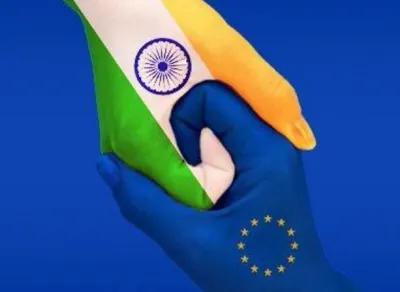
Synopsis
As US-India relations face strain under Trump's presidency, the emerging bond between India and the EU is set to play a pivotal role in fostering global stability. This strategic shift reflects India's adaptability in a changing geopolitical landscape.
Key Takeaways
India-EU partnership is vital for global stability.
Shifts in US policy under Trump have strained US-India ties.
The FTA could significantly boost trade by 2032.
India is pursuing a multi-aligned geopolitical strategy.
Japan and Europe are key partners for India's strategic interests.
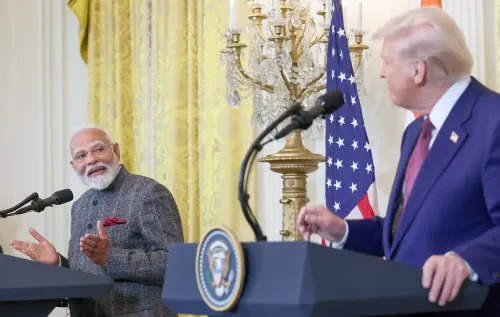
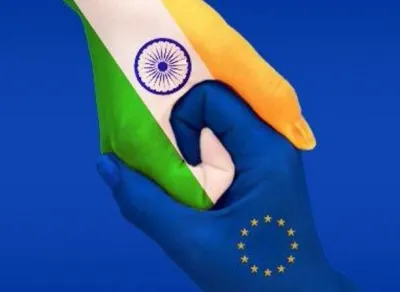
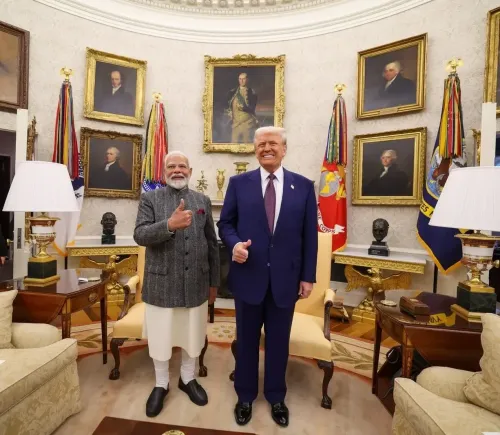
New Delhi, April 8 (NationPress) During his second term, US President Donald Trump is significantly reshaping the historically close relationships between India and the United States. His administration is embracing a more isolationist 'America First' stance. Given this shift, the emerging partnership between India and the EU is increasingly viewed as vital for enhancing stability in the global system, as noted in a recent article.
The Trump administration's approach marks a notable departure from earlier US policies that aimed to contain China, with India playing an instrumental role in the Indo-Pacific strategy. In the current climate of geopolitical instability, the new partnership with the EU is essential for reinforcing global stability, according to insights shared by the Robert Schuman Foundation.
In recent months, the US-India connection has faced challenges, particularly highlighted by President Trump’s meeting with the Pakistani Prime Minister at the White House in July 2025, which was interpreted by Indian leaders as a direct challenge. Earlier attempts by the United States to mediate between India and Pakistan left India feeling uncertain about its reliance on US support, prompting it to shift its focus to its own strategic interests, as articulated by Karine de Vergeron.
This sentiment is also echoed in trade and economic discussions. India's engagement in the Shanghai Cooperation Organisation (SCO) summit in late August 2025, after a seven-year hiatus, reflects Prime Minister Narendra Modi's effort to address the tariffs imposed by the US in the same year and to tackle India's considerable $100 billion trade deficit with China by 2025.
Consequently, India is prioritizing collaboration with various 'middle powers' to balance its relationship with the United States. The country is adopting a 'multi-aligned' geopolitical strategy rather than the traditional non-alignment, reaffirming its pragmatic approach to international relations, especially with the European Union.
Japan stands out as one of India's key strategic middle powers. Prime Minister Modi's visit to Tokyo at the end of August 2025, just before the SCO Summit in Tianjin, was perceived as significantly beneficial for India's interests.
Equally significant is Europe, regarded from New Delhi as a major collective of middle powers, along with Canada, the United Kingdom, the United Arab Emirates, and Russia.
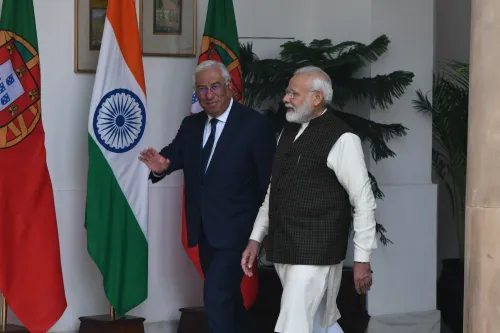
Following the completion of negotiations for the Free Trade Agreement (FTA) announced during the 16th EU-India Summit on January 27, the EU is positioned as India's most dependable economic and technological ally. This agreement is projected to enhance EU goods exports to India by 2032, eliminating or reducing tariffs on over 90% of goods, while excluding certain politically sensitive agricultural products. Given the immense potential of the rapidly expanding Indian market and the EU, this is poised to be the largest trade deal each side has ever finalized, facilitating trade across a quarter of the world's population and global GDP.
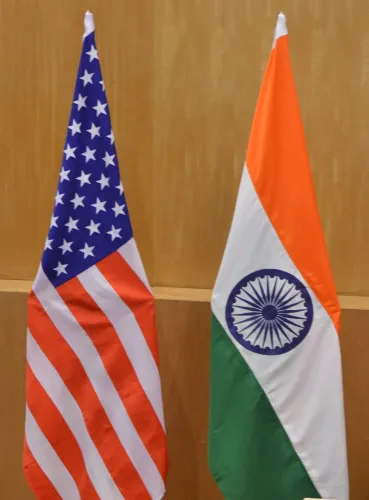
Despite ongoing trade and strategic disagreements with the US, the Quad remains a vital aspect of Indo-American relations, as both nations continue to align on assessing the risks posed by China in the Indo-Pacific region.
Point of View
The evolving partnership between India and the EU is a strategic maneuver to enhance national interests and stability in a turbulent geopolitical landscape. It's essential to recognize that while the US remains an important ally, India is diversifying its partnerships to ensure its strategic autonomy.
NationPress
14 Oct 2026
Frequently Asked Questions
What is the significance of the India-EU partnership?
The India-EU partnership is crucial for enhancing global stability, especially in light of recent shifts in US foreign policy. It allows India to diversify its strategic alliances.
How has US foreign policy changed under Trump?
Under Trump's administration, the US has adopted a more isolationist stance, which has strained its longstanding ties with India and prompted India to seek stronger connections with the EU.
What impact does the FTA have on India-EU trade?
The FTA is expected to double EU goods exports to India by 2032 and eliminate or reduce tariffs on over 90% of goods, significantly boosting trade between the two regions.
Why is India engaging with middle powers?
India is engaging with middle powers to hedge its position with the US and adopt a multi-aligned strategy, enhancing its geopolitical leverage.
What role does the Quad play in Indo-American relations?
The Quad remains a significant framework for Indo-American relations, focusing on shared interests in the Indo-Pacific region, particularly regarding China.