India deploys satellites as soft-power tool with 61 nations: Lowy Report
Synopsis
A new Lowy Institute report reveals that India's space pact with Seychelles is no isolated deal — it is the latest move in a decade-long strategy that has quietly wired 61 countries into India's diplomatic orbit through satellite cooperation. The report frames it as a deliberate, low-backlash alternative to China's debt-heavy Belt and Road model, with satellites serving as portable instruments of influence that carry no loan conditions.
Key Takeaways
India signed a space cooperation agreement with Seychelles in late June 2026 , covering ocean observation, marine science, and coastal management.
By early 2024 , India had signed space cooperation pacts with 61 countries and five multilateral organisations .
The South Asia Satellite , launched in May 2017 , was described by PM Modi as a 'gift' to neighbours, offering tele-medicine, tele-education, and disaster management services.
India launched a formal Space Dialogue with the European Union in November 2025 and has deepened ties with Australia , Japan , and the United States .
The Lowy Institute contrasts India's model with China's Belt and Road financing, noting India's approach generates 'far less local backlash' but offers less short-term strategic leverage.
India has systematically used space cooperation agreements as a quiet but durable instrument of foreign diplomacy over the past decade, according to a new report by the Lowy Institute, an Australia-based policy think tank. The latest example, a space pact signed with Seychelles in late June 2026, covers ocean observation, marine science, and coastal management — and fits a well-established template of satellite-based services offered to partner states on generous terms.
A Decade of Quiet Space Diplomacy
The Lowy Institute report argues that India's bilateral space deals, taken individually, can appear routine. Viewed together, however, they reveal what the think tank describes as 'one of the quietest transformations in India's foreign policy.' Since 2014, New Delhi has built a soft-power portfolio around practical, modest initiatives framed as goodwill rather than grand strategy.
By early 2024, India had signed space cooperation agreements with 61 countries and five multilateral organisations — a figure that underscores the scale of an effort that rarely commands front-page attention.
South Asia Satellite and the Regional Blueprint
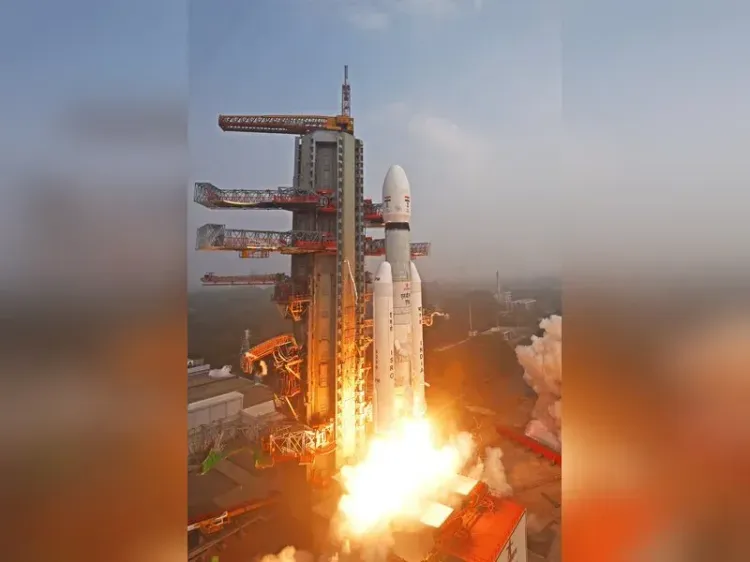
A pivotal moment in this push came in May 2017, when India launched the South Asia Satellite, a geosynchronous communications platform that Prime Minister Narendra Modi publicly described as a 'gift' to India's neighbours. The satellite provides tele-medicine, tele-education, disaster management, and broadcasting services across the region.
Since then, India has expanded its footprint further — constructing ground stations in Bhutan and pursuing similar facilities in Fiji and Vietnam. Cooperation has also deepened with major powers, including Australia, Japan, and the United States, while a formal Space Dialogue with the European Union was launched in November 2025.
India vs China: Two Models of Influence
The Lowy Institute directly contrasts India's approach with China's Belt and Road Initiative infrastructure financing across the Indian Ocean and the Pacific — a model that has, in several recipient countries, generated resentment over debt terms and sovereignty concerns.
The think tank characterises satellites as a 'portable form of soft power' that can be extended to any partner without the political baggage of large loans. 'India's approach earns less strategic leverage in the short term, but it also earns far less local backlash,' the report noted.
The Strategic Trade-Off
The report does not frame India's strategy as without risk. It warns that New Delhi is 'effectively acting on faith, delivering its side up front with no lever to ensure follow-through' from partner nations. In other words, the goodwill model generates goodwill — but not necessarily binding commitments.
This tension between long-term relationship-building and short-term strategic leverage is likely to shape how India calibrates future space partnerships, particularly as competition for influence in the Indo-Pacific intensifies.
Point of View
Scalable alternative to the infrastructure-financing model that China has used — and that has repeatedly backfired. The 61-country figure is striking for how little attention it has received. Yet the report's own caveat is worth dwelling on: delivering goodwill up front with no enforcement mechanism is a bet on reciprocity that history does not always honour. As the Indo-Pacific competition sharpens, India will need to decide whether soft-power accumulation alone translates into the kind of durable strategic alignment that its foreign policy objectives actually require.
NationPress
22 Sept 2026
Frequently Asked Questions
What is India's satellite soft-power strategy?
India has used space cooperation agreements — covering services like tele-medicine, disaster management, and ocean observation — as a diplomatic tool with partner nations since at least 2014. According to a Lowy Institute report, this approach frames satellite access as goodwill rather than a transactional deal, distinguishing it from debt-linked infrastructure models.
How many countries has India signed space cooperation agreements with?
By early 2024, India had signed space cooperation agreements with 61 countries and five multilateral organisations, according to the Lowy Institute report released in August 2026.
What is the South Asia Satellite and why does it matter?
The South Asia Satellite, launched in May 2017, is a geosynchronous communications platform that Prime Minister Narendra Modi described as a 'gift' to India's neighbours. It provides tele-medicine, tele-education, disaster management, and broadcasting services, and is considered a cornerstone of India's regional space diplomacy.
How does India's approach differ from China's Belt and Road Initiative?
The Lowy Institute contrasts India's satellite diplomacy — which carries no loan conditions — with China's Belt and Road infrastructure financing in the Indian Ocean and Pacific, which has drawn resentment in several recipient countries. The report notes India's model generates less local backlash, though it also yields less short-term strategic leverage.
What is the significance of the India-Seychelles space agreement?
The space cooperation agreement signed with Seychelles in late June 2026 covers ocean observation, marine science, and coastal management. The Lowy Institute describes it as the latest instance of a decade-long pattern, illustrating how India consistently offers satellite-based services to partner states on generous terms as part of a broader diplomatic strategy.