Awami League calls Bangladesh a 'state failure' two years after July Movement
Synopsis
Two years after the July Movement ousted it from power, the Awami League has issued its sharpest indictment yet — calling Bangladesh a 'state failure' and citing over 2,000 documented attacks on minorities, 86 child deaths, and 336 cases of child sexual abuse in the first half of 2026 alone. The charge sheet targets both the Yunus-led interim government and the BNP administration, and ends with a direct appeal to the international community to act.
Key Takeaways
Awami League declared Bangladesh a 'state failure' on 4 August , two years after the July Movement .
The party accused both the Muhammad Yunus -led interim government and the BNP administration of exploiting public insecurity for political consolidation.
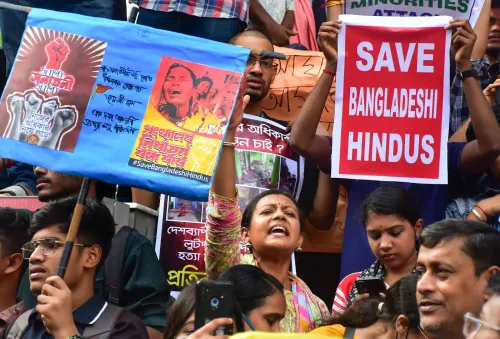
The Bangladesh Hindu Buddhist Christian Unity Council documented more than 2,000 attacks on minority communities between August 2024 and June 2026 , including 66 deaths and 522 communal attacks .
Ain o Salish Kendra (ASK) recorded 118 rapes and 17 murders of girls in the first four months of 2026 .
Child-rights group Shishurai Shob documented 86 child deaths and 336 cases of child sexual abuse between January and June 2026 .
The Awami League urged foreign governments and international human rights bodies to hold Dhaka accountable.
Bangladesh's Awami League on Tuesday, 4 August declared that the country has descended into a 'state failure' two years after what it termed the 'so-called July Movement', alleging that pledges of reform, civil liberties, and the rule of law have been supplanted by a 'dangerous security vacuum, systemic violence, and state institutions weaponised for political consolidation.'
Successive Governments in the Dock
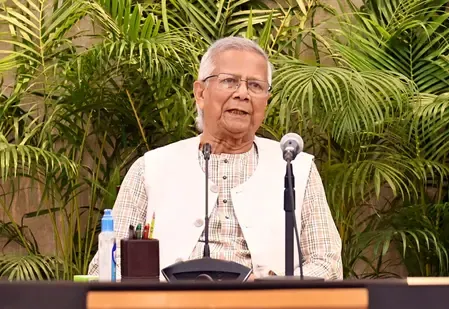
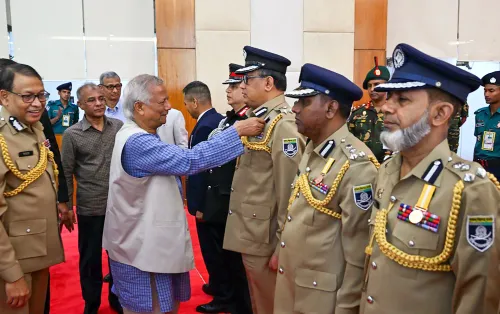
The party levelled charges against both the interim administration led by Muhammad Yunus and the subsequently elected Bangladesh Nationalist Party (BNP) government, alleging that neither regime stabilised the nation. According to the Awami League, both administrations exploited prevailing public insecurity to justify extraordinary powers while allowing 'vigilantes, criminal networks, and partisan mobs to police society.'
This comes amid a broader political churn in Bangladesh that began with the July 2024 demonstrations, which displaced the Awami League from power after over a decade. The party's statement marks its most comprehensive public indictment of the post-July political order.
Minority Communities Under Siege
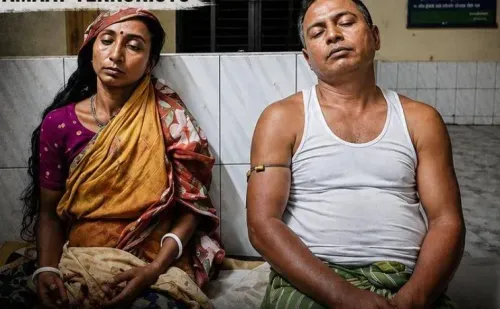
The Awami League cited the Bangladesh Hindu Buddhist Christian Unity Council, a minority rights group, which documented more than 2,000 attacks on minority homes, businesses, and places of worship between August 2024 and June 2026. The group's records show 522 communal attacks, 66 deaths, 95 assaults on temples and churches, and 28 cases of sexual violence against minority women and girls across Bangladesh in 2025 alone.
The first half of 2026 reportedly witnessed a further 257 sectarian incidents, including murders and organised land grabs. The Awami League alleged that the interim government dismissed these as 'political, not communal' and that the BNP administration that followed 'has shown no greater urgency.'
Violence Against Women and Children
The party also highlighted a sharp surge in crimes against women and minors since the July 2024 protests. Citing the Dhaka-based human rights organisation Ain o Salish Kendra (ASK), the Awami League stated that 118 girls were raped and 17 murdered following assault during the first four months of 2026.
It further referenced the child-rights group Shishurai Shob, which documented that 86 children were killed and 336 were sexually abused between January and June 2026, with neighbours, relatives, and teachers repeatedly identified among the alleged perpetrators.
Call for International Accountability
The Awami League asserted that the international community can no longer hide behind 'diplomatic platitudes' or characterise Bangladesh's current situation as a healthy political transition. The party called on foreign governments, international human rights bodies, and trade partners to hold the authorities in Dhaka accountable for the breakdown of law and order.
Notably, the Awami League framed the pattern of mob killings, political assassinations, minority attacks, land grabbing, and assaults on teachers and journalists as reflecting 'weak investigation, delayed justice, and political interference.' Whether these allegations prompt any formal international response remains to be seen.
Point of View
Including weak judicial independence and a culture of impunity, were well-documented under its own tenure. The minority violence data, sourced from credible civil society groups, is nonetheless serious and independently corroborated in part. The more consequential question is whether the international community, particularly the EU and US, which quietly welcomed the post-Sheikh Hasina transition, will now recalibrate their posture toward Dhaka. Bangladesh's trade exposure — particularly in garments — gives Western partners real leverage that has so far gone unused.
NationPress
4 Aug 2026
Frequently Asked Questions
What has the Awami League alleged about Bangladesh's current situation?
The Awami League has alleged that Bangladesh has descended into a 'state failure' two years after the July Movement, claiming that both the Muhammad Yunus-led interim government and the BNP administration have failed to restore law and order. The party says promises of reform and civil liberties have been replaced by systemic violence and politically weaponised institutions.
How many attacks on minorities have been documented in Bangladesh since August 2024?
According to the Bangladesh Hindu Buddhist Christian Unity Council, cited by the Awami League, more than 2,000 attacks on minority homes, businesses, and places of worship were recorded between August 2024 and June 2026. This includes 522 communal attacks, 66 deaths, and 95 assaults on temples and churches.
What data exists on violence against women and children in Bangladesh in 2026?
Dhaka-based rights group Ain o Salish Kendra (ASK) documented 118 rapes and 17 murders of girls in the first four months of 2026. Child-rights group Shishurai Shob separately recorded 86 child deaths and 336 cases of child sexual abuse between January and June 2026.
Which governments does the Awami League hold responsible?
The Awami League has directed its criticism at both the post-July interim government led by Muhammad Yunus and the elected BNP government that followed, alleging that neither stabilised the country. It claims both regimes leveraged public insecurity to consolidate political power.
What is the Awami League calling on the international community to do?
The party has urged foreign governments, international human rights bodies, and trade partners to hold Dhaka accountable for the breakdown of law and order, arguing that the situation can no longer be described as a healthy political transition.