US Senator moves to end China's normal trade status, hike tariffs
Synopsis
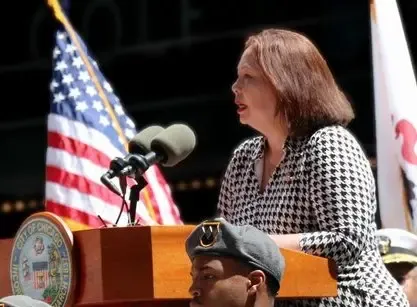
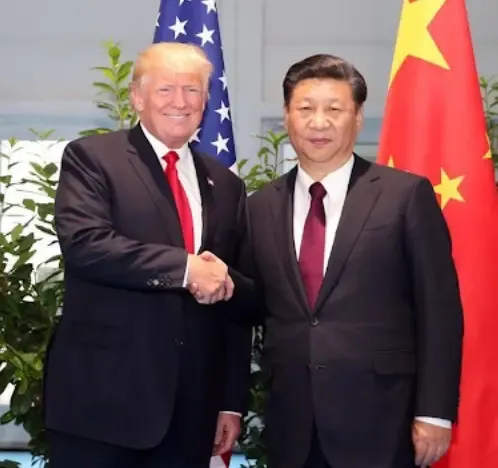
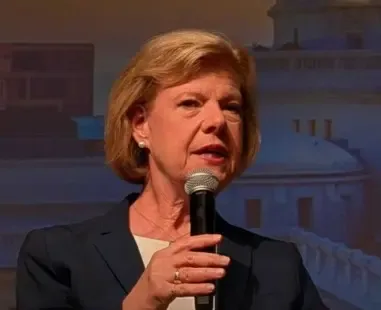
Wisconsin Senator Tammy Baldwin has moved to strip China of its Permanent Normal Trade Relations status — a step that would sharply raise US tariffs on Chinese goods — just as Trump and Xi prepare to meet. The bill is designed to anchor trade policy in law rather than executive orders, directly challenging both Beijing's trade practices and the Trump administration's unpredictable tariff strategy in one sweep.
Key Takeaways
Senator Tammy Baldwin introduced the Ending China's Special Treatment Act to revoke China's PNTR status .
Under the proposal, Chinese goods would face Column 2 tariff rates — generally higher than current levels — taking effect one year after enactment.
The bill targets China's tariff treatment in statute, rather than leaving it to executive action subject to legal challenge.
Baldwin cited Beijing's alleged intellectual property theft, market manipulation, and Trump's 'shifting trade measures' as reasons for the legislation.
The proposal follows a 2024 recommendation by the US-China Economic and Security Review Commission to repeal China's PNTR status.
The bill is a legislative proposal and does not currently alter tariffs; it must pass Congress and be signed into law to take effect.
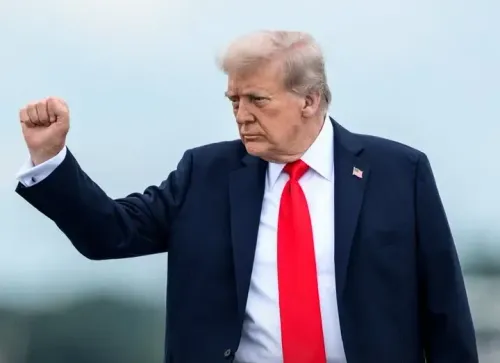
US Senator Tammy Baldwin has introduced legislation to revoke China's Permanent Normal Trade Relations (PNTR) status, a move that would trigger significantly higher tariffs on Chinese goods one year after enactment. The Wisconsin Democrat unveiled the bill — the Ending China's Special Treatment Act — as President Donald Trump prepares to meet Chinese President Xi Jinping, adding a fresh legislative dimension to the already fraught US-China trade relationship.
What the Legislation Proposes
Under Baldwin's proposal, Chinese imports would be moved to the tariff rates listed in Column 2 of the US Harmonised Tariff Schedule — rates that are generally higher than those currently applicable to China and vary by product. Crucially, the bill does not impose a single uniform tariff across all Chinese goods; the impact would differ sector by sector.
The measure would also require the US Trade Representative to prepare a comprehensive report on continuing trade and economic challenges posed by China, developed in consultation with the Commerce Department, the US International Trade Commission, and the US-China Economic and Security Review Commission. That report would inform future policy decisions, according to Baldwin's office.
Baldwin's Case Against Beijing — and Trump
'We need a trade system that puts American workers, companies, and families first,' Baldwin said in a statement announcing the bill. She accused Beijing of market manipulation, intellectual property theft, and policies that she argues undermine American manufacturers.
Notably, Baldwin also trained her criticism on the Trump administration itself, arguing that the White House's shifting trade measures had increased uncertainty and costs without delivering manufacturing jobs back to the United States. By anchoring China's tariff treatment in statute rather than executive action, her proposal aims to insulate policy from the legal challenges and reversals that have dogged past presidential trade moves.
Background: PNTR and the 2024 Commission Report
China's PNTR status — which grants it the same trade terms extended to US allies — has been contested for years. The US-China Economic and Security Review Commission formally recommended in its 2024 annual report that Congress repeal the arrangement, arguing it allowed China to benefit from preferential terms despite practices the commission described as intellectual property theft and market manipulation. That recommendation was advisory and carried no binding force.
Separately, the US International Trade Commission launched an investigation in February to examine the consequences of applying Column 2 duties to Chinese products over a six-year horizon, covering effects on US production, prices, trade flows, and sourcing. The investigation's findings are expected to shape any eventual legislative or executive response.
What It Means in Practice
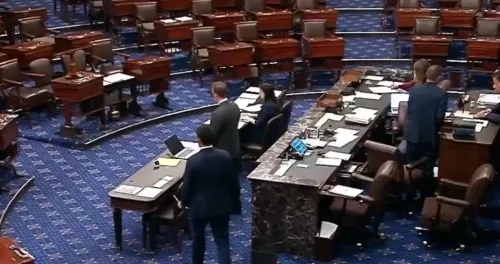
Baldwin's bill is a legislative proposal and does not, by itself, alter the tariffs importers currently pay. It would need to pass both chambers of Congress and be signed into law before the one-year countdown to PNTR withdrawal could begin. The absence of a product-by-product tariff assessment in the announcement means the full economic impact remains unquantified at this stage. This comes amid broader uncertainty over US trade policy, with the Trump administration's executive tariff actions already facing legal scrutiny in domestic courts.
What Happens Next
The bill's trajectory in Congress will be closely watched, particularly against the backdrop of a potential Trump-Xi summit. Any diplomatic progress between Washington and Beijing could affect the legislative appetite for a measure as sweeping as stripping China of its PNTR status. Industry groups and trade economists are expected to weigh in as the US International Trade Commission's investigation matures.
Point of View
She is exposing a central tension in US trade politics: the executive branch has used tariffs as a negotiating lever, but that flexibility comes at the cost of business certainty. Converting PNTR revocation into law would remove that lever — which is precisely why the bill's legislative path is steep. The timing, on the eve of a Trump-Xi meeting, is not incidental; it signals that at least one wing of Congress views diplomatic engagement with China as insufficient without structural trade realignment. India and other export-dependent economies should track this closely — a broad Column 2 tariff regime on China tends to redirect trade flows, with ripple effects on supply chains that run through South and Southeast Asia.
NationPress
18 Nov 2026
Frequently Asked Questions
What is the Ending China's Special Treatment Act?
It is legislation introduced by US Senator Tammy Baldwin that would revoke China's Permanent Normal Trade Relations status and move Chinese imports to the generally higher Column 2 tariff rates in the US Harmonised Tariff Schedule, one year after the bill becomes law. It does not impose a single flat tariff — rates would vary by product.
What is Permanent Normal Trade Relations (PNTR) and why does it matter?
PNTR grants China the same low tariff treatment extended to most US trading partners. Revoking it would expose Chinese goods to significantly higher Column 2 rates, raising costs for US importers and potentially reducing trade volumes. The status has been in place since 2001 when China joined the World Trade Organisation.
Why did Senator Baldwin introduce this bill now?
Baldwin cited China's alleged market manipulation, intellectual property theft, and policies harmful to American manufacturers. She also criticised President Trump's shifting executive tariff measures for creating uncertainty without restoring US manufacturing jobs. The timing coincides with Trump preparing to meet Chinese President Xi Jinping.
Does this bill immediately change US tariffs on Chinese goods?
No. The bill is a legislative proposal and does not alter current tariff rates on its own. It would need to pass both chambers of Congress and be signed into law before the one-year countdown to PNTR withdrawal could begin.
What other bodies are examining the impact of stripping China's trade status?
The US International Trade Commission launched a separate investigation in February to study the economic consequences of applying Column 2 duties to Chinese goods over six years, covering US production, prices, and trade sourcing. The US-China Economic and Security Review Commission recommended the PNTR repeal in its 2024 annual report.