CM Bhajan Lal Sharma Pays Tribute to Batukeshwar Dutt on Birth Anniversary
Synopsis
Rajasthan CM Bhajan Lal Sharma honoured revolutionary Batukeshwar Dutt on his 18 November birth anniversary, recalling Dutt's historic 1929 Central Legislative Assembly protest alongside Bhagat Singh as an eternal inspiration for national service.
Key Takeaways
Batukeshwar Dutt was born on 18 November 1910 , and his birth anniversary is marked nationally as a day of tribute.
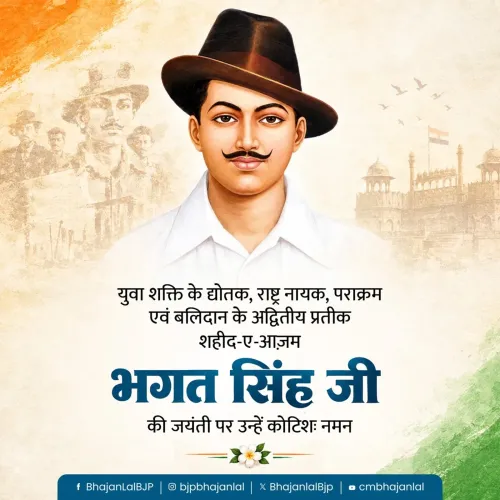
Dutt and Bhagat Singh threw bombs in the Central Legislative Assembly on 8 April 1929 to protest the Public Safety Bill and Trade Disputes Bill , courting arrest deliberately.
Dutt was sentenced to life transportation and imprisoned in the Andaman cellular jail ; Bhagat Singh was executed on 23 March 1931 .
Rajasthan CM Bhajan Lal Sharma described Dutt's courage and sacrifice as an enduring inspiration for 'nation service.' Indian political leaders across parties routinely issue tributes on revolutionary anniversaries, reinforcing the armed strand of the freedom struggle in national memory.
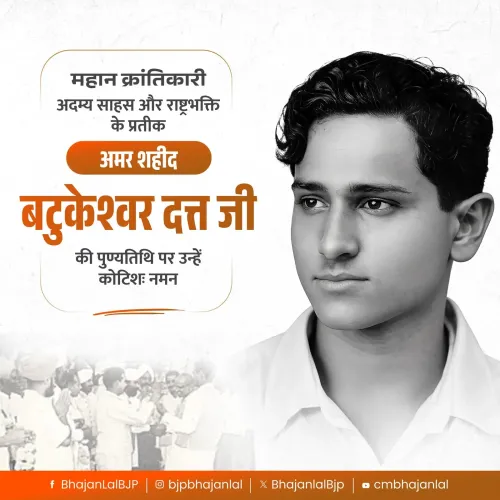
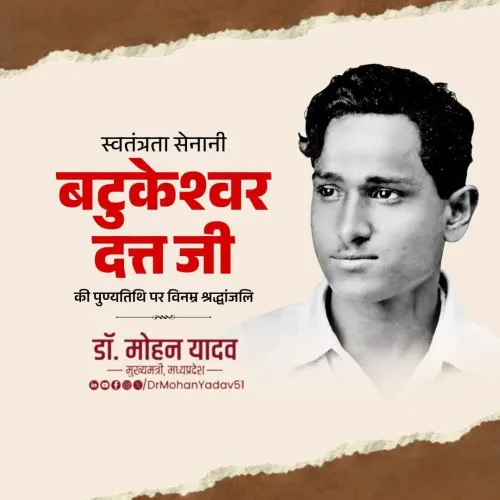
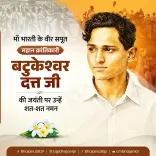
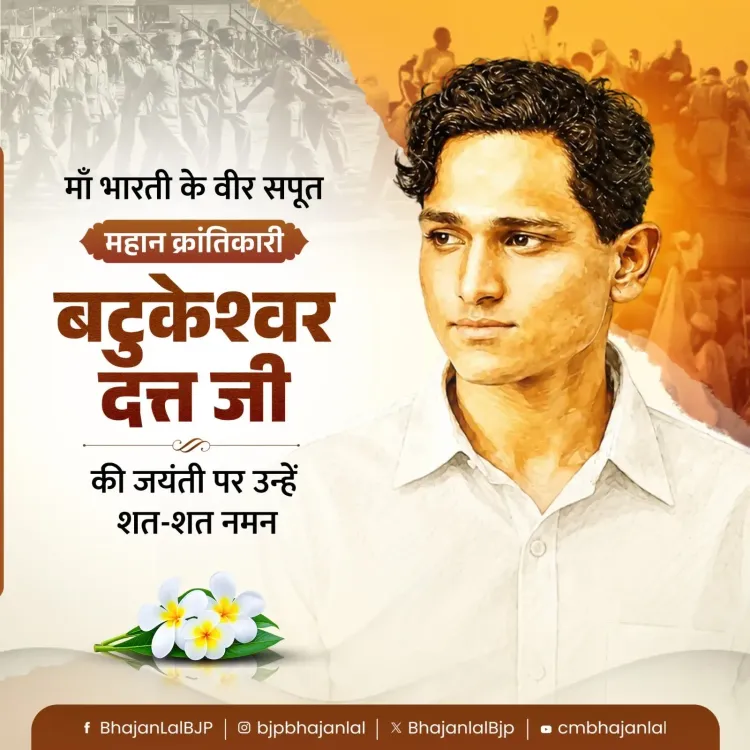
On the birth anniversary of revolutionary freedom fighter Batukeshwar Dutt, Rajasthan Chief Minister Bhajan Lal Sharma offered a heartfelt tribute on Wednesday, 18 November 2026, saluting the man who helped shake the foundations of British rule alongside Bhagat Singh.
In his post, CM Sharma wrote: 'स्वतंत्रता संग्राम के अमर सेनानी, मां भारती के वीर सपूत एवं महान क्रांतिकारी बटुकेश्वर दत्त जी की जयंती पर उन्हें कोटि-कोटि नमन!' — 'Countless salutations to immortal freedom fighter and great revolutionary Batukeshwar Dutt on his birth anniversary, a brave son of Mother India!' He added that Dutt's 'unparalleled courage, indomitable patriotism and sacrifice' would continue to inspire citizens toward national service for all time.
The Assembly Bomb Protest That Echoed Through History
Batukeshwar Dutt was born on 18 November 1910. He is remembered most vividly for the act he carried out alongside Bhagat Singh on 8 April 1929, when the two threw bombs inside the Central Legislative Assembly in Delhi to protest the draconian Public Safety Bill and the Trade Disputes Bill. The bombs were designed not to kill but to make the British administration hear — a dramatic statement that turned a legislative chamber into a stage for resistance.
Dutt and Bhagat Singh did not flee. They courted arrest, chanting revolutionary slogans, and turned their subsequent trial into a platform for the independence cause. While Bhagat Singh was hanged on 23 March 1931, Dutt was sentenced to transportation for life to the Andaman cellular jail, where he endured years of brutal imprisonment.
A Recurring National Ritual of Remembrance
CM Sharma's tribute follows a well-established tradition in Indian political life: leaders across the spectrum mark the anniversaries of independence-era revolutionaries with public acknowledgements, reinforcing both the armed and non-violent strands of the freedom struggle in national memory. These commemorations serve less as policy signals and more as acts of collective identity — reminding citizens that the republic they inhabit was bought at a steep personal price by men like Dutt.
Point of View
' the post subtly links historical resistance to contemporary governance rhetoric. The commemoration is ceremonial in form but carries a layered ideological signal: that the state honours all paths to freedom, armed and peaceful alike. With Bhagat Singh's own execution anniversary in March and Republic Day in January approaching, the political season for revolutionary tributes is only just beginning.
NationPress
18 Nov 2026
Frequently Asked Questions
Who was Batukeshwar Dutt?
Batukeshwar Dutt was a revolutionary Indian freedom fighter born on 18 November 1910 , best known for throwing bombs in the Central Legislative Assembly on 8 April 1929 alongside Bhagat Singh to protest repressive British legislation.
What did Batukeshwar Dutt and Bhagat Singh do in the Central Legislative Assembly?
On 8 April 1929 , Dutt and Bhagat Singh threw smoke bombs inside the Central Legislative Assembly in Delhi to protest the Public Safety Bill and the Trade Disputes Bill . They deliberately stayed to court arrest and turned their trial into a platform for the independence movement.
Why did Bhajan Lal Sharma post a tribute to Batukeshwar Dutt?
18 November is Batukeshwar Dutt's birth anniversary. Rajasthan CM Bhajan Lal Sharma posted the tribute as part of the national tradition of commemorating revolutionary freedom fighters on their birth anniversaries.
What happened to Batukeshwar Dutt after the 1929 Assembly protest?
Batukeshwar Dutt was sentenced to transportation for life and was imprisoned in the Andaman cellular jail , where he endured years of harsh incarceration for his role in the protest.
What is the difference between Batukeshwar Dutt's fate and Bhagat Singh's?
While both were arrested together after the 1929 Assembly bombing , Bhagat Singh was hanged by the British on 23 March 1931 , whereas Batukeshwar Dutt received a life sentence and survived imprisonment.