US Senator Warner: No cyberattack found behind recent bank, tech outages
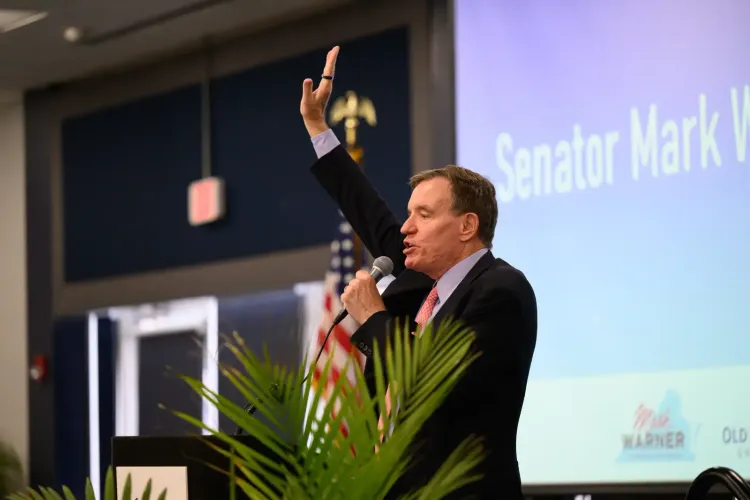
Synopsis
No cyberattack, no foreign interference — but possibly too many AI-triggered security patches hitting too many systems at once. That is the preliminary verdict of Senate Intelligence Committee Vice Chairman Mark Warner on a cluster of outages that rattled US banks, tech firms, and government agencies, with the FAA's flight-halt and an NSA maintenance disruption among the confirmed incidents.
Key Takeaways
Senator Mark Warner said on Tuesday there is currently no evidence of a cyberattack, foreign interference, or coordinated effort behind recent US system outages.
Warner suggested AI-accelerated vulnerability patching may be straining networks by forcing simultaneous rapid updates.
The NSA confirmed a temporary service deterioration during scheduled maintenance; mission-critical systems remained operational.
The FAA traced Friday's nationwide flight-departure halt to excessive data flooding its network, with two sites — in Amarillo, Texas and El Dorado, Arkansas — identified as potential sources.
The FAA has paused installation of the implicated Juniper router type pending a root-cause investigation.
Warner is pushing the Artificial Intelligence Risk Management and Security Act of 2026 , co-sponsored with Senators Brian Schatz and Andy Kim .
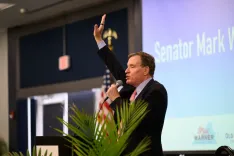
US Senator Mark Warner, Vice Chairman of the Senate Intelligence Committee, said on Tuesday that there is currently no indication that a string of recent outages affecting banks, technology companies, and government systems resulted from a coordinated cyberattack, foreign interference, or any malicious effort. The Virginia Democrat cautioned, however, that his assessment remains preliminary and that the incidents warrant further investigation.
What Warner Said
'At this point, there is no indication that these incidents are the result of a cyberattack, foreign interference, or some coordinated effort,' Warner said in a formal statement. He added: 'While we still need to get to the bottom of these incidents, the evidence so far points toward legitimate efforts to secure our systems, not malicious activity.'
Warner did not identify individual affected systems, disclose specific technical findings, or establish a single common cause linking the disruptions.
The AI Strain Theory
Warner suggested a potential contributing factor: artificial intelligence is now enabling security teams to identify vulnerabilities across vast numbers of systems at unprecedented speed. That capability, he argued, is pressuring businesses and government agencies to push out security patches rapidly — sometimes simultaneously — placing significant strain on networks not engineered to absorb such rapid, concurrent changes.
Notably, neither the National Security Agency (NSA) nor the Federal Aviation Administration (FAA) — two agencies that separately confirmed disruptions — attributed their incidents to AI-driven security updates in their own public statements.
NSA and FAA Disruptions
The NSA said on Tuesday that it had experienced a temporary deterioration in service during scheduled routine maintenance, with some internal systems affected, though mission-critical capabilities remained fully operational. The agency noted its infrastructure carries multiple layers of redundancy.
The FAA separately confirmed that a nationwide halt to flight departures on Friday was triggered by an excessive flood of data into its telecommunications network, which destabilised aircraft communications and radar feeds. A preliminary investigation pointed to two potential sources: a radar site in Amarillo, Texas, and a radio communications site in El Dorado, Arkansas. Network provider L3Harris had been working at the Arkansas location, including installing a new router. The FAA said the network stabilised once both locations were isolated.
As a precaution, the FAA has paused installation of the originating type of Juniper router and disabled the relevant function on other routers. Its root-cause investigation is ongoing.
Push for AI Safeguards
Warner framed the disruptions as a warning signal about the accelerating pace of technological change and used the moment to renew his legislative push. His office pointed to the Artificial Intelligence Risk Management and Security Act of 2026, co-introduced with Democratic Senators Brian Schatz and Andy Kim. The proposal calls for mandatory safety testing of advanced AI systems, the establishment of cybersecurity standards, and mandatory reporting of serious safety and security incidents.
'Americans deserve clear, reliable information and a government that is prepared to respond,' Warner said, adding that he would continue examining the outages and pressing for answers.
What Comes Next
With the FAA root-cause probe still active and Warner's committee expected to scrutinise further, the question of whether AI-accelerated patch cycles played any systemic role across sectors remains open. The coming weeks will test whether Congress moves beyond preliminary assessments toward binding standards for AI-linked infrastructure risk.
Point of View
That is a systemic risk requiring regulatory action, not just a preliminary observation. The legislative push for the AI Risk Management and Security Act is well-timed politically, but its credibility depends on the ongoing investigations producing findings that actually support the AI-strain hypothesis. Congress risks getting ahead of the evidence.
NationPress
18 Nov 2026
Frequently Asked Questions
What caused the recent outages at US banks, tech companies, and government systems?
The precise cause has not been established. Senator Mark Warner said on Tuesday there is no current indication of a cyberattack, foreign interference, or coordinated effort. He suggested that AI-enabled security patching applied rapidly across many systems simultaneously may have strained some networks, though neither the NSA nor the FAA attributed their disruptions to that cause in their own statements.
What happened to the FAA's systems that halted flight departures?
The FAA said excessive data flooded its telecommunications network on Friday, destabilising aircraft communications and radar feeds. Its preliminary investigation identified two potential sources: a radar site in Amarillo, Texas, and a radio communications site in El Dorado, Arkansas, where network provider L3Harris had been installing a new router. The network stabilised after both sites were isolated.
Was the NSA hacked or compromised?
No. The NSA said it experienced a temporary deterioration in service during scheduled routine maintenance on Tuesday, with some internal systems affected. The agency stated its mission-critical capabilities remained fully operational and that it did not attribute the disruption to a cyberattack or AI.
What is the Artificial Intelligence Risk Management and Security Act of 2026?
It is a legislative proposal introduced by Senator Warner alongside Democratic Senators Brian Schatz and Andy Kim. The bill calls for mandatory safety testing of advanced AI systems, the creation of cybersecurity standards, and mandatory reporting requirements for serious AI safety and security incidents.
Why does Senator Warner believe AI could be contributing to system outages?
Warner argued that AI is now capable of identifying vulnerabilities across large numbers of systems at unprecedented speed, compelling businesses and government agencies to deploy security fixes rapidly and sometimes simultaneously. He said systems not designed for such rapid concurrent changes could experience significant strain as a result, though he described this assessment as preliminary.