Baloch activists cite Pakistan airstrikes, rights abuses at UN Geneva session
Synopsis
At the 63rd UNHRC session in Geneva, Baloch National Movement members alleged a Pakistan Army airstrike in Surab on 12 September 2026 killed six civilians — including a toddler — and accused Islamabad of systematic enforced disappearances, torture, and extrajudicial killings. The BNM called for independent international monitoring of Balochistan, directly challenging Pakistan's counter-terrorism framing of its military operations.
Key Takeaways
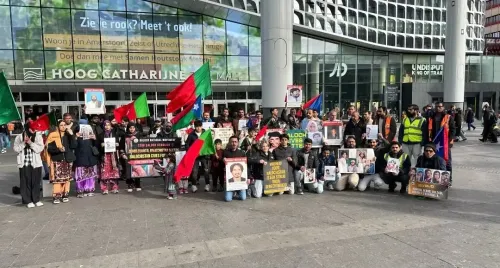
BNM members addressed the 63rd UNHRC session in Geneva on 1 October 2026 , alleging systematic human rights violations in Balochistan .
Ahmed Baloch alleged a Pakistan Army airstrike in Surab on 12 September 2026 killed 6 civilians , including a woman and a two-year-old child , and injured 9 others .
Mahrah Baloch cited enforced disappearances, arbitrary detention, torture, extrajudicial killings, and restrictions on political expression targeting Baloch women and girls.
BNM chairman Naseem Baloch made similar allegations the previous week at the 12th Balochistan International Conference in Geneva.
The BNM called for independent international monitoring, transparent investigations, and international access to Balochistan.
Pakistan has not publicly responded to the specific 1 October 2026 allegations and has historically described military operations in Balochistan as counter-terrorism measures.
Several members of the Baloch National Movement (BNM) on 1 October 2026 raised serious concerns about the deteriorating human rights situation in Balochistan before the 63rd session of the UN Human Rights Council (UNHRC) in Geneva, alleging Pakistan Army airstrikes on civilian areas and systematic violations targeting Baloch women and girls across the province.
Airstrikes on Civilians: What BNM Alleged
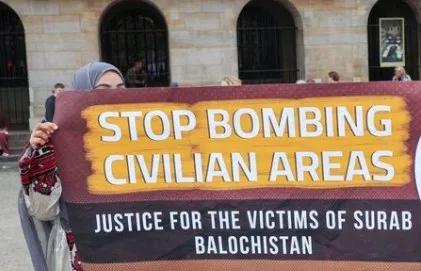
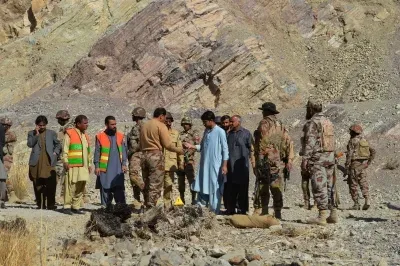
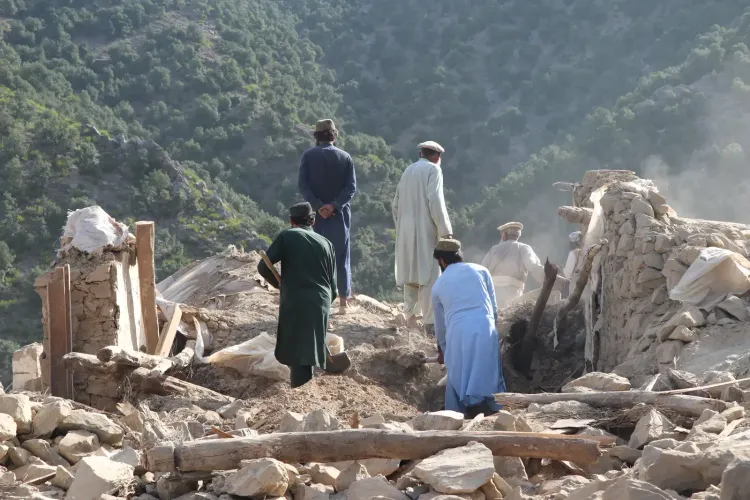
BNM member Ahmed Baloch told the UNHRC session that a Pakistan Army airstrike in Surab on 12 September 2026 killed six civilians, including a woman and a two-year-old child, and injured nine others, most of them young children. He said Pakistani authorities attributed the casualties to 'concealed explosive devices', while, according to Ahmed Baloch, 'photographs and footage from the area showed fragments of numbered munitions and damage consistent with aerial bombardment.'
Ahmed Baloch alleged that the Surab strike was not an isolated incident, pointing to earlier alleged airstrikes in Zehri and the Chiltan area of Shaal. He warned that the increasing use of fighter jets, drones, and helicopter gunships in populated areas was putting thousands of Baloch lives at risk. He called for an end to airstrikes, international access to Balochistan, and recognition of what he termed the 'Baloch nation's right to self-determination.'
Baloch Women and Girls: Rights Violations Highlighted
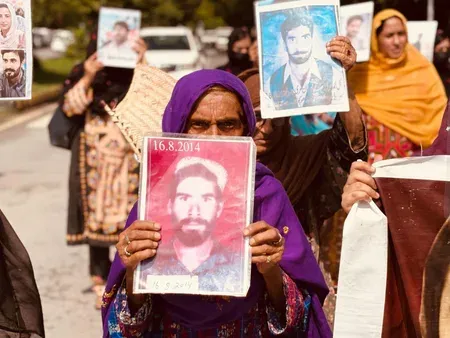
BNM member Mahrah Baloch drew the Council's attention to the situation of Baloch women and girls, stating that 'serious violations of their fundamental rights by Pakistani authorities continue, including enforced disappearances, arbitrary detention, torture, extrajudicial killings, and restrictions on peaceful political expression.' She noted that Baloch women have played a prominent role in movements for justice and accountability, yet many continue to bear the emotional, social, and economic consequences of the enforced disappearances and killings of their family members.
Mahrah Baloch described the pattern of conduct by Pakistani authorities as 'state terrorism' and called on the Council to ensure independent monitoring of Balochistan, transparent investigations, and protection for those who peacefully document and challenge alleged abuses.
BNM Chairman's Remarks at Balochistan International Conference
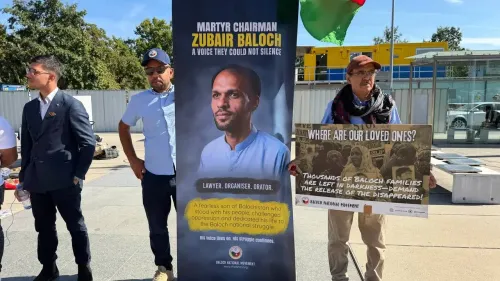
The Geneva-based advocacy followed remarks made the previous week by Naseem Baloch, chairman of the BNM, at the 12th Balochistan International Conference in Geneva. Addressing human rights defenders, representatives of various nations and organisations, media members, and Baloch political activists, Naseem Baloch accused Pakistani authorities of subjecting successive generations of Baloch political activists, students, doctors, teachers, lawyers, and ordinary citizens to imprisonment, enforced disappearance, exile, and death.
He alleged that decades-long efforts by Islamabad to suppress what he called the 'Baloch national question' involved military force, political engineering, enforced disappearances, imprisonment, and control over Balochistan's resources. This comes amid a longstanding pattern of BNM and other Baloch diaspora groups using UN forums to internationalise the situation in the province, which Pakistan consistently disputes.
Pakistan's Position and International Context
Pakistan has historically rejected allegations of systematic human rights violations in Balochistan, framing military operations in the province as counter-terrorism measures against armed groups. Islamabad has not issued an immediate public response to the specific UNHRC allegations made on 1 October 2026. The UNHRC session provides a formal multilateral platform where member states and civil society groups can raise concerns, though resolutions or investigative mandates require broader consensus among member states.
The allegations, if independently verified, could increase diplomatic pressure on Pakistan at a time when international scrutiny of the province has been growing. Whether the Council takes any formal action in response to the BNM's submissions remains to be seen.
Point of View
If corroborated by independent forensic evidence, would be difficult for Islamabad to deflect at future sessions. What mainstream coverage tends to miss is the institutional gap: the UNHRC can hear testimony and pass resolutions, but without a formal country mandate or an independent fact-finding mechanism for Balochistan — which Pakistan has consistently blocked — the evidentiary bar for consequence remains high. The real test is whether any UNHRC member state picks up the BNM's call for independent monitoring and formalises it into a resolution.
NationPress
1 Oct 2026
Frequently Asked Questions
What did Baloch National Movement members allege at the UNHRC session in Geneva?
BNM members alleged at the 63rd UNHRC session on 1 October 2026 that Pakistan Army airstrikes killed six civilians in Surab on 12 September 2026 and that Baloch women face systematic enforced disappearances, torture, and extrajudicial killings. They called for independent international monitoring of Balochistan and transparent investigations.
What is Pakistan's position on the Balochistan allegations?
Pakistan has historically rejected allegations of systematic human rights violations in Balochistan, describing its military operations in the province as counter-terrorism measures against armed groups. Islamabad had not issued a public response to the specific 1 October 2026 UNHRC allegations at the time of reporting.
Who is the Baloch National Movement (BNM)?
The Baloch National Movement is a Baloch diaspora political organisation that advocates for the rights of the Baloch people and has been a consistent presence at international human rights forums, including the UNHRC. It is one of several groups that seeks to internationalise the situation in Balochistan through multilateral platforms.
What happened in Surab on 12 September 2026, according to the BNM?
According to BNM member Ahmed Baloch, a Pakistan Army airstrike in Surab on 12 September 2026 killed six civilians, including a woman and a two-year-old child, and injured nine others. Pakistan reportedly attributed the deaths to concealed explosive devices, a characterisation the BNM disputed, citing photographic and video evidence of munitions fragments.
What action did the BNM call for at the UNHRC?
The BNM called for an end to Pakistani airstrikes in Balochistan, independent international monitoring of the province, transparent investigations into alleged abuses, protection for those documenting violations, and international recognition of the Baloch right to self-determination.