Balochistan abuses spotlighted at UN rights body as BNM rallies in Geneva
Synopsis
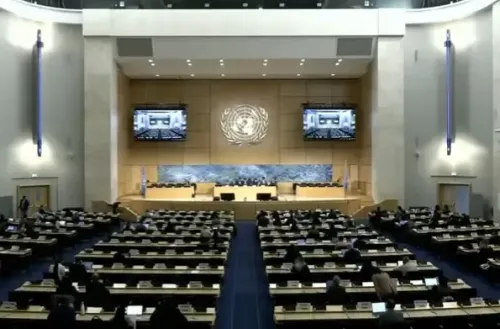
As the 63rd UN Human Rights Council session convened in Geneva, the Baloch National Movement brought its case to the Broken Chair — staging a rally, photo exhibition, and international conference in a single day. With a sitting British MP demanding UK action and a rights group documenting 485 disappearances in just six months, the push to internationalise the Balochistan crisis is gaining visible traction.
Key Takeaways
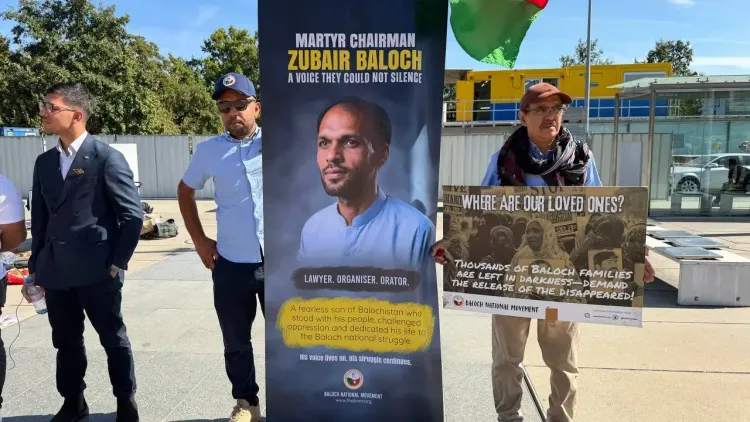
The Baloch National Movement (BNM) held a protest rally and photo exhibition at the Broken Chair monument in Geneva on 25 September 2026 , during the 63rd UN Human Rights Council session.
Rights organisation Paank documented 485 enforced disappearances and 181 extrajudicial killings in Balochistan over the past six months .
Sohail Ahmed Abro of the Jeay Sindh Freedom Movement alleged more than 30,000 Baloch have been forcibly disappeared and over 8,000 killed — figures that have not been independently verified.
British Labour MP John McDonnell called on the UK government to take a proactive role, citing Britain's colonial history as a basis for 'special responsibility.' The 12th Balochistan International Conference was held at the Geneva Press Club , drawing speakers from Baloch advocacy and diaspora groups.
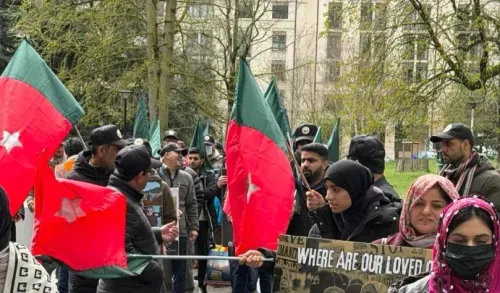
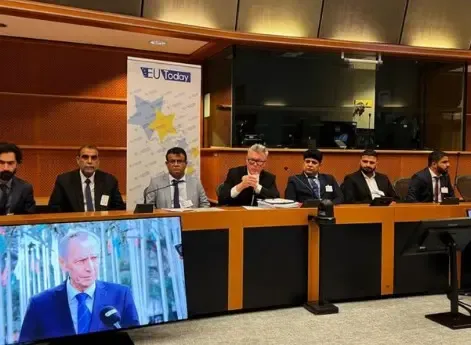
The Baloch National Movement (BNM) on Friday, 25 September 2026, staged a protest rally in Geneva on the sidelines of the 63rd Session of the UN Human Rights Council, seeking to focus international attention on what the group describes as escalating human rights abuses by Pakistani authorities in Balochistan. The demonstration came alongside the 12th Balochistan International Conference, organised by the BNM at the Geneva Press Club.
Key Developments at the Geneva Protest
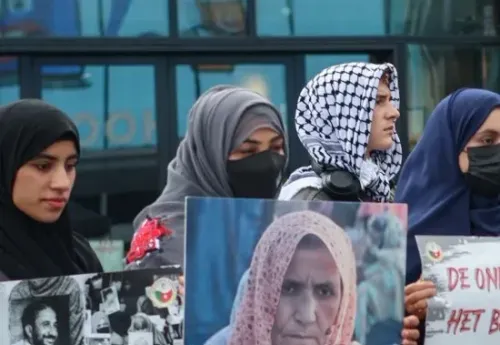
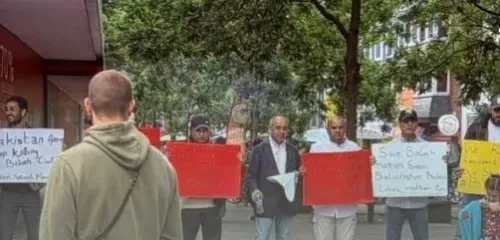
Demonstrators gathered at the iconic Broken Chair monument in Geneva, carrying placards that read: 'They were civilians, not targets; UN act now to end collective punishment in Balochistan', 'End Enforced Disappearance', and 'Balochistan was occupied by Pakistan'. A photo exhibition was also held at the site, with participants raising awareness about what the BNM characterises as a deteriorating human rights situation in the region.
Speakers Allege Systematic Atrocities
Jeay Sindh Freedom Movement chairman Sohail Ahmed Abro, addressing the 12th Balochistan International Conference, described Balochistan as 'a land of sorrow' despite its vast natural wealth — including uranium, minerals, the Saindak Project, the Reko Diq Project, the Dadhar Project, the Dalbandin Project, coal mines, gas, and an extensive coastline. He alleged that 'Pakistani imperialism' was driven by interest in the region's resources rather than the welfare of its people.
Abro further claimed that 'more than 30,000 Baloch have been forcibly disappeared, and their genocide continues,' adding that 'over the years, more than 8,000 Baloch have been killed.' These figures have not been independently verified.
British MP Calls for UK Action
On Thursday, British Labour Party Member of Parliament John McDonnell addressed the same conference virtually and called on the UK government to take a more proactive role in addressing the alleged human rights violations. He cited Britain's colonial history as the basis for what he described as a 'special responsibility' toward the Baloch people.
McDonnell said British ministers should recognise Baloch demands for 'peace, justice and the right to self-determination,' and stated that he has continued to provide political and diplomatic support to Baloch people affected by what he described as Pakistani repression, pledging to maintain that position.
Rights Body Documents Hundreds of Cases
Jamal Baloch, media coordinator of human-rights organisation Paank — the rights wing of the BNM — presented documented figures at the conference. According to Jamal, Paank recorded 485 cases of enforced disappearance in the past six months alone, alongside 181 extrajudicial killings in the same period, several of which the organisation said it had independently confirmed. He noted that Paank has documented thousands of rights violations and enforced disappearances over the years.
Broader Context and What Comes Next
The protest and conference reflect a sustained effort by Baloch advocacy groups to internationalise grievances that Pakistan has long sought to frame as an internal security matter. This comes amid ongoing operations by Pakistani security forces in Balochistan and recurring reports — contested by Islamabad — of civilian casualties and enforced disappearances. Notably, the BNM's use of the UN Human Rights Council session as a platform follows a pattern of diaspora-driven advocacy seen in previous Council cycles. Whether the sessions will prompt a formal Council resolution or inquiry remains to be seen, but the presence of a sitting British MP adds a degree of diplomatic weight to the campaign.
Point of View
But his party is in government and his remarks are personal, not policy. The figures cited — 30,000 disappearances, 8,000 killed — are staggering if accurate, yet they remain unverified by any neutral international body. Until a credible independent inquiry is commissioned, the numbers will continue to be contested, and Pakistan will continue to treat this as a foreign-sponsored narrative rather than a humanitarian emergency.
NationPress
25 Sept 2026
Frequently Asked Questions
What is the Baloch National Movement (BNM) protesting at the UN in Geneva?
The BNM is protesting alleged human rights abuses by Pakistani authorities in Balochistan, including enforced disappearances and extrajudicial killings. The group staged a rally and photo exhibition at the Broken Chair monument in Geneva on 25 September 2026, during the 63rd Session of the UN Human Rights Council.
How many enforced disappearances has Paank documented in Balochistan?
Rights organisation Paank, the human-rights wing of the BNM, recorded 485 cases of enforced disappearance in Balochistan over the past six months, according to media coordinator Jamal Baloch. The group also documented 181 extrajudicial killings in the same period, several of which it said it independently confirmed.
What did British MP John McDonnell say about Balochistan?
Labour MP John McDonnell called on the UK government to take a more proactive role in addressing alleged human rights violations in Balochistan, citing Britain's colonial history as a basis for a 'special responsibility.' He addressed the 12th Balochistan International Conference virtually on Thursday and pledged continued political and diplomatic support for Baloch people.
Who is Sohail Ahmed Abro and what did he allege?
Sohail Ahmed Abro is the chairman of the Jeay Sindh Freedom Movement. Speaking at the conference, he alleged that more than 30,000 Baloch have been forcibly disappeared and over 8,000 killed, and accused Pakistani authorities of being driven by interest in the region's mineral and resource wealth rather than its people's welfare. These figures have not been independently verified.
What is the significance of the 63rd UN Human Rights Council session for Balochistan?
The session provides a high-visibility diplomatic platform for Baloch advocacy groups to present documented cases of alleged abuses to UN member states and international media. Whether the sessions will result in a formal Council resolution or independent inquiry into Balochistan remains uncertain.