Baloch group exposes Pakistan rights abuses at UN Geneva photo exhibition
Synopsis
Outside the United Nations in Geneva, the Baloch National Movement placed photographic evidence of enforced disappearances by Pakistani authorities directly before the international community — citing a life sentence against activist Mahrang Baloch and the February 2026 disappearance of BNM chairperson Naseem Baloch's relatives. The campaign represents the most structured international push yet by a Baloch advocacy group to force global accountability.
Key Takeaways
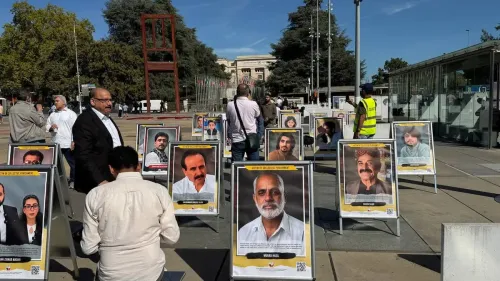
The Baloch National Movement (BNM) held a photo exhibition outside the UN Office in Geneva on 30 September 2026 documenting enforced disappearances in Balochistan.
BYC leader Mahrang Baloch was reportedly sentenced to life imprisonment by a Pakistani court in June 2026 , which BNM described as a 'false case.' Three relatives of BNM chairperson Naseem Baloch — including his father Muhammad Bakhsh Sajidi — were allegedly disappeared by the Pakistan Army in the Hub region on 2 February 2026 ; their whereabouts remain unknown.
The case was also raised in an Early Day Motion in the British Parliament .
BNM says no effective international action has been taken despite hunger strikes, long marches, and protests by families of the missing inside Balochistan.
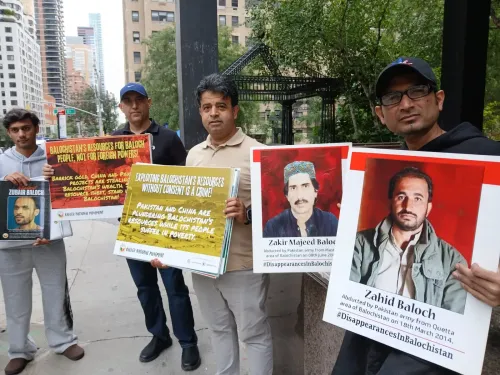
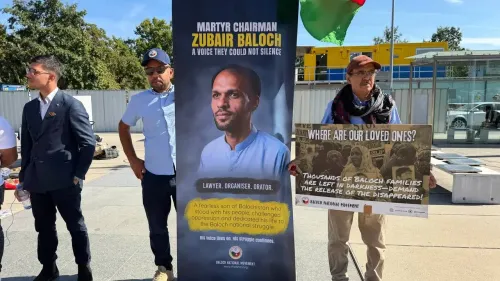
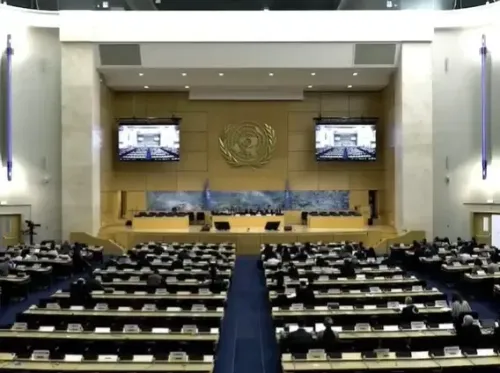
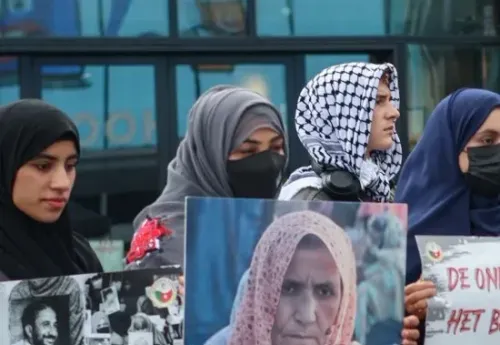
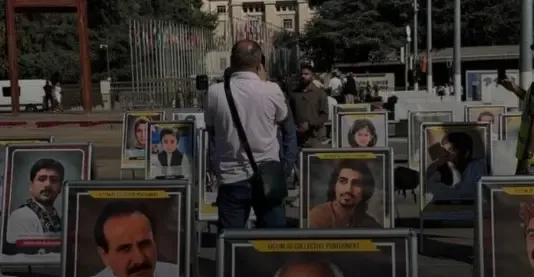
The Baloch National Movement (BNM) staged a photo exhibition outside the United Nations Office in Geneva on 30 September 2026, placing photographic evidence of enforced disappearances, collective punishment, and alleged human rights violations by Pakistani authorities in Balochistan directly before the international community. The event marked one of the most visible attempts by a Baloch advocacy group to bring the crisis to a global institutional platform.
What the Exhibition Displayed
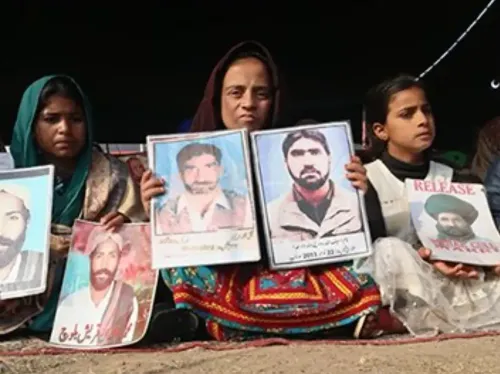
The exhibition featured photographs documenting the plight of forcibly disappeared Baloch individuals and the anguish of their families. According to the BNM, these images represent families who have been waiting for years — in some cases decades — for the return of loved ones and for answers about their whereabouts.
The group described enforced disappearance in Balochistan as 'not merely a claim or a statistic, but a painful reality affecting thousands of families.' The exhibition was framed as a documentation effort, presenting evidence directly to international institutions and the broader global community gathered around the UN campus.
The Campaign Behind the Event
The BNM said its global campaign is 'an effort to bring this question, in the form of documentation and photographic evidence, to an international platform such as the United Nations.' The group highlighted that despite prolonged hunger strikes, protest marches by the Voice for Baloch Missing Persons, and repeated demonstrations by affected families inside Balochistan, no effective international action has been taken on the issue to date.
The BNM noted that the deteriorating human rights situation in Balochistan has persisted without meaningful external accountability, and argued that the Geneva exhibition was aimed at closing that gap.
Key Cases Cited
Baloch Yakjehti Committee (BYC) leader Mahrang Baloch was cited as a prominent case. According to the BNM, she first raised her voice against the enforced disappearance of her father as a young girl and has since become a leading figure in Baloch rights advocacy. The group alleged that she was sentenced to life imprisonment in June 2026 by a Pakistani court in what it described as a 'false case.'
The BNM also highlighted the cases linked to its own chairperson, Naseem Baloch. According to the group, Naseem Baloch's father Muhammad Bakhsh Sajidi, his uncle Naeem Sajidi, and his maternal uncle Rafiq Baloch were allegedly forcibly disappeared by the Pakistan Army during raids on their homes in the Hub region of Balochistan on 2 February 2026. Their whereabouts reportedly remain unknown. The matter was also raised in an Early Day Motion in the British Parliament, lending it a degree of legislative visibility in the United Kingdom.
International Context and What Comes Next
The Geneva exhibition comes amid growing scrutiny of Pakistan's human rights record at multilateral forums. Notably, Balochistan's enforced disappearances have been flagged periodically by UN human rights bodies, though Pakistan has consistently denied systematic abuses. The BNM's appeal to international institutions signals an intent to escalate its documentation campaign ahead of upcoming UN Human Rights Council sessions.
Whether the exhibition translates into formal UN inquiries or resolutions remains to be seen, but the group's coordinated push — combining street-level advocacy outside the UN building with parliamentary motions in Britain — points to an increasingly structured international strategy.
Point of View
Paired with a British parliamentary motion, signalling a more coordinated internationalisation strategy. The life imprisonment of a visible activist like Mahrang Baloch and the alleged disappearance of a chairperson's family members give the campaign concrete named cases that are harder for multilateral bodies to dismiss as abstractions. Pakistan's standard denial posture faces increasing strain as documentation mounts and Western parliamentary systems begin formally registering these grievances. The real question is whether any UN mechanism will move beyond periodic expressions of concern toward enforceable accountability — a step that geopolitical calculations around Pakistan have historically blocked.
NationPress
30 Sept 2026
Frequently Asked Questions
What did the Baloch National Movement do at the UN in Geneva?
The Baloch National Movement held a photo exhibition outside the United Nations Office in Geneva on 30 September 2026, displaying photographs of forcibly disappeared Baloch individuals and their families to bring evidence of human rights abuses by Pakistani authorities to international attention.
Who is Mahrang Baloch and why is her case significant?
Mahrang Baloch is the leader of the Baloch Yakjehti Committee (BYC) and a prominent Baloch rights activist. According to the BNM, she was sentenced to life imprisonment in June 2026 by a Pakistani court in what the group described as a 'false case,' making her situation a focal point of the international advocacy campaign.
What happened to BNM chairperson Naseem Baloch's family?
According to the BNM, Naseem Baloch's father Muhammad Bakhsh Sajidi, his uncle Naeem Sajidi, and his maternal uncle Rafiq Baloch were allegedly forcibly disappeared by the Pakistan Army during raids in the Hub region of Balochistan on 2 February 2026. Their whereabouts reportedly remain unknown, and the matter was raised in an Early Day Motion in the British Parliament.
Why has international action on Balochistan's disappearances been limited?
The BNM argues that despite protests, hunger strikes, and long marches by families of the missing, no effective international action has been taken. Geopolitical considerations and Pakistan's consistent denial of systematic abuses have historically limited the appetite of multilateral bodies for enforceable accountability measures.
What is the BNM's broader goal with this campaign?
The BNM describes the Geneva exhibition as part of a global campaign to bring documented evidence of enforced disappearances to international platforms such as the United Nations. The group is pushing for the deteriorating human rights situation in Balochistan to be formally taken up by international institutions ahead of upcoming UN Human Rights Council sessions.