Baloch rights groups condemn Pakistani forces over Karachi raids, enforced disappearances
Synopsis
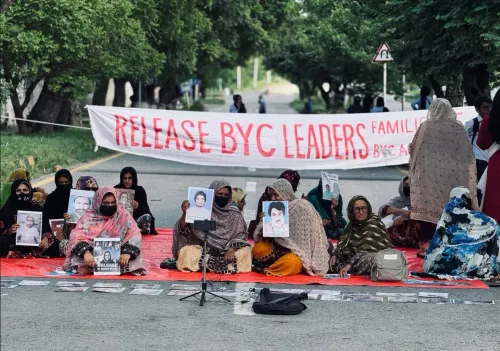
Human rights groups have issued some of their sharpest condemnations yet of Pakistani security operations in Karachi's Baloch neighbourhoods, alleging raids, arbitrary detentions, and enforced disappearances. The BYC's disclosure that teacher Hatim Baloch's body was recovered in Panjgur after an alleged forced disappearance puts a stark human face on what rights organisations are calling a worsening crisis of impunity.
Key Takeaways
Rights groups including the Baloch Yakjehti Committee (BYC) and Baloch Voice for Justice (BVJ) condemned alleged Pakistani security force raids and enforced disappearances in Karachi on 21 August .
The BYC alleged that operations in Baloch neighbourhoods are aimed at suppressing Baloch political identity .
The body of Hatim Baloch , a 29-year-old government teacher, was reportedly recovered in Panjgur district on 8 August after an alleged enforced disappearance.
The BVJ has urged Amnesty International , Human Rights Watch , and the UN Working Group on Enforced or Involuntary Disappearances to investigate.
Pakistan has historically denied systematic targeting of Baloch civilians; NationPress could not independently verify the specific allegations.
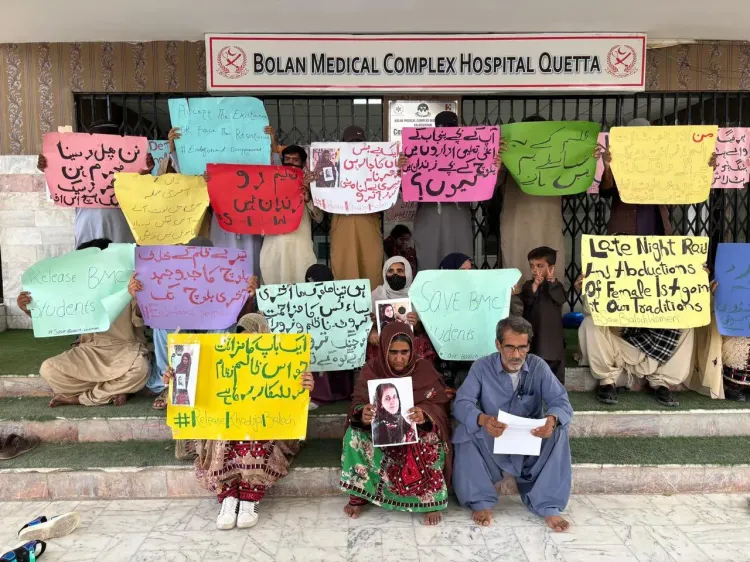
Several prominent human rights organisations on Friday, 21 August condemned what they described as systematic persecution of Baloch communities in Karachi, citing military raids, arbitrary detentions, and enforced disappearances allegedly carried out by Pakistani security forces. The condemnations came amid fresh reports of violence targeting Baloch civilians in both Karachi and Balochistan.
What the Rights Groups Alleged
The Baloch Yakjehti Committee (BYC) alleged that ongoing military operations and raids in Baloch neighbourhoods across Karachi are designed to suppress Baloch political identity. In a statement, the BYC said: 'Frightened by the rising Baloch consciousness and political awakening, the state is once again perpetuating its Baloch genocidal policies in the streets of Karachi, attempting to bring Baloch communities under the shadow of fear, raids, arrests, and enforced disappearances.'
The BYC further alleged that the Pakistani state 'repeatedly recycles its colonial policies with new titles and methods, but the objective remains the same: to keep Baloch communities under pressure through fear.' These are among the most direct accusations levelled by a Baloch civil society body in recent months.
International Bodies Urged to Investigate
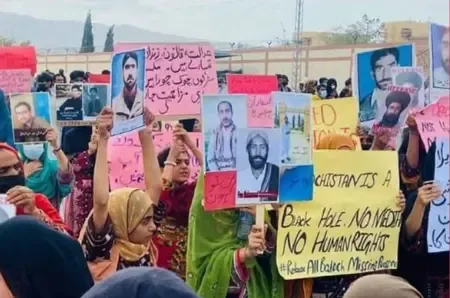
The Baloch Voice for Justice (BVJ) expressed grave concern over the reported atrocities and formally called on Amnesty International, Human Rights Watch, the United Nations Working Group on Enforced or Involuntary Disappearances, and other international human rights bodies to urgently investigate and document the allegations, engage with affected families, and press Pakistan for accountability.
Notably, this appeal to multilateral bodies marks an escalation in the international advocacy strategy of Baloch rights groups, which have increasingly sought external scrutiny as domestic legal channels remain largely inaccessible to affected communities.
Teacher's Body Recovered in Panjgur
In a separate but related development, the BYC revealed that the body of Hatim Baloch, a 29-year-old government school teacher, was recovered in Panjgur district on 8 August, after he was allegedly forcibly disappeared by what the group described as 'Pakistan-backed death squads.' No official Pakistani government response to this specific allegation was available at the time of reporting.
The BYC stated: 'The killing of Hatim Baloch reflects the growing danger faced by Baloch across Balochistan, where death squads and security-linked forces operate with no accountability. Teachers, students, labourers, fishermen, and other ordinary civilians continue to face enforced disappearances and extrajudicial killings, while families are left with lifelong sorrow.'
Broader Pattern of Violence
Rights groups say the Panjgur killing is not an isolated incident. The BYC described it as 'another blow to a community already living through a worsening human rights crisis,' arguing that such killings 'deepen fear, destroy families, and reinforce a culture of impunity in Balochistan.' Enforced disappearances in Balochistan have been documented by international human rights bodies for over two decades, with the UN Working Group on Enforced or Involuntary Disappearances having repeatedly raised concerns with Islamabad.
The Pakistani government has historically denied systematic targeting of Baloch civilians, attributing security operations to counter-insurgency efforts against armed separatist groups. NationPress was unable to independently verify the specific allegations made by the BYC and BVJ.
What Rights Groups Are Demanding
Both the BYC and BVJ have called on the international community to urgently document these alleged violations and demand independent investigations. The BYC stated that the people of Balochistan could not continue to be left 'without protection, justice, or answers.' As international pressure mounts, whether global human rights institutions will formally engage with Pakistan over these latest allegations remains to be seen.
Point of View
Combined with a direct appeal to UN mechanisms, suggest Baloch civil society is shifting from domestic protest to internationalisation of its grievances — a tactical escalation worth watching. The disclosure of Hatim Baloch's killing is particularly pointed: targeting a government teacher, not an armed actor, makes it harder for Islamabad to invoke its standard counter-insurgency framing. What mainstream coverage often misses is that enforced disappearances in Balochistan have appeared in UN Working Group reports for over two decades with little measurable accountability — making each new appeal to international bodies as much a statement of desperation as of strategy.
NationPress
6 Oct 2026
Frequently Asked Questions
What did rights groups allege about Pakistani forces in Karachi?
The Baloch Yakjehti Committee (BYC) and Baloch Voice for Justice (BVJ) alleged that Pakistani security forces conducted raids, arbitrary detentions, and enforced disappearances in Baloch neighbourhoods in Karachi. The BYC described the operations as part of a long-standing pattern of suppressing Baloch political identity, though Pakistan has historically denied systematic targeting of Baloch civilians.
Who was Hatim Baloch and what happened to him?
Hatim Baloch was a 29-year-old government school teacher whose body was reportedly recovered in Panjgur district on 8 August, according to the BYC. The group alleged he was forcibly disappeared by Pakistan-backed death squads, though NationPress could not independently verify this claim.
Which international bodies have been asked to intervene?
The Baloch Voice for Justice formally called on Amnesty International, Human Rights Watch, and the United Nations Working Group on Enforced or Involuntary Disappearances to investigate the allegations, document cases, engage with affected families, and press Pakistan for accountability.
How long have enforced disappearances in Balochistan been documented?
International human rights bodies, including the UN Working Group on Enforced or Involuntary Disappearances, have documented cases in Balochistan for over two decades and have repeatedly raised concerns with the Pakistani government. Accountability measures have remained limited, according to rights groups.
What is Pakistan's position on these allegations?
The Pakistani government has historically denied the systematic targeting of Baloch civilians, attributing security operations in the region to counter-insurgency efforts against armed separatist groups. No official Pakistani government response to the specific August 2025 allegations was available at the time of reporting.