Baloch groups demand UN action on Enforced Disappearances Day, cite 9,130 cases
Synopsis
On the UN’s International Day of the Victims of Enforced Disappearances, Baloch rights groups revealed that 9,130 cases have been documented since 2016 — and say that figure is a fraction of the real toll. With over 800 disappearances reported in just the first half of 2026, including a 1.5-year-old child, activists are demanding the UN move from symbolic observance to concrete accountability against Pakistan.
Key Takeaways
The Human Rights Council of Balochistan (HRCB) documented 9,130 enforced disappearances in Balochistan between January 2016 and July 2026 .
BSO-Azad alleged more than 800 disappearances in the first half of 2026 alone, including a 1.5-year-old child from Mastung .
BYC leader Sabiha Baloch posted on X calling enforced disappearance a daily reality for Baloch families, not an annual remembrance.
Multiple organisations — HRCB , BSO-Azad , BYC , and BVJ — jointly urged the UN and international community to take immediate, meaningful action.
The International Day of the Victims of Enforced Disappearances is observed every year on 30 August , a UN-designated date since 2011 .
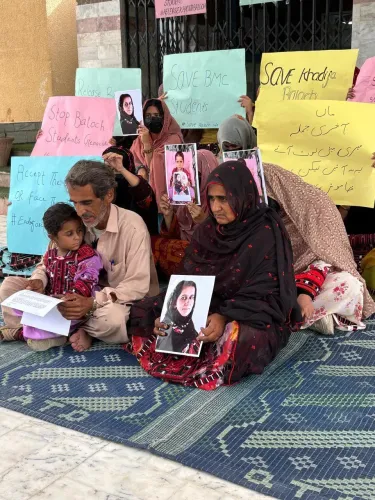
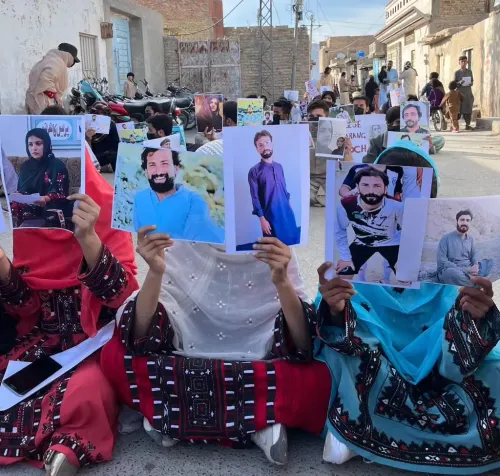
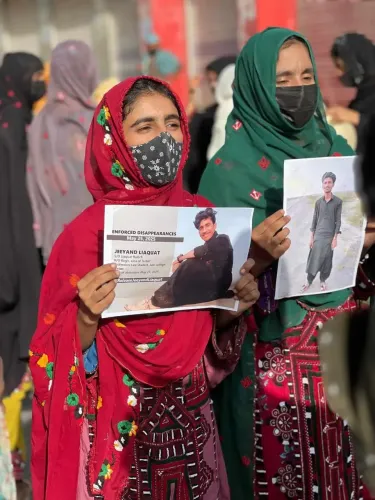
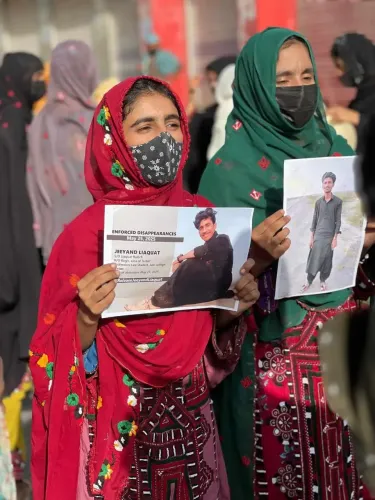
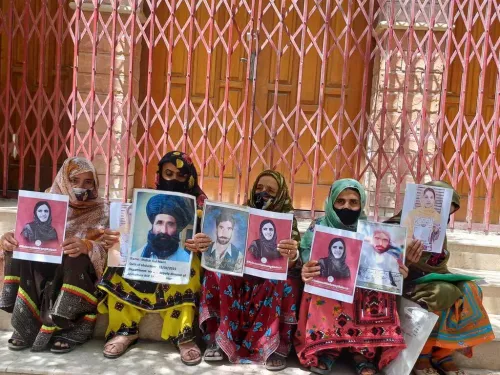
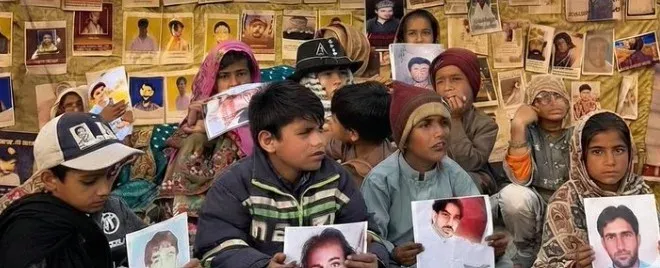
Several Baloch human rights organisations and activists on 30 August 2026 — the International Day of the Victims of Enforced Disappearances — called on the United Nations and the global community to take concrete steps to secure the release of thousands of forcibly disappeared Baloch individuals, including children, women, and the elderly, allegedly taken by Pakistani forces across Balochistan. The appeals came from Quetta and across activist networks, as families of the missing marked the UN-designated day with grief and renewed urgency.
Scale of Documented Cases
The Human Rights Council of Balochistan (HRCB) stated that between January 2016 and July 2026, it had documented 9,130 cases of enforced disappearance across the region. The organisation cautioned, however, that this figure represents only a fraction of the actual toll. “Many areas remain under strict security force control, making countless cases difficult to document,” the HRCB noted, adding: “Behind every number is a mother waiting for her son, a child waiting for a parent, a wife waiting for her husband, and a family living every day with uncertainty.”
Students, Activists Among Recent Victims
The Baloch Students Organisation (BSO)-Azad alleged that in the first half of 2026 alone, more than 800 Baloch students, political activists, teachers, doctors, labourers, shopkeepers and other civilians had been subjected to enforced disappearances by Pakistani military and intelligence services. The organisation said victims ranged in age from eight to sixty years, and included women, girls, minor children, and the elderly. A reportedly documented case involved a 1.5-year-old child named Zakir from Mastung. BSO-Azad accused Pakistani forces of carrying out ‘illegal actions’ and called on international human rights bodies to hold Pakistani authorities accountable for what it described as ‘severe crimes.’
Voices From the Ground
Baloch Yakjehti Committee (BYC) leader Sabiha Baloch said that for Baloch families, enforced disappearance is not an issue to be remembered once a year but a daily reality. In a post on social media platform X, she wrote: “Every day, Baloch families live with the fear that another loved one may be taken away and disappeared. Mothers wait for their sons. Children wait for their fathers. Families wait for answers that may never come. For Balochistan, every day is a day of enforced disappearances. The world must not remain silent while families continue to wait between hope and unbearable pain.”
International Community Urged to Act
The Baloch Voice for Justice (BVJ) similarly urged the international community to uphold its responsibility to protect human rights, press for accountability from Pakistani authorities, and support efforts to end the practice of enforced disappearance in Balochistan. This comes amid longstanding criticism from human rights observers who argue that the issue has received insufficient international attention relative to its reported scale. The International Day of the Victims of Enforced Disappearances has been observed every year on 30 August since it was designated by the UN in 2011 to raise global awareness of the violation and honour victims and their families.
What Happens Next
Baloch rights groups are pressing for formal UN mechanisms — including special rapporteur engagement and Security Council attention — to be directed at the situation in Balochistan. Whether the international community moves beyond symbolic observance to structured accountability remains the central question activists are raising as the day passes and the disappearances, they say, continue.
Point of View
130 figure from HRCB is significant not because it is definitive — the organisation itself concedes it is an undercount — but because it is among the most systematically compiled datasets on Baloch enforced disappearances in the public domain. What is striking about this year’s observance is the specificity: named victims, age ranges, professional categories, and even a 1.5-year-old child, suggesting documentation has become more granular even as access to affected areas reportedly remains restricted. The international community’s response has historically stopped at statements; the question Baloch activists are now pressing is whether the UN’s mechanisms — special rapporteurs, treaty bodies, the Human Rights Council — will be formally invoked, or whether 30 August will again pass as a day of acknowledgement without consequence.
NationPress
31 Aug 2026
Frequently Asked Questions
What is the International Day of the Victims of Enforced Disappearances?
It is a UN-designated day observed every year on 30 August to raise global awareness of enforced disappearances as a grave human rights violation and to honour victims and their families. The UN established the observance in 2011.
How many enforced disappearances have been documented in Balochistan?
The Human Rights Council of Balochistan (HRCB) has documented 9,130 cases of enforced disappearance between January 2016 and July 2026. The organisation notes this is likely a significant undercount, as many areas remain under strict security force control.
Who are the victims of enforced disappearances in Balochistan?
According to BSO-Azad, victims in the first half of 2026 alone included students, political activists, teachers, doctors, labourers, shopkeepers, women, girls, minor children, and elderly individuals aged eight to sixty. A reported case also involves a 1.5-year-old child named Zakir from Mastung.
What are Baloch organisations demanding from the international community?
Multiple groups — including HRCB, BSO-Azad, BYC, and BVJ — are urging the UN and global human rights bodies to take immediate, effective action to secure the release of disappeared individuals and hold Pakistani authorities accountable. They are calling for formal accountability mechanisms, not just symbolic observance.
What did BYC leader Sabiha Baloch say about the situation?
Sabiha Baloch posted on X that enforced disappearance is a daily reality for Baloch families, not an issue to be remembered once a year. She wrote that mothers wait for sons, children for fathers, and families for answers that may never come, urging the world not to remain silent.