Balochistan attacks: Pakistani forces, 'death squads' hit in Basima, Panjgur, Turbat
Synopsis
The BLF claims to have killed over 80 Pakistani military and intelligence personnel — including an MI captain and ISI officers — in a single operation targeting a Frontier Works Organisation camp in Gwadar, while fresh attacks hit Basima, Panjgur, and Turbat. The group has now explicitly threatened CPEC, Reko Diq, and Saindak, putting Chinese investment stakes directly in its crosshairs.
Key Takeaways
Armed attacks on Pakistani forces and army-backed 'death squads' were reported on 29 October 2026 in Basima , Panjgur , and Turbat in Balochistan .
The Balochistan Liberation Front (BLF) claimed responsibility for killing over 80 Pakistani military and intelligence personnel in earlier 'Operation Almas' in Gwadar district , launched on 22 October .
Claimed fatalities include a Military Intelligence captain , ISI officers , and SSG personnel ; Pakistani authorities have not confirmed casualty figures.
The BLF claims fighters shot down four quadcopters and two surveillance drones during the operation.
The group has explicitly threatened to continue targeting CPEC , Reko Diq , and the Saindak project, warning foreign entities to expect losses.
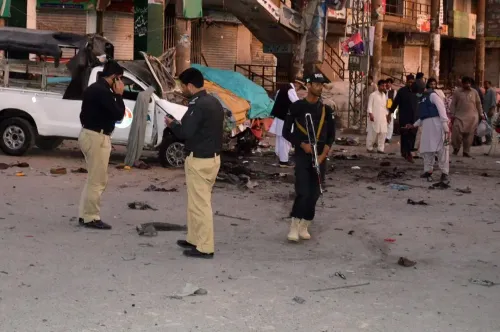
Pakistani security forces and army-backed paramilitary elements, including so-called 'death squads' reportedly outsourced by the Pakistan Army and its intelligence agencies, suffered casualties in a series of armed attacks across Balochistan province on 29 October 2026, according to local media reports. The attacks struck the districts of Basima, Panjgur, and Turbat, compounding a week of sustained militant violence in the restive southwestern province.
Key Incidents on Thursday
According to reports citing local sources, armed men ambushed a Pakistani forces convoy near the Sajid area of Basima, inflicting casualties and severely damaging two vehicles. The engagement reportedly lasted over two hours before military helicopters were deployed to reinforce the besieged column.
Separately, a convoy of Pakistani forces was targeted in the Gwargo area of Panjgur on Wednesday as three military vehicles were passing through. Authorities have not confirmed casualty figures from that attack. Additionally, gunmen reportedly opened fire on members of a Pakistani army-backed 'Death Squad' in the Noduz area of Turbat early Thursday morning. Sustained gunfire was heard in the area for an extended period; no official casualty figures have been released.
BLF Claims 80-Plus Killed in Earlier 'Operation Almas'
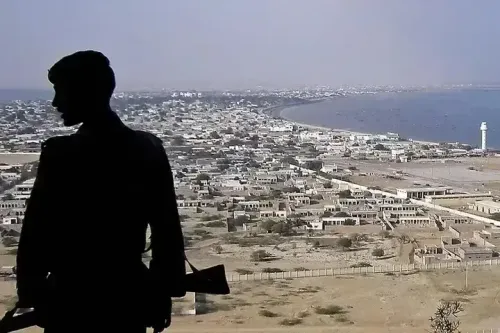
The fresh attacks follow a significant claim made earlier this week by the Balochistan Liberation Front (BLF), which asserted responsibility for killing over 80 Pakistani military and intelligence personnel in a sustained assault on a Frontier Works Organisation (FWO) camp and other installations in Gwadar district.
BLF spokesperson Major Gwahram Baloch said in a statement that those killed during 'Operation Almas' included a Military Intelligence (MI) captain, officers from the Inter-Services Intelligence (ISI), and personnel from the Special Services Group (SSG), with dozens more reportedly sustaining serious injuries.
According to Gwahram Baloch, the operation was launched on 22 October with a vehicle-borne suicide attack at the FWO camp entrance. He said the explosion breached the main gate and nearby defensive positions, enabling fighters to enter the compound. Inside, the group claimed to have stormed an ISI office, killing an officer and five personnel, while a separate engagement at a Military Intelligence office left six personnel dead — including the MI captain.
The statement further claimed that fighters seized a multi-storey residential barracks, where 21 personnel were killed in close-quarters combat. Pakistani forces reportedly launched nine counterattacks overnight, supported by mortar and artillery fire, before mounting a larger morning offensive with armoured vehicles — an assault the BLF claimed to have repelled, killing around 13 more personnel and destroying two armoured vehicles.
The BLF additionally claimed its fighters shot down four quadcopters and two surveillance drones during the operation, and that a sniper team killed six Pakistani military personnel across the course of the engagement. Pakistani authorities have not publicly confirmed or denied these figures.
BLF's Stated Grievances and Future Targets
Gwahram Baloch described the FWO and similar institutions as 'the commercial and military arms of this occupying army, used to loot our resources, guard international exploitative companies and change our demography.' He stated that the organisation was 'not against any outside power or country' but opposed Pakistan's control over Balochistan and what it characterised as exploitation of the region's coastline and natural resources.
The spokesperson explicitly warned that the group would continue targeting the China–Pakistan Economic Corridor (CPEC), the Reko Diq mining project, the Saindak copper-gold project, and other development ventures in Balochistan. He cautioned that foreign entities operating in the province without the consent of the Baloch people would bear responsibility for any losses.
Broader Context
Balochistan has witnessed a sustained insurgency for decades, with multiple armed groups demanding independence or greater autonomy, citing perceived economic marginalisation and resource extraction. Pakistani authorities have consistently described the insurgency as a law-and-order challenge backed by hostile foreign elements — a characterisation the BLF and allied groups reject. The targeting of CPEC infrastructure, which runs through the province, has become an increasingly prominent element of militant strategy, raising concerns among Chinese investors and Pakistani planners alike. Notably, attacks of this scale and coordination represent a significant escalation in operational tempo for the BLF.
Point of View
Yet Pakistani state media has maintained near-silence on the figures, a pattern that makes independent verification impossible. What is harder to dismiss is the operational sophistication on display: a vehicle-borne suicide breach, compound seizure, sustained counterattack repulsion, and drone interdiction do not suggest a degraded force. The explicit targeting of CPEC infrastructure and the warning to foreign investors signal a deliberate internationalisation of the conflict — a strategic shift that Beijing and Islamabad cannot afford to treat as routine. India's security establishment will be watching closely, as will Gulf investors with exposure to Reko Diq.
NationPress
29 Oct 2026
Frequently Asked Questions
What happened in the Balochistan attacks on 29 October 2026?
Armed attackers struck Pakistani security forces and army-backed 'death squads' in three separate incidents in Basima, Panjgur, and Turbat on 29 October 2026. Casualties were reported in the Basima ambush, which lasted over two hours; Pakistani authorities have not released official figures for the other incidents.
What is 'Operation Almas' claimed by the BLF?
Operation Almas is a militant operation claimed by the Balochistan Liberation Front (BLF), launched on 22 October 2026 with a suicide vehicle attack on a Frontier Works Organisation camp in Gwadar district. The BLF claims over 80 Pakistani military and intelligence personnel were killed, including an MI captain and ISI officers, though Pakistani authorities have not confirmed these figures.
Why is the BLF targeting CPEC and development projects?
The BLF argues that projects like CPEC, Reko Diq, and Saindak are instruments of resource extraction carried out without the consent of the Baloch people. Its spokesperson described the Frontier Works Organisation as a 'commercial and military arm' of the Pakistani state used to exploit Balochistan's coastline and natural resources.
Has Pakistan officially confirmed casualties from these attacks?
No. Pakistani authorities had not publicly confirmed or denied casualty figures from either the recent Basima, Panjgur, and Turbat incidents or the BLF's broader Operation Almas claims as of reporting. The figures cited are drawn from BLF statements and local media sources and should be treated as unverified claims.
What is the Balochistan Liberation Front (BLF)?
The BLF is one of several armed groups operating in Pakistan's Balochistan province that advocates for independence from Pakistan, citing economic marginalisation and resource exploitation. It has increasingly targeted infrastructure linked to the China-Pakistan Economic Corridor, positioning its campaign as resistance to both Pakistani state authority and foreign economic interests.