Bangladesh ICT jails 3 journalists in July 2024 crimes against humanity case
Synopsis
Three Bangladeshi journalists — including a former newspaper editor and a TV channel's top brass — have been sent to jail by the International Crimes Tribunal over a press conference held in July 2024. The CPJ and international rights groups are calling it a dangerous criminalisation of editorial judgment, and the case is now a flashpoint for Bangladesh's democratic credibility.
Key Takeaways
Bangladesh's International Crimes Tribunal (ICT) ordered three journalists into custody on 25 August in a crimes against humanity case linked to July 2024 protests.
The accused are Shyamal Dutta (former editor, Bhorer Kagoj), Mozammel Babu (MD and editor-in-chief, Ekattor TV), and Farzana Rupa (chief correspondent, Ekattor TV).
Prosecutors allege their statements at a 14 July 2024 press conference triggered then-PM Sheikh Hasina 's 'Razakar' remark, which sparked protests.
Babu and Rupa also face a separate ICT case over the 2013 Hefazat-e-Islam crackdown at Shapla Chattar.
The Committee to Protect Journalists (CPJ) and Justice Makers Bangladesh in France (JMBF) have condemned the move, calling it a criminalisation of journalism.
Rights groups warn the case sets a 'dangerous precedent' and raises concerns of political retaliation under the BNP -led government.
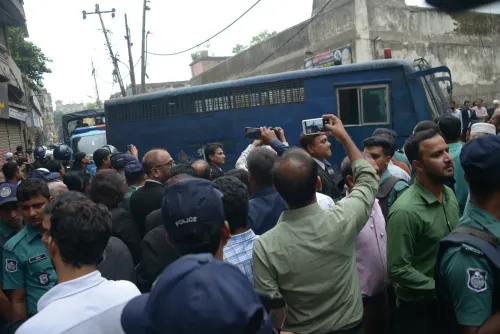
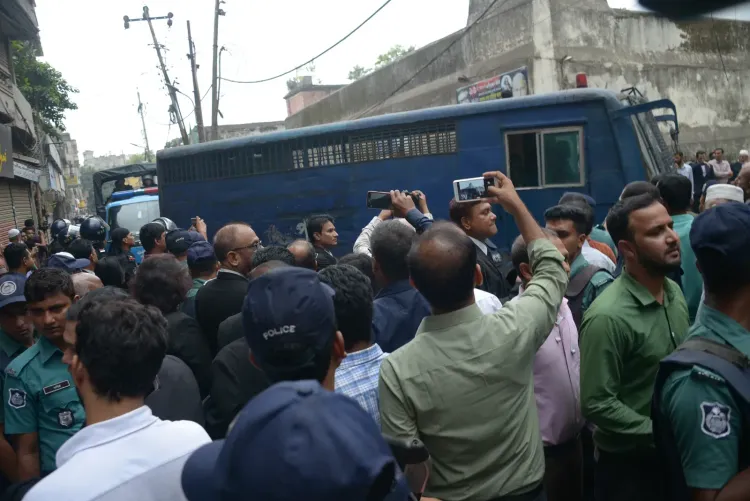
Bangladesh's International Crimes Tribunal (ICT) on Monday, 25 August formally ordered three journalists into judicial custody after showing them arrested in a crimes against humanity case tied to the July 2024 mass protests. The three — Shyamal Dutta, former editor of Bhorer Kagoj; Mozammel Babu, managing director and editor-in-chief of Ekattor TV; and the channel's chief correspondent Farzana Rupa — were produced before the tribunal by jail authorities, according to local media reports.
The Allegation Against the Journalists
Prosecutor Gazi Monawar Hossain Tamim alleged that provocative statements made by the accused at a 14 July 2024 press conference triggered then-Prime Minister Sheikh Hasina's use of the word 'Razakar' — a term historically associated with collaborators of the 1971 Pakistani military — which subsequently inflamed street protests, according to The Daily Star, Bangladesh's leading English daily.
Separately, Babu and Rupa are also facing trial in a distinct crimes against humanity case related to the 2013 crackdown on a Hefazat-e-Islam rally at Shapla Chattar in Motijheel and Narayanganj.
Global Condemnation and Press Freedom Concerns
The ICT's move drew swift and widespread international criticism. Global press freedom organisation Committee to Protect Journalists (CPJ) called on Bangladeshi authorities to drop the charges and stop 'criminalising' news reporting.
'Launching a crimes-against-humanity case against journalists Shyamal Dutta, Mozammel Babu, and Farzana Rupa for simply asking questions at a press conference is outrageous and deeply troubling,' said Kunal Majumder, CPJ's Asia-Pacific Program Coordinator. 'Editorial decisions may be partisan or ethically questionable, but they cannot be criminalized. Criminalizing editorial judgment sets a dangerous precedent and undermines Bangladesh's reputation as a democracy. Authorities must immediately release the three journalists and drop the charges,' he added.
Rights Groups Flag 'Political Retaliation'
International human rights organisation Justice Makers Bangladesh in France (JMBF) expressed grave concern, calling the application of the 'crimes against humanity' label to journalistic speech 'deeply alarming.' The group argued that such allegations must be backed by credible, individualised evidence meeting stringent requirements under applicable criminal law and international standards.
'Journalism is not a crime. Political disagreement is not a crime. Criticism, questioning, commentary, and even controversial or unpopular expression cannot be transformed into crimes against humanity merely because such expression subsequently becomes politically objectionable,' JMBF stated.
Shahanur Islam, Founder President of JMBF, said the pursuit of such proceedings against journalists under the current Bangladesh Nationalist Party (BNP)-led government raises serious concerns over the use of the criminal justice system as an instrument of 'political retaliation and intimidation.' 'Such a practice is deeply disturbing, incompatible with democratic values, and wholly unacceptable,' he noted.
A Pattern Under Scrutiny
Notably, Islam's remarks drew a comparison with practices reportedly witnessed under the previous Muhammad Yunus-led interim government, suggesting the use of the ICT against media figures may represent a continuing pattern rather than an isolated development. This is the second distinct ICT case in which Babu and Rupa are implicated, raising questions about the cumulative legal pressure being applied to journalists associated with coverage of politically sensitive events.
As international pressure mounts, all eyes will be on whether the BNP-led government moves to review the charges or presses ahead — a decision that analysts say will significantly shape Bangladesh's democratic credentials on the global stage.
Point of View
Originally established to deliver accountability for 1971 war crimes, is being tested on whether it can resist becoming a tool for settling contemporary political scores. The BNP-led government's continuation of what rights groups describe as a pattern from the Yunus-era interim administration suggests the problem is structural, not partisan. Bangladesh's democratic reputation, already under strain, cannot afford a precedent that equates editorial judgment with mass atrocity.
NationPress
25 Aug 2026
Frequently Asked Questions
Why were the three Bangladeshi journalists sent to jail by the ICT?
The International Crimes Tribunal ordered Shyamal Dutta, Mozammel Babu, and Farzana Rupa into judicial custody on 25 August in a crimes against humanity case linked to the July 2024 protests. Prosecutors allege that statements they made at a 14 July 2024 press conference led to then-PM Sheikh Hasina's inflammatory 'Razakar' remark, which reportedly triggered the demonstrations.
Who are the three journalists named in the Bangladesh ICT case?
They are Shyamal Dutta, former editor of Bhorer Kagoj; Mozammel Babu, managing director and editor-in-chief of Ekattor TV; and Farzana Rupa, chief correspondent of Ekattor TV. All three were already in custody and were produced before the tribunal by jail authorities.
What has the Committee to Protect Journalists said about the case?
The CPJ has called on Bangladeshi authorities to immediately drop the charges and release the three journalists, describing the case as 'outrageous.' CPJ's Asia-Pacific Program Coordinator Kunal Majumder said criminalising editorial judgment 'sets a dangerous precedent and undermines Bangladesh's reputation as a democracy.'
Are there other cases against these journalists?
Yes. Mozammel Babu and Farzana Rupa are also facing trial in a separate ICT case related to the 2013 crackdown on a Hefazat-e-Islam rally at Shapla Chattar in Motijheel and Narayanganj, making this their second active crimes against humanity proceeding.
What does the Bangladesh Nationalist Party government's role mean for press freedom?
Rights group Justice Makers Bangladesh in France (JMBF) has warned that pursuing crimes against humanity charges against journalists under the BNP-led government mirrors patterns seen under the previous interim administration, suggesting the criminal justice system is being used for political retaliation. JMBF founder Shahanur Islam called the practice 'incompatible with democratic values.'