Bangladesh custodial death: Rights body condemns lawyer Abdul Latif's jail death
Synopsis
A senior Bangladeshi lawyer died in jail after reportedly being held for over five months without trial in conditions his family described as inhumane. An international rights body says it is not an isolated case — but part of a systematic pattern of political arrests and custodial neglect since the fall of the Awami League government.
Key Takeaways
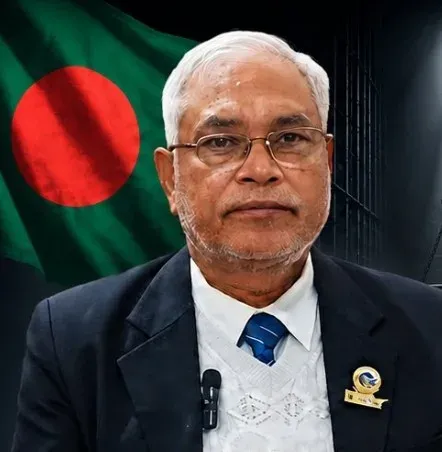
Abdul Latif , former Public Prosecutor of Satkhira Judge Court , reportedly died on 25 May 2025 after a stroke while in jail custody.
He had been held for over five months without trial following his arrest on 12 December 2025 by Satkhira DB Police .
Justice Makers Bangladesh in France (JMBF) condemned the death, alleging inhumane prison conditions and denial of timely medical care.
JMBF Founder President Shahanur Islam called the death part of a 'continuing pattern' of custodial abuse targeting Awami League members since July 2024 .
The rights body has demanded an independent judicial inquiry and accountability for those responsible for Latif's treatment in custody.
A senior Bangladeshi lawyer, Abdul Latif, former Public Prosecutor of Satkhira Judge Court, reportedly died on 25 May 2025 after suffering a stroke while in jail custody, triggering sharp condemnation from an international human rights organisation. The death has reignited concerns over state accountability, pre-trial detention conditions, and political targeting in Bangladesh.
What Happened
According to prison authorities, Latif suffered a stroke while in custody and died on 25 May 2025. He had been arrested along with his son, Aminul Islam Rasel, on 12 December 2025 by the Satkhira District Detective Branch (DB) Police from the Bohera area of Khulna City Corporation. Reports indicate he had gone into hiding following the July 2024 demonstrations and was previously associated with the Awami League.
Rights Body's Condemnation
Justice Makers Bangladesh in France (JMBF), a leading international human rights organisation, strongly condemned the death, alleging that Latif had been held for over five months without trial and with no visible progress in the judicial process against him. The organisation stated that detaining a person for a prolonged period without proving allegations and without an effective judicial process is 'contrary to the fundamental principles of justice.'
Citing family members and colleagues, JMBF alleged that Latif endured 'inhumane prison conditions, suffering from poor-quality food, inadequate sanitation facilities, unhealthy surroundings, unsuitable accommodation, and lack of proper medical care.' It further alleged that timely medical treatment was not provided even after he fell seriously ill.
A Pattern, Not an Isolated Incident
Shahanur Islam, Founder President of JMBF and a prominent human rights lawyer, said in a statement: 'The death of senior lawyer Abdul Latif in Satkhira prison is not an isolated incident. Rather, it is part of a continuing pattern since the fall of the Awami League government, where Awami League leaders and activists have been arrested in one false case after another, detained for months without trial, and subjected to deaths in custody due to poor-quality food, inadequate sanitation, unhealthy prison conditions, unsuitable accommodation, and lack of proper medical care.'
JMBF warned that a growing 'culture of political retaliation, false cases, and extrajudicial harassment' across Bangladesh is undermining the rule of law and eroding public confidence in the justice system. The body stressed that depriving citizens of fundamental rights on the basis of political identity or ideology violates democratic values and constitutional governance.
Key Demands
JMBF called on Bangladeshi authorities to immediately constitute an independent, impartial, and judicial inquiry commission into Latif's death. It also urged authorities to identify and hold accountable those responsible for failures in his treatment, security, and human rights conditions while in custody.
This comes amid broader international scrutiny of Bangladesh's post-July 2024 political transition and the treatment of individuals associated with the previous government. Human rights groups have flagged multiple cases of prolonged pre-trial detention and deteriorating prison conditions in the months since.
Point of View
It is failing. Holding a senior legal professional for over five months without trial, in conditions his family describes as inhumane, is not a procedural lapse; it is a structural failure. What makes this harder to dismiss is the pattern: JMBF's documentation suggests Latif is one of several Awami League-linked detainees who have died or suffered serious illness in custody since July 2024. The international community has been largely muted, but sustained pressure from diaspora rights groups like JMBF signals that the accountability deficit is becoming a reputational liability for Dhaka. Without an independent inquiry with enforceable outcomes, this risks normalising political detention as an instrument of governance.
NationPress
26 Sept 2026
Frequently Asked Questions
Who was Abdul Latif and why was he arrested?
Abdul Latif was the former Public Prosecutor of Satkhira Judge Court in Bangladesh and was previously associated with the Awami League. He was arrested on 12 December 2025 by Satkhira District Detective Branch Police from the Bohera area of Khulna City Corporation, reportedly after going into hiding following the July 2024 demonstrations.
How did Abdul Latif die in custody?
According to prison authorities, Latif suffered a stroke while in jail custody and died on 25 May 2025. Rights body JMBF alleged that effective medical treatment was not provided in a timely manner even after he became seriously ill, and that he had been living in inhumane prison conditions.
What is Justice Makers Bangladesh in France (JMBF)?
Justice Makers Bangladesh in France (JMBF) is an international human rights organisation based in France. It is led by Shahanur Islam, its Founder President and a prominent human rights lawyer, and focuses on rights violations affecting Bangladeshi citizens.
What has JMBF demanded from Bangladeshi authorities?
JMBF has called on Bangladeshi authorities to immediately form an independent, impartial, and judicial inquiry commission into Latif's death. It has also urged the government to identify and hold accountable those responsible for failures in his treatment, security, and human rights conditions while in custody.
Is this an isolated incident or part of a broader pattern?
JMBF says it is part of a broader pattern. According to Shahanur Islam, multiple Awami League leaders and activists have been arrested on what the organisation describes as false cases, detained for months without trial, and subjected to deaths in custody due to poor prison conditions since the fall of the Awami League government in 2024.