Pakistan's 'Knowledge Corridor' scholarships fall short for Bangladeshi students
Synopsis
Pakistan's 'Knowledge Corridor' — launched with fanfare by Deputy PM Ishaq Dar as a fully funded scholarship initiative for Bangladeshi students — is unravelling at the offer-letter stage. Selected students say they were promised full funding but received awards covering only tuition and a dormitory bed, with no stipend, meals, or airfare. Many have walked away, calling it outright deception.
Key Takeaways
Pakistan Deputy PM Ishaq Dar announced the Knowledge Corridor during his Dhaka visit in August 2024 , promising 500 fully funded scholarships over five years.
The programme is administered by Pakistan's Higher Education Commission (HEC) .
The first batch of around 74 students began studying in Pakistan in February 2025 ; a second phase was announced in May 2025 .
Selected students allege their offer letters cover only tuition fees and dormitory accommodation — excluding meals, transport, airfare, and monthly allowances.
Many shortlisted students have declined the scholarship, with one calling it 'a form of deception' .
Neither Pakistan's HEC nor the government has publicly responded to the allegations at the time of reporting.
Pakistan's much-touted 'Knowledge Corridor' scholarship programme for Bangladeshi students is facing a credibility crisis, with selected candidates alleging that the 'fully funded' scholarships cover only tuition fees and dormitory accommodation — leaving out meals, transport, airfare, and monthly allowances. The discrepancy, reported by Bangladesh-based Daily Asian Age, has prompted many selected students to reject the offers outright, calling the situation a 'deception'.
How the Knowledge Corridor Was Announced
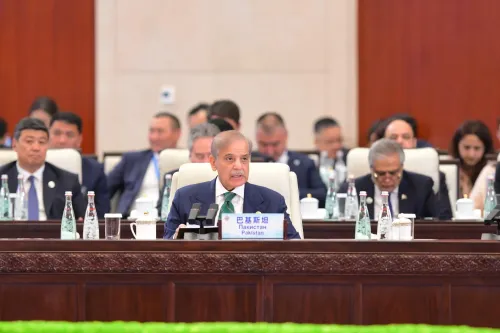
The initiative was announced during a visit to Dhaka by Pakistan Deputy Prime Minister Ishaq Dar in August 2024. Dar unveiled the Knowledge Corridor as an educational cooperation framework designed to strengthen higher education links and people-to-people ties between Pakistan and Bangladesh. Under the programme, administered by Pakistan's Higher Education Commission (HEC), the Pakistan government reportedly committed to providing 500 fully funded scholarships to Bangladeshi students over five years.
What Students Were Actually Offered
The first batch of approximately 74 students began their studies at Pakistani universities in February 2025, according to the Daily Asian Age report by journalist Rafiqul Islam Pintu. A second phase of scholarships was subsequently announced in Dhaka in May 2025. However, after completing the selection process, students shortlisted for postgraduate programmes were informed that their awards would cover only tuition fees and dormitory charges — with no provision for monthly stipends, meals, transport, or other essential living expenses.
This stands in sharp contrast to the 'fully funded' label under which the scholarships were publicly promoted, and has led to widespread disillusionment. Despite clearing rigorous examination and selection processes, many students have decided to decline the awards rather than bear out-of-pocket costs in a foreign country.
Students Call It 'Deception'
One selected student, who requested anonymity, was quoted by the Daily Asian Age as saying: 'On behalf of Bangladeshi applicants for Pakistan's fully funded master's scholarships, I would like to bring an important issue to your attention. This is a form of deception: saying one thing and doing another. It is deceiving hundreds of students and jeopardising their futures.'
The sentiment is reportedly widespread among the second-phase cohort. Students argue that the gap between what was promised publicly and what the official offer letters state amounts to a fundamental breach of trust, one that carries practical consequences — particularly for students from lower-income families who made educational decisions premised on full financial support.
Broader Context: Bangladesh-Pakistan Ties
The Knowledge Corridor was positioned as a flagship people-to-people initiative at a time when Pakistan and Bangladesh have been cautiously rebuilding diplomatic and trade ties. Educational diplomacy, historically a soft-power tool, carries symbolic weight in this bilateral relationship. The scholarship controversy, if unaddressed, risks undermining the goodwill the programme was intended to generate. Notably, neither Pakistan's HEC nor the Pakistani government has publicly responded to the allegations at the time of reporting.
What Happens Next
It remains unclear whether Pakistan's authorities will revise the scholarship terms or issue a clarification addressing the gap between the announced benefits and those reflected in the offer letters. Student advocates are reportedly pushing for official intervention, and the issue has drawn attention in Bangladeshi civil society and media circles. How Pakistan's HEC responds in the coming weeks will determine whether the Knowledge Corridor retains any traction among Bangladeshi applicants.
Point of View
High-optics gesture at a moment when Pakistan was keen to rebuild its standing in Dhaka. The problem is that 'fully funded' is not a vague aspiration; it is a specific, enforceable commitment to prospective students who made career decisions on its basis. Packaging tuition-plus-dorm as 'full funding' while excluding liveable expenses is a material misrepresentation — and the fact that no official rebuttal has emerged suggests the gap in benefits is real. Pakistan's soft-power calculus here is self-defeating: the negative word-of-mouth from rejected scholars will outlast any diplomatic press release. If Islamabad is serious about the bilateral relationship, it needs to either fund the scholarships properly or withdraw the 'fully funded' label before the third phase launches.
NationPress
18 Sept 2026
Frequently Asked Questions
What is Pakistan's Knowledge Corridor scholarship programme?
The Knowledge Corridor is an educational cooperation initiative announced by Pakistan Deputy Prime Minister Ishaq Dar during his visit to Dhaka in August 2024. Under the programme, administered by Pakistan's Higher Education Commission (HEC), Pakistan committed to providing 500 fully funded scholarships to Bangladeshi students over five years for postgraduate studies at Pakistani universities.
Why are Bangladeshi students disappointed with the scholarships?
Students selected under the second phase of the Knowledge Corridor allege that their official offer letters cover only tuition fees and dormitory accommodation, not meals, transport, airfare, or monthly allowances — despite the scholarships being publicly advertised as 'fully funded'. Many have declined the offer, describing the situation as deceptive.
How many students have been selected under the Knowledge Corridor so far?
The first batch of approximately 74 students began studying in Pakistani universities in February 2025. A second round of scholarships was subsequently announced in Dhaka in May 2025, with a broader target of 500 scholarships over five years.
Has Pakistan's government responded to the allegations?
As of the time of reporting, neither Pakistan's Higher Education Commission nor the Pakistani government has issued a public response addressing the discrepancy between the promised scholarship benefits and what the offer letters reflect.
What is the significance of this controversy for Bangladesh-Pakistan relations?
The Knowledge Corridor was a flagship people-to-people gesture intended to strengthen diplomatic and educational ties between Bangladesh and Pakistan. The scholarship controversy risks undermining the goodwill the programme was meant to generate, particularly if Pakistani authorities do not address the funding gap before the next phase of scholarships is launched.