CPEC at crossroads: Why China's $62 billion Pakistan corridor has stalled
Synopsis
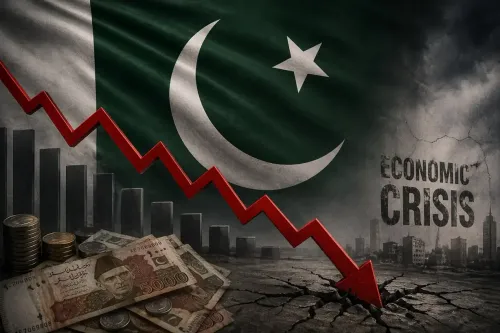
A decade after it was billed as Pakistan's economic game-changer, CPEC has delivered incomplete infrastructure, a $7 billion-plus power-sector debt overhang, a dormant Gwadar port, and a worsening security crisis in Balochistan. The 'CPEC 2.0' label, according to a new report, is less a relaunch than a face-saving exercise for a flagship Belt and Road project that has underdelivered on nearly every original promise.
Key Takeaways
CPEC , valued at approximately $62 billion , has failed to deliver industrial transformation or export growth for Pakistan , according to a European Times report.
Unpaid dues to Chinese independent power producers alone reportedly crossed $7 billion by 2025 , deepening Pakistan's circular debt crisis.
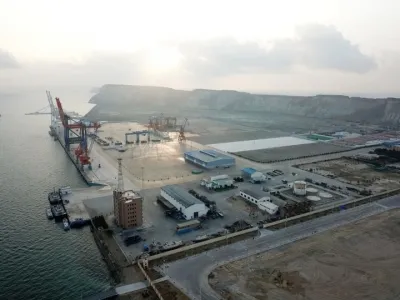
Gwadar port has not emerged as the major commercial hub originally envisioned, with the city remaining largely underdeveloped.
Security conditions in Balochistan have deteriorated, with Chinese workers increasingly targeted by militant groups.
The 'CPEC 2.0' rebranding is described in the report as a political salvage attempt rather than a genuine strategic renewal.
The China-Pakistan Economic Corridor (CPEC), a flagship project of Beijing's Belt and Road Initiative (BRI) valued at approximately $62 billion, has failed to deliver on its foundational promises — leaving behind what a European Times report describes as 'a heavily securitised network of incomplete infrastructure, mounting debt obligations, stalled industrial zones, and growing frustration on both sides.' A decade after it was positioned as a transformative force for Pakistan's economy, the corridor finds itself mired in financial strain, security deterioration, and structural underperformance.
A Model Flawed from the Start
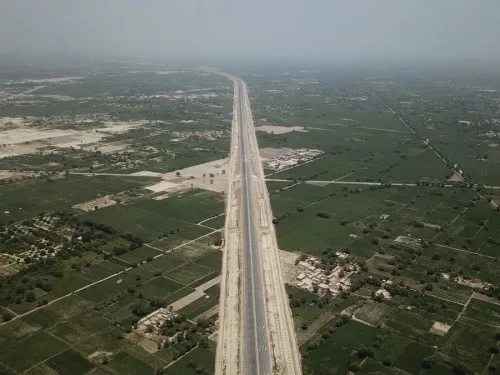
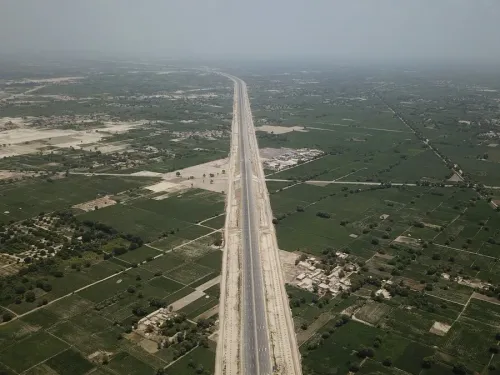
The original CPEC framework spanned highways, power plants, rail infrastructure, port development, and special economic zones spread across Pakistan. Beijing had projected Gwadar as a future commercial hub rivalling Dubai or Singapore, linking western China to the Arabian Sea. According to the report, the model was structurally compromised from its inception — it prioritised visible infrastructure over long-term economic sustainability.
Pakistan absorbed large-scale Chinese financing and construction capacity without cultivating the industrial ecosystem required to generate durable economic returns. Roads and ports, the report observes, do not independently create growth unless anchored to productive industries, stable exports, and functioning governance structures.
The Debt Spiral and Power Sector Crisis
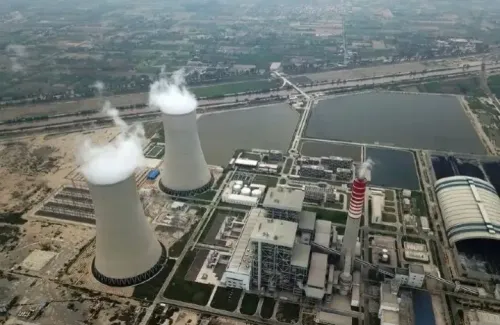
Several Chinese-backed coal and power projects were executed under agreements that guaranteed high returns to Chinese firms in US dollars. As Pakistan's currency depreciated and its broader economic crisis deepened, these commitments became increasingly burdensome. By 2025, Pakistan's circular debt crisis had reportedly left billions in unpaid dues owed to Chinese power producers, with estimates linked to Chinese independent power producers alone crossing $7 billion.
Rather than resolving structural weaknesses in Pakistan's power sector, CPEC reportedly added another layer of financial liability onto an already fragile system. Pakistan's recurring balance-of-payments crises, repeated negotiations with the International Monetary Fund (IMF), and persistent foreign exchange shortages exposed the corridor model's core vulnerability: Chinese loans and investments built infrastructure, but did not generate the export competitiveness required to sustain repayment obligations.
Gwadar's Unfulfilled Promise
The port city of Gwadar — once envisioned as the centrepiece of CPEC's commercial ambitions — has failed to emerge as a major trade hub. The original plans projected it as a gateway linking Central Asia and western China to global shipping lanes. Instead, the port remains significantly underutilised, and the surrounding region has seen limited industrial or economic uplift, according to the report.
Security Deterioration in Balochistan
The security situation surrounding CPEC has deteriorated sharply. Chinese engineers and workers have increasingly become targets of militant attacks, particularly in Balochistan, where insurgent groups reportedly view the corridor as a form of external extraction imposed on local populations without meaningful economic inclusion. This has raised operational costs, slowed project timelines, and strained the bilateral relationship at the ground level.
CPEC 2.0: Rebranding or Revival?
The current push to relaunch the initiative under the banner of 'CPEC 2.0' is, according to the report, less a sign of genuine renewal and more an attempt to politically salvage a project that has fallen short of its own strategic and economic benchmarks. Notably, this rebranding arrives at a moment when both sides are grappling with the gap between the corridor's original ambitions and its on-ground reality. Whether a second phase can correct the structural deficits of the first remains an open question, with the burden of proof now firmly on the project's architects.
Point of View
Institutional capacity, or export base to absorb dollar-denominated debt at scale. The Gwadar fiasco is particularly telling: port cities do not become Singapores by decree; they require hinterland industry, rule of law, and trade volume. What CPEC delivered instead was leverage — for China over Pakistan's energy sector, and for Baloch insurgents over Chinese workers. The 'CPEC 2.0' framing should be scrutinised carefully: if the first phase's core design flaws — guaranteed dollar returns, no local value-chain integration, no security compact with affected communities — remain unaddressed, a relaunch is simply a replication of the original risk at higher cost.
NationPress
15 Oct 2026
Frequently Asked Questions
Why has CPEC failed to deliver on its promises?
CPEC prioritised large-scale visible infrastructure over long-term economic sustainability, according to the report. Pakistan absorbed Chinese financing and construction capacity without building the industrial ecosystem needed to generate durable returns — roads and ports alone do not create growth without productive industries, stable exports, and functioning governance.
How much debt has CPEC created for Pakistan?
Estimates linked to Chinese independent power producers alone crossed $7 billion in unpaid dues by 2025. Several power projects were structured with guaranteed dollar returns to Chinese firms, which became increasingly costly as Pakistan's currency weakened and its economic crisis deepened.
What happened to Gwadar's ambitions as a major port city?
Gwadar was originally projected to become a commercial hub rivalling Dubai or Singapore, linking western China to the Arabian Sea. It has instead remained significantly underutilised and underdeveloped, failing to attract the trade volumes or industrial investment the original plans envisaged.
What is the security situation around CPEC?
Security has deteriorated sharply, particularly in Balochistan, where insurgent groups have increasingly targeted Chinese engineers and workers. These groups reportedly view the corridor as external extraction imposed on local populations without meaningful economic inclusion.
What is CPEC 2.0 and does it address earlier failures?
CPEC 2.0 is the rebranded second phase of the corridor initiative. According to the report, it is less a genuine renewal and more a political attempt to salvage a project that has fallen short of its strategic and economic benchmarks, with the structural flaws of the first phase yet to be credibly addressed.