CPEC deepening Pakistan's Chinese debt trap as poverty, joblessness rise
Synopsis
CPEC was sold as Pakistan's economic lifeline — but a Modern Diplomacy analysis argues it is doing the opposite: locking Islamabad into opaque debt obligations, handing Beijing operational control over critical infrastructure, and constraining Pakistan's foreign policy at the worst possible moment. With 9,504 MW of costly power and a $6.7–7 billion railway with no revenue model, the corridor's promise and its reality are diverging sharply.
Key Takeaways
The China–Pakistan Economic Corridor (CPEC) has grown Pakistan's external debt substantially, with concerns over hidden loan clauses and insufficient project revenues, according to Modern Diplomacy .
Chinese investment has added 9,504 MW of power capacity, but at tariffs straining Pakistani consumers and government finances; the IMF has repeatedly questioned their financial viability.
The Main Line-1 Railway Upgrade , estimated at $6.7–7 billion , lacks a clear revenue model — Pakistan's railways have historically never been profitable.
Chinese firms dominate CPEC implementation, procurement, and hold operational control over ports, energy plants, and transport networks, creating structural dependency.
CPEC's deepening ties with China are reportedly constraining Pakistan's ability to pursue an independent foreign policy as it tries to balance relations with the US and Russia .
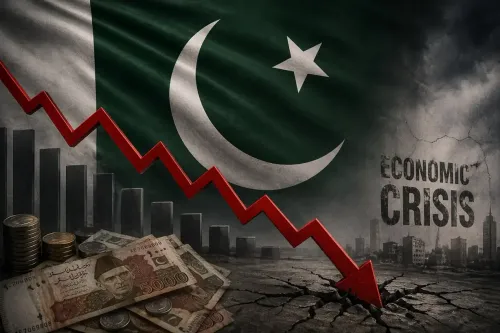
The China–Pakistan Economic Corridor (CPEC) — long promoted as a transformative infrastructure programme to accelerate Pakistan's economic development — is instead pulling the country deeper into a Chinese debt trap, with poverty and unemployment continuing to climb even as Beijing's financial footprint expands, according to an analysis published in Modern Diplomacy.
The Debt Burden at the Core
The article argues that CPEC's most consequential impact is not the infrastructure it has delivered, but the debt obligations it has generated. Pakistan's external debt has grown substantially over the CPEC period, with persistent concerns over the true cost of capital, opaque clauses embedded in loan agreements, and whether completed projects generate sufficient revenue to service accumulated liabilities.
'The most fundamental concern surrounding CPEC is not the infrastructure it delivers but the debt obligations it creates,' the Modern Diplomacy article noted. 'Concerns persist regarding the true cost of capital, hidden clauses in loan agreements, and the adequacy of revenue generation from completed projects to service accumulated debt.'
Energy Projects: Capacity Without Viability
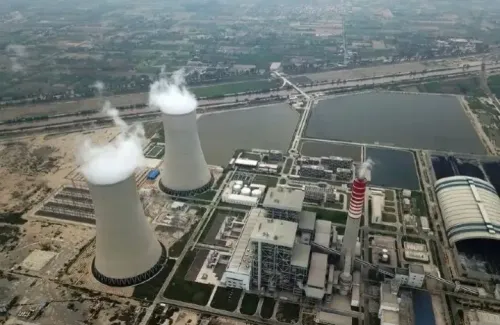
Although Chinese investment has added 9,504 MW of power capacity in Pakistan, the article highlights that these projects operate at elevated costs and generate electricity at tariffs that are straining both Pakistani consumers and government finances. The International Monetary Fund (IMF) has repeatedly flagged concerns about the financial viability of these energy installations, questioning whether returns justify their capital outlays.
This comes amid Pakistan's broader fiscal crisis, where energy-sector circular debt has become one of the most destabilising forces on the national balance sheet.
Main Line-1 Railway: A Debt Trap in Motion
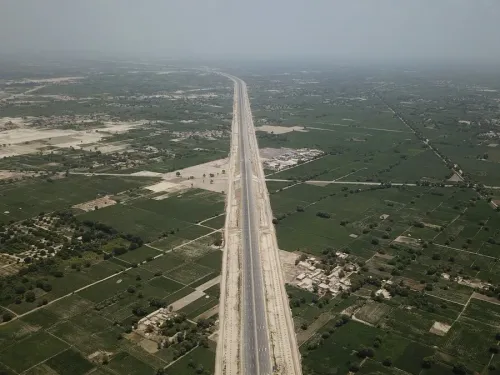
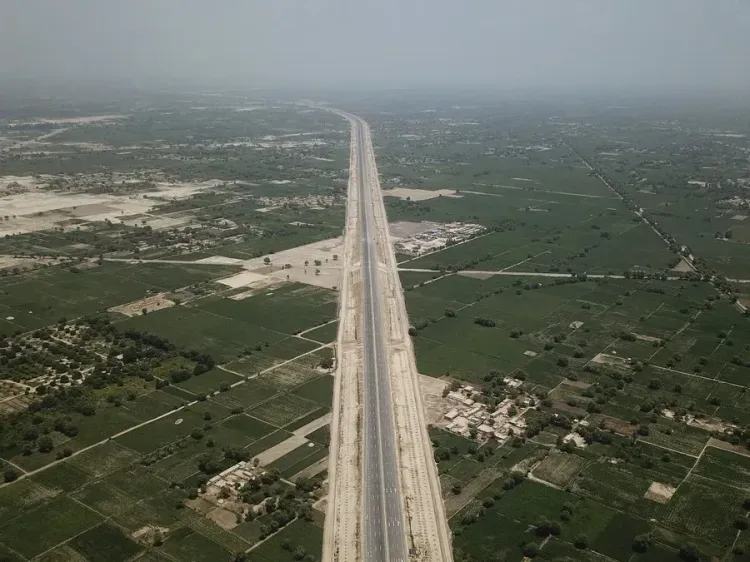
The Main Line-1 (ML-1) Railway Upgrade, estimated at $6.7–7 billion, presents a similar risk. Pakistan's railway network has historically never been profitable — train fares are subsidised to keep them accessible for low-income commuters. Without a fundamental overhaul of tariff structures and operational efficiency, the article warns, ML-1 risks becoming a capital-intensive project incapable of generating revenue streams sufficient to meet its debt obligations.
Strategic Leverage and Policy Autonomy
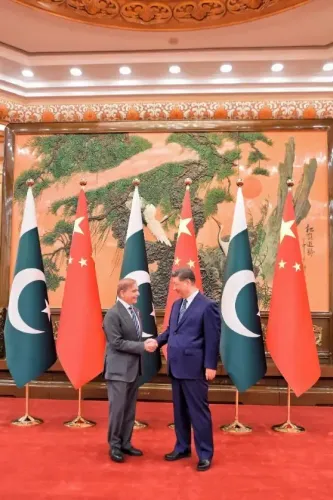
Beyond finances, the article identifies a critical geopolitical dimension: the structural dependency CPEC creates gives China asymmetric strategic leverage over Islamabad. Chinese firms dominate CPEC project implementation, procurement, technology supply, and exercise operational control over key infrastructure — including ports, energy installations, and transport networks.
'As China's investments deepen and Pakistan's dependence on Chinese capital grows, questions emerge regarding the degree to which this economic interdependence constrains Pakistani policy autonomy,' the article observed.
Notably, this dependency is deepening at a moment when Pakistan is simultaneously attempting to balance diplomatic relationships with both the United States and Russia. When Chinese and American interests diverge, Islamabad's capacity to pursue a genuinely independent foreign policy is increasingly constrained, the analysis argues.
What Comes Next
With the IMF continuing to scrutinise Pakistan's debt sustainability and CPEC projects failing to generate the promised economic dividends, pressure is mounting on Islamabad to renegotiate terms with Beijing — a politically and diplomatically fraught prospect. The trajectory of CPEC's next phase will be a key test of whether Pakistan can reclaim fiscal and strategic agency, or whether the corridor's structural dependencies deepen further.
Point of View
But the Modern Diplomacy analysis adds granularity that mainstream coverage often skips: the problem is not merely the quantum of debt but its architecture — opaque terms, Chinese operational control over finished assets, and projects structured without credible revenue models. Pakistan's ML-1 dilemma is particularly telling: a country that has never run a profitable railway is taking on billions in loans to upgrade it, with fares too politically sensitive to raise. The IMF's repeated flagging of energy-project viability has gone largely unaddressed. What makes this moment distinct is the geopolitical compression — Islamabad is trying to hedge between Washington and Beijing while structurally dependent on the latter. That is not a balance; it is a constraint dressed as a strategy.
NationPress
18 Sept 2026
Frequently Asked Questions
What is the CPEC debt trap and why is it a concern for Pakistan?
The CPEC debt trap refers to the growing concern that Pakistan's participation in the China–Pakistan Economic Corridor has generated debt obligations — through opaque loan terms and projects with insufficient revenue — that outweigh the economic benefits delivered. Pakistan's external debt has grown substantially during the CPEC period, with the IMF repeatedly questioning the financial viability of key energy and infrastructure projects.
How much power capacity has CPEC added in Pakistan, and what is the problem?
CPEC-backed Chinese investment has added 9,504 MW of power capacity in Pakistan. However, these projects operate at elevated costs and generate electricity at tariffs that are straining both consumers and government finances, according to the Modern Diplomacy analysis. The IMF has questioned whether the returns justify the capital invested.
What is the Main Line-1 Railway Upgrade and why is it financially risky?
The Main Line-1 (ML-1) Railway Upgrade is a major rail infrastructure project estimated at $6.7–7 billion. Pakistan's railway network has historically never been profitable, as fares are subsidised for affordability. Without restructuring tariff policy and operational efficiency, analysts warn ML-1 could become a capital-intensive liability unable to service its own debt.
How does CPEC affect Pakistan's foreign policy independence?
CPEC creates what analysts describe as strategic leverage asymmetry — as Pakistan's dependence on Chinese capital deepens, its ability to take positions independent of Beijing's interests is reportedly constrained. This is particularly significant as Pakistan simultaneously tries to balance diplomatic relationships with the United States and Russia.
Which international body has raised concerns about CPEC's financial viability?
The International Monetary Fund (IMF) has repeatedly raised concerns about the financial viability of CPEC energy projects, questioning whether they generate sufficient returns to justify their capital costs. The IMF has also flagged Pakistan's broader debt sustainability in the context of CPEC obligations.