CPEC's $62 billion bet: Why Pakistan failed to turn infrastructure into growth
Synopsis
A new analysis finds that CPEC's near-$62 billion investment built roads and power plants — but Pakistan never built the institutions to make them work. Soaring electricity tariffs, mounting circular debt, and an idle Gwadar Port reveal a corridor that modernised infrastructure without transforming the economy, leaving Pakistan less competitive than Bangladesh and Vietnam.
Key Takeaways
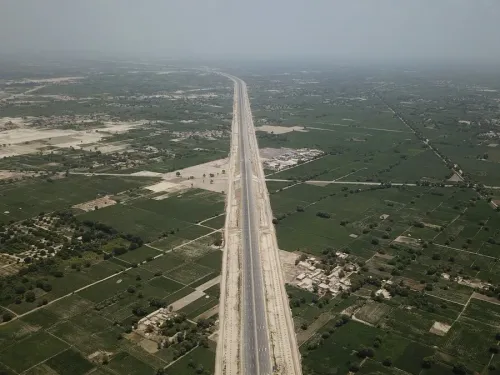
CPEC brought nearly $62 billion in investment into Pakistan , funding roads, power plants, and Gwadar Port .
A new analysis argues the core failure was not lack of investment but shortcomings in planning, policy, and institutional development .
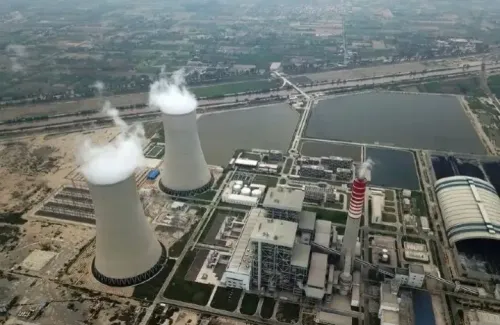
Pakistan's power sector expanded generation capacity but neglected transmission, distribution, and market reforms, resulting in high tariffs and worsening circular debt .
Reliance on imported coal for CPEC power projects created long-term foreign exchange exposure and structurally higher electricity costs.
High energy costs have eroded Pakistan's manufacturing competitiveness relative to Bangladesh , Vietnam , India , Indonesia , and China .
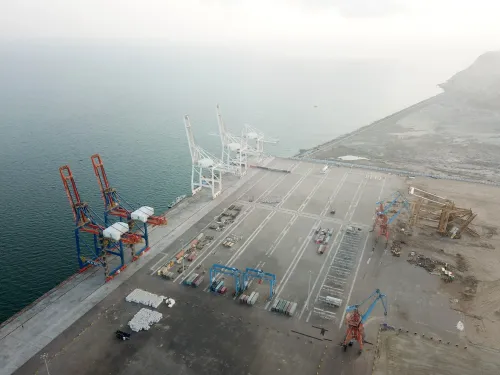
Gwadar Port remains underutilised as supporting industries, skilled labour, and enabling regulations failed to develop alongside the infrastructure.
Pakistan's failure to convert the China-Pakistan Economic Corridor (CPEC)'s near-$62 billion investment into sustained industrial growth and economic competitiveness has emerged as the corridor's most significant shortcoming, according to a new analysis cited by Business Recorder. The report, released in July 2025, argues that neither the project's defenders nor its critics have identified the real problem.
The Polarised Debate Misses the Point
The analysis notes that commentary on CPEC has split into two entrenched camps — one crediting the corridor with modernising Pakistan's infrastructure, the other holding it responsible for the country's deepening economic difficulties. Both narratives, the report contends, sidestep the central failure: Pakistan's inability to develop the complementary policies and institutions needed to extract maximum benefit from the investment.
The problem, according to the analysis, was not a shortage of capital. It was a deficit in planning and execution.
Power Sector: A Cautionary Tale
The electricity sector is cited as the starkest illustration of this gap. Pakistan rapidly scaled up generation capacity to tackle chronic power shortages — a headline achievement of CPEC. However, reforms in transmission infrastructure, distribution networks, loss reduction, and electricity market development failed to keep pace with that expansion.
The consequence is that consumers now bear capacity payments for power that often goes unused, pushing up tariffs and deepening the country's circular debt crisis. The report also questions the strategic decision to rely on imported coal for several CPEC power projects, arguing it locked Pakistan into long-term exposure to foreign exchange volatility and structurally elevated electricity costs through fuel import and transportation expenses.
Manufacturing Competitiveness Eroded
High electricity tariffs have had a direct knock-on effect on industrial competitiveness. Energy-intensive sectors in Pakistan are now at a measurable disadvantage compared with manufacturers in Bangladesh, Vietnam, India, Indonesia, and China itself. Rather than serving as an enabler of industrialisation and export growth, the power sector has become a structural constraint on the broader economy, the analysis concludes.
Gwadar Port: Infrastructure Without an Ecosystem
Gwadar Port — envisioned as the centrepiece of an integrated industrial and logistics hub — presents a parallel story. The port's physical infrastructure was developed, but the surrounding ecosystem it required never materialised. Supporting industries, export-oriented manufacturing clusters, a skilled labour base, efficient regulatory frameworks, and reliable public services all lagged behind. The report underscores a broader principle: infrastructure alone cannot generate sustained economic activity without competitive industries and an enabling business environment.
What the Analysis Recommends
The report stops short of writing off CPEC entirely, but its diagnosis is clear — the corridor's returns will remain sub-optimal unless Pakistan addresses the institutional and policy gaps that have prevented investments from translating into industrial output. With CPEC's second phase reportedly under discussion, the pressure to course-correct is mounting. Whether Islamabad can build the enabling environment that the first phase lacked will likely determine the corridor's ultimate legacy.
Point of View
And no serious industrial policy would have made it. As CPEC's second phase is discussed, the harder question is whether Islamabad has the institutional capacity to do differently — and there is little evidence yet that it does.
NationPress
22 Oct 2026
Frequently Asked Questions
Why did CPEC fail to generate sustained economic growth in Pakistan?
According to a new analysis, CPEC failed not because of insufficient investment but because Pakistan did not develop the complementary policies and institutions needed to convert infrastructure into industrial output. Key gaps included power sector reform, an enabling business environment, and supporting industries around projects like Gwadar Port.
What went wrong with Pakistan's power sector under CPEC?
Pakistan expanded electricity generation capacity rapidly but neglected reforms in transmission, distribution, loss reduction, and market development. This left consumers paying capacity charges for underutilised power, driving up tariffs and deepening the country's circular debt crisis.
Why is Gwadar Port underutilised despite CPEC investment?
Gwadar Port was built as infrastructure but the surrounding industrial ecosystem — supporting industries, export manufacturing, skilled labour, and efficient regulations — never developed alongside it. The analysis argues that infrastructure alone cannot generate economic activity without competitive industries and an enabling business environment.
How has CPEC affected Pakistan's manufacturing competitiveness?
High electricity tariffs, partly a result of CPEC power sector mismanagement and reliance on imported coal, have made Pakistan's energy-intensive industries less competitive than counterparts in Bangladesh, Vietnam, India, Indonesia, and China, according to the analysis.
What does the analysis recommend for CPEC going forward?
The report does not dismiss CPEC outright but argues that returns will remain sub-optimal unless Pakistan addresses institutional and policy gaps. With a second phase reportedly under discussion, the analysis implies that building an enabling business and regulatory environment is a prerequisite for the corridor to deliver on its original promise.