Bangladesh excels at toppling dictators but fails to build democracy: Editor
Synopsis
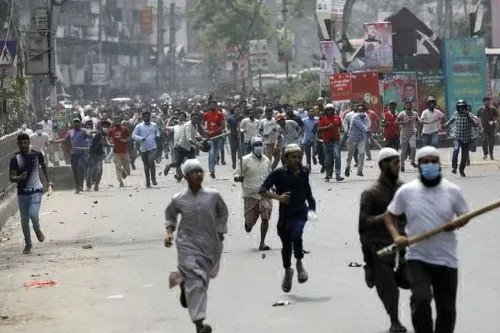
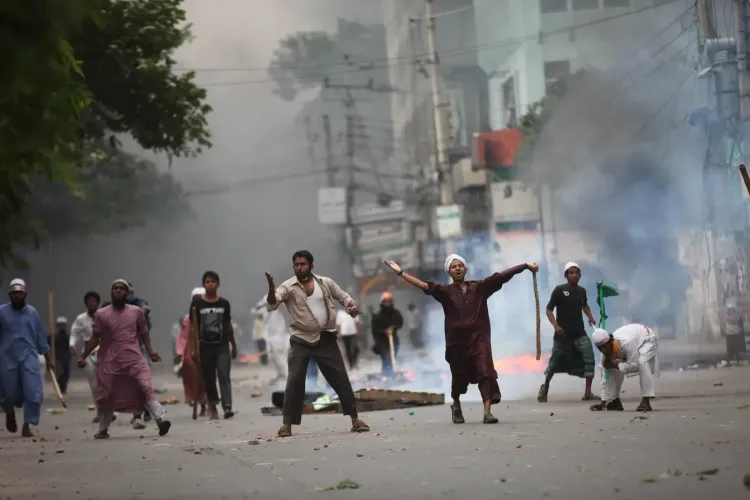
Bangladesh has toppled dictators — but never learned to replace them with durable democracy. The Daily Star's editor Mahfuz Anam told a Dhaka governance conference that over-politicisation has corroded every institution from police to the press, leaving the country trapped in a cycle of inspiring uprisings and sobering institutional collapse.
Key Takeaways
Mahfuz Anam , Editor of The Daily Star , delivered the diagnosis at the Bay of Bengal Conversation conference in Dhaka .
He argued Bangladesh is "so good at dismantling dictatorships" but "so bad at building democratic institutions." The fall of military ruler Hussain Muhammad Ershad and the return to democracy in 1991 raised hopes that were never consolidated.
Caretaker-administered elections were credible but the systems failed to endure, giving way to "conflicts, rivalries and destruction." Anam cited the near-total politicisation of the police, intelligence agencies, the Anti-Corruption Commission , and even journalism as the structural root cause.
Bangladesh, a nation forged through an uprising against Pakistani military rule, has repeatedly demonstrated the capacity to dismantle authoritarian regimes — yet has consistently struggled to construct lasting democratic institutions, according to Mahfuz Anam, Editor and Publisher of leading Bangladeshi daily The Daily Star.
A Pattern of Uprisings Without Institutional Follow-Through
Speaking at the Bay of Bengal Conversation conference organised by the Dhaka-based Centre for Governance Studies, Anam offered a candid diagnosis of his country's democratic deficit. "We are so good at dismantling dictatorships, but the tragic reality is that we are so bad at building democratic institutions," he said.
Anam observed that the very energy that unites a nation against a common authoritarian enemy dissipates — and turns inward — once the regime falls. "The very groups who worked together to dismantle the dictatorship then become each other's enemies," he noted. "We really don't know how to bring people together, with all their energy, all their innovation, all their resilience, and turn that resource into national strength."
The False Dawn of 1991
Anam pointed specifically to 1991 as a watershed moment that ultimately disappointed. The fall of military ruler Hussain Muhammad Ershad — the last in a line of strongmen — had rekindled hopes of a democratic rebirth. Bangladesh subsequently held several elections under caretaker administrations that were widely regarded as credible.
"We really hoped that this would be the rebirth of democracy in Bangladesh," Anam said. But those institutional arrangements were not consolidated. "Instead of institutionalising fair elections, we got more and more into conflicts, rivalries and then destruction," he added.
Over-Politicisation Corroding Every Institution
At the root of the crisis, Anam argued, lies a systemic failure: the near-total politicisation of public life. "We have over-politicised every institution imaginable," he said. "This over-politicisation has corroded the effectiveness of almost all our institutions."
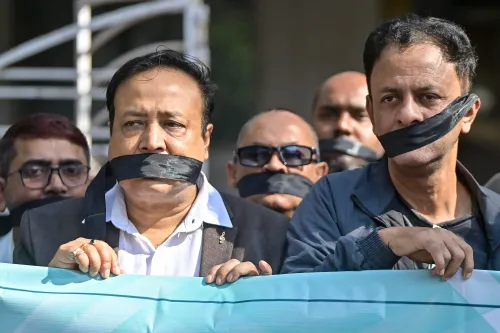
He catalogued a wide sweep of affected bodies — from the police, described as "a partisan extension of one's party muscle," to intelligence agencies deployed for political ends, to the Anti-Corruption Commission, which despite its constitutional mandate has been drawn into partisan battles. Even professions such as medicine and journalism have not been spared, he said, with political affiliation overriding the non-partisanship those fields depend on.
"In a profession where credibility is your lifeblood, how can you openly side with a political party and still expect that you will enjoy credibility?" Anam asked, in what appeared to be a direct address to fellow journalists.
Why the Diagnosis Matters Now
Anam's remarks come at a particularly sensitive juncture for Bangladesh. The country has seen cycles of political upheaval, military intervention, and contested elections — a pattern that continues to shape its institutional culture. Observers have long noted that the rivalry between the country's two dominant political dynasties has crowded out space for independent institutions to take root.
With Bangladesh navigating yet another transitional moment in its political history, the question of whether the country can break its cycle of collective action without consolidation remains as urgent as ever. How institutions are rebuilt — or whether they are rebuilt at all — will define the country's democratic trajectory in the years ahead.
Point of View
The absence of any norm against weaponising the state apparatus for partisan advantage. Until the two dominant political forces accept mutual constraints on institutional capture, each new democratic opening will likely reproduce the same arc: unity in uprising, fragmentation in governance.
NationPress
5 Oct 2026
Frequently Asked Questions
What did Mahfuz Anam say about Bangladesh's democracy at the Dhaka conference?
Mahfuz Anam, Editor of The Daily Star, said Bangladesh is skilled at dismantling dictatorships but consistently fails to build lasting democratic institutions. He made the remarks at the Bay of Bengal Conversation conference organised by the Centre for Governance Studies in Dhaka.
Why has Bangladesh struggled to build democratic institutions?
According to Anam, the core problem is the over-politicisation of every major institution — from the police and intelligence agencies to constitutional bodies like the Anti-Corruption Commission and even the media. He argued this partisan capture has corroded institutional effectiveness across the board.
What happened after the fall of Hussain Muhammad Ershad in Bangladesh?
The fall of military ruler Hussain Muhammad Ershad and the restoration of democracy in 1991 initially raised hopes of a democratic rebirth. Bangladesh held several credible elections under caretaker administrations, but those systems ultimately failed to endure, giving way to deepening political conflicts.
Who organised the conference where Anam spoke?
The Bay of Bengal Conversation conference was organised by the Centre for Governance Studies, a Dhaka-based think tank. Anam addressed the conference on 5 October 2026.
Is this a recurring pattern in Bangladesh's political history?
Yes. Anam noted that Bangladesh has repeatedly seen coalitions unite to topple authoritarian regimes, only to fracture once the common enemy is removed. Each cycle of uprising has failed to translate into durable institutional reform, a pattern stretching from independence through the Ershad era to more recent political crises.