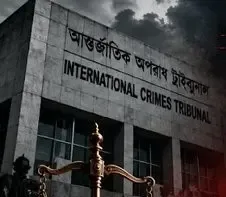
Bangladesh ICT accepts crimes against humanity charges against 8 over July 2024 protests
Synopsis
Bangladesh's International Crimes Tribunal has accepted crimes against humanity charges against eight people — including a prominent academic, a former university vice-chancellor, and a retired Supreme Court judge — over the July 2024 protests. An international rights body has condemned the proceedings as politically motivated, raising sharp questions about judicial independence and academic freedom.
Key Takeaways
Bangladesh's International Crimes Tribunal (ICT) accepted charges of crimes against humanity against eight individuals on 21 September 2026 .
The accused include academic Muhammed Zafar Iqbal , former Dhaka University VC ASM Maksud Kamal , and former Supreme Court judge AHM Shamsuddin Chowdhury Manik .
Arrest warrants were issued for five of the accused; the remaining three are already in custody and are to appear on 22 October .
Justice Makers Bangladesh in France (JMBF) condemned the probe as 'politically motivated and biased,' raising concerns about judicial independence.
JMBF called on the UN Human Rights Council , EU , and international community to monitor proceedings and ensure internationally compliant trials.
Bangladesh's International Crimes Tribunal (ICT) has formally accepted charges of crimes against humanity against eight individuals, including noted academic Muhammed Zafar Iqbal, former Dhaka University Vice-Chancellor ASM Maksud Kamal, and former Supreme Court judge AHM Shamsuddin Chowdhury Manik, in connection with the deadly July 2024 protests. The charges were taken on cognisance on Sunday, 21 September 2026 by a three-member bench led by Justice Md Golam Mortuza Mozumder, following their submission by the prosecution.
Key Developments in the Tribunal
The bench issued arrest warrants for five of the eight accused: Zafar Iqbal, Maksud Kamal, former Chhatra League President Saddam Hussain, then General Secretary Sheikh Wali Asif Enan, and then Dhaka University Chhatra League president Mazharul Kabir Shayan. The Chhatra League is the student wing of the Awami League.
The remaining three accused — former judge Manik, Dhaka University sociology teacher AKM Jamal Uddin, and former Dhaka University Chhatra League General Secretary Tanbir Hasan Shaikat — are already in custody. The tribunal directed authorities to produce them before the bench on 22 October, according to reports from The Daily Star.
International Rights Body Raises Alarm
A leading international human rights organisation, Justice Makers Bangladesh in France (JMBF), has strongly condemned the proceedings, alleging the investigation was conducted in a 'politically motivated and biased manner' without adherence to minimum standards of an independent, impartial, and internationally recognised process.
JMBF warned that initiating judicial proceedings on the basis of such a 'questionable investigation' raises serious concerns regarding the tribunal's independence, impartiality, and freedom from political influence. The rights body stated: 'Crimes against humanity are among the most serious crimes under international law. Turning such allegations into an instrument of political retaliation against political opponents, dissenting voices, academics, writers, teachers, or judges constitutes a grave abuse of justice.'
Concerns Over Academic Freedom
JMBF specifically cautioned that prosecuting university teachers and academics on the basis of their academic activities, professional roles, or public expressions — rather than specific criminal conduct — poses a 'grave risk to academic freedom and freedom of expression.' The organisation stressed that 'an individual's political ideology, statements, professional identity, or actual or perceived relationship with a previous government cannot substitute for individual criminal responsibility.'
The rights body called for specific conduct, criminal intent, and a legally established connection between each accused and the alleged crimes to be demonstrated through credible evidence, as required under international law.
International Community Called to Act
JMBF has urged the United Nations Human Rights Council, the UN High Commissioner for Human Rights, relevant Special Rapporteurs, the European Union, and the broader international community to closely monitor the proceedings and take necessary diplomatic measures to ensure trials are conducted impartially, transparently, and in accordance with international standards.
This development comes against the backdrop of Bangladesh's political transition following the ouster of former Prime Minister Sheikh Hasina in August 2024, with the ICT now taking up multiple cases linked to the events of that period. The next hearing is scheduled for 22 October, when the three individuals in custody are to be produced before the tribunal.
Point of View
Charges of crimes against humanity are being levelled against academics and a retired judge, not just politicians or security officials. This tests the limits of post-transition justice in Bangladesh — where the line between accountability and political score-settling is under international scrutiny. JMBF's intervention signals that international observers are not treating this as routine legal process. The real risk is that even if some of the accused bear genuine responsibility, the inclusion of academics on the basis of professional identity rather than demonstrated criminal conduct could delegitimise the entire tribunal in the eyes of the international community and set a dangerous precedent for judicial harassment of dissenting voices.
NationPress
21 Sept 2026
Frequently Asked Questions
What charges has Bangladesh's ICT accepted against the eight accused?
Bangladesh's International Crimes Tribunal has accepted charges of crimes against humanity against eight individuals in connection with the July 2024 protests. The charges were formally taken on cognisance on 21 September 2026 by a three-member bench.
Who are the prominent figures charged by the Bangladesh ICT?
The eight accused include academic Muhammed Zafar Iqbal, former Dhaka University Vice-Chancellor ASM Maksud Kamal, former Supreme Court judge AHM Shamsuddin Chowdhury Manik, and former Chhatra League office-bearers Saddam Hussain, Sheikh Wali Asif Enan, and Mazharul Kabir Shayan, among others.
What has Justice Makers Bangladesh in France said about the proceedings?
JMBF condemned the proceedings as based on a 'politically motivated and biased' investigation that did not meet minimum international standards. It warned that prosecuting academics for their professional activities or statements without specific criminal evidence constitutes a grave abuse of justice and poses risks to academic freedom.
When is the next hearing at the Bangladesh ICT?
The next significant hearing is scheduled for 22 October, when the three accused currently in custody — former judge Manik, teacher AKM Jamal Uddin, and former Chhatra League General Secretary Tanbir Hasan Shaikat — are to be produced before the tribunal.
Why are the Bangladesh ICT proceedings significant?
The case is significant because it involves charges of crimes against humanity — among the gravest under international law — being levelled against academics, a retired judge, and student leaders, not just political figures. International rights organisations and global bodies have been called upon to monitor the proceedings for compliance with fair trial standards.