Bangladesh law and order crisis: Mob attacks, 900+ river bodies, extortion surge
Synopsis
Bangladesh's law and order breakdown is now backed by hard numbers: over 900 bodies pulled from rivers in 20 months, 723 extortion complaints in Dhaka alone — and police data suggesting all of it is just the tip of the iceberg. With the ruling BNP accused of rewarding political arrests over public safety, the country's democratic aspirations look increasingly fragile.
Key Takeaways
River Police recovered more than 900 bodies from Bangladesh's waterways over the past 20 months , with the highest count near Dhaka , according to newspaper New Age .
723 extortion complaints were filed at police stations across Dhaka in the first eight months of 2026; 85% were found substantiated, per Bhorer Kagoj .
Hundreds of shrines and khanqahs (Sufi centres) have reportedly been vandalised amid a pattern of mob attacks followed by post-hoc justifications.
The Awami League has accused Home Minister Salahuddin Ahmed of prioritising political retaliation over public security under the BNP government.
Reports flag concerns over the Prevention of Forced Disappearances Act , the Human Rights Commission Act , and a draft cyber law as structurally inadequate.
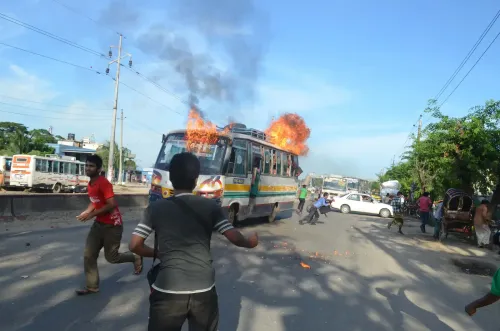
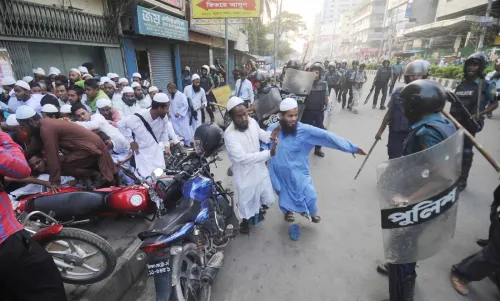
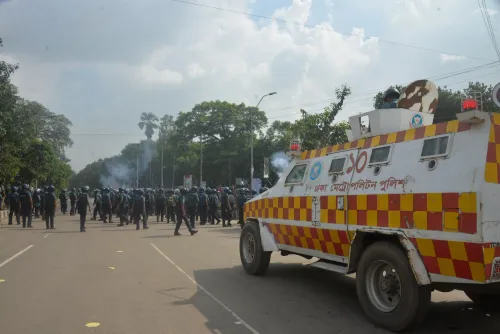
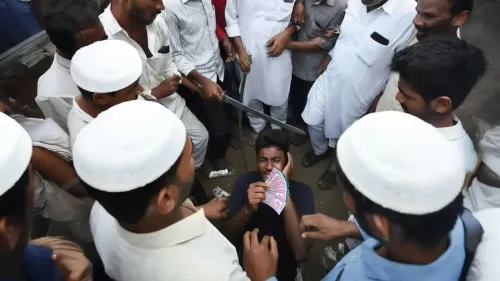
Bangladesh is grappling with a sharp deterioration in law and order, with mob attacks, vandalism, extortion, and unexplained deaths rising across the country, according to multiple reports citing data sourced directly from Bangladeshi police and local media. The findings, published on 3 October 2026, paint a picture of spreading anarchy that analysts warn could undermine the country's long-held aspirations for stability and prosperity.
Mob Violence and Vandalism on the Rise
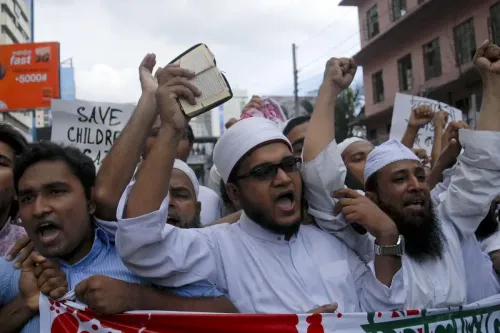
Reports from Bangladeshi daily Prothom Alo describe a pattern in which mob attacks are followed by a ready supply of justifications — a dynamic that observers say reflects deep societal decay. Hundreds of shrines and khanqahs (Sufi centres) have reportedly been broken, and even the studio of a prominent content creator was recently vandalised. According to the report, 'no shortage of voices' emerges to defend such acts after the fact, normalising a cycle of targeted violence.
Prothom Alo noted: 'The dream of seeing and building a prosperous Bangladesh is an old one. It is not just in speeches or literature; thousands of people have sacrificed their lives for this dream at various times... However, in the case of Bangladesh, that dream has repeatedly remained elusive.'
Alarming Data: Bodies, Extortion, and Unreported Crime
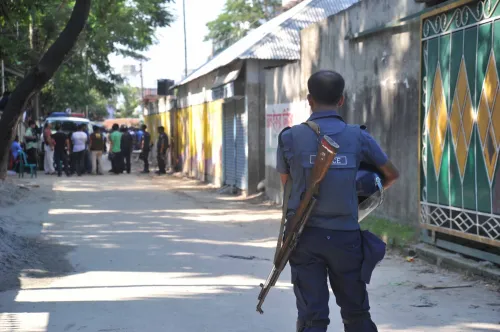
Bangladeshi newspaper New Age reported that the River Police recovered more than 900 bodies from rivers over the past 20 months, with the highest concentration found in waterways in the Dhaka region. Separately, Bengali-language daily Bhorer Kagoj documented 723 extortion complaints filed at police stations across the capital during the first eight months of this year, of which 85 per cent were found to be substantiated upon investigation.
Reports warn that these figures likely represent only a fraction of actual crimes, as many victims reportedly avoid filing complaints to sidestep further harassment. 'If this is the condition in the capital and its surroundings, what is happening in distant villages?' the Prothom Alo report questioned.
Structural Failures: Laws and Administration Under Scrutiny
Analysts cited in the report argue that after 2024, no political order in Bangladesh can sustain itself unless it delivers justice, ensures equitable distribution of resources, and undertakes genuine administrative reform. However, the report contends that existing political actors remain unwilling to pursue such changes. Concerns have been raised specifically about the Prevention of Forced Disappearances Act, the Human Rights Commission Act, structural changes within the RAB, and what the report describes as 'unclear and dangerous provisions' in a draft cyber law.
Awami League Accuses BNP Government of Prioritising Retaliation
Earlier this week, the Awami League alleged that the law and order situation has collapsed under the ruling Bangladesh Nationalist Party (BNP) government, citing records of murder, rape, mob killings, and enforced disappearances. The party directly accused Home Minister Salahuddin Ahmed of focusing on political retaliation rather than public safety, alleging that he had appeared on a public stage boasting about eliminating the Awami League and announcing rewards for political arrests.
'Maintaining law and order is the responsibility of the Home Ministry. When a minister, having failed to fulfil that responsibility, instead begins announcing rewards for political arrests, it becomes clear that, for this government, the safety and security of the people are not the priority. Political retaliation is,' the Awami League stated.
What Comes Next
With the country's legal and administrative framework under strain and political tensions running high, rights groups and civil society observers are calling for immediate reforms and independent oversight. Whether the ruling dispensation moves to address these demands — or doubles down on its current approach — will likely define Bangladesh's political trajectory in the months ahead.
Point of View
Hundreds of extortion cases, mob attacks on cultural and religious sites — are not just statistics; they are symptoms of a state that is losing its monopoly on legitimate force. What makes this more alarming is that the reported justification apparatus for mob violence suggests social norm erosion, not just institutional failure. The Awami League's allegations against Home Minister Salahuddin Ahmed, if substantiated, would represent a catastrophic failure of governance — a minister allegedly incentivising political violence while crime statistics worsen. Bangladesh's post-2024 political transition carries the risk of trading one form of authoritarian dysfunction for another, with civil society and the press bearing the cost.
NationPress
3 Oct 2026
Frequently Asked Questions
What is the current law and order situation in Bangladesh?
Bangladesh is experiencing a sharp rise in mob attacks, vandalism, extortion, and unexplained deaths, according to multiple reports citing Bangladeshi police data and local media. Over 900 bodies were recovered from rivers in 20 months, and 723 extortion complaints were filed in Dhaka alone in the first eight months of 2026.
How many bodies were found in Bangladesh's rivers?
According to Bangladeshi newspaper New Age, the River Police recovered more than 900 bodies from rivers over the past 20 months, with the highest concentration in waterways in the Dhaka region.
What has the Awami League alleged against the BNP government?
The Awami League has alleged that law and order has collapsed under the ruling BNP government, accusing Home Minister Salahuddin Ahmed of prioritising political retaliation over public safety. The party claims he publicly boasted about eliminating the Awami League and announced rewards for political arrests.
Why are reported crime figures considered an undercount in Bangladesh?
Reports suggest that many crime victims in Bangladesh avoid filing police complaints to sidestep further harassment, meaning official figures capture only a fraction of actual incidents. Analysts describe the available data as 'the tip of a terrifying iceberg.'
What legal and administrative reforms are being called for in Bangladesh?
Analysts and reports are calling for reforms to the Prevention of Forced Disappearances Act, the Human Rights Commission Act, and a draft cyber law, which have been criticised as structurally inadequate or potentially dangerous. Broader demands include equitable resource distribution and genuine administrative reform.