BYC leaders' sit-in at Quetta's Huda Jail enters sixth day over faceless trials
Synopsis
BYC leaders are staging a jail-based sit-in inside Quetta's Huda Jail for a sixth straight day, refusing to accept proceedings before a faceless court they call unconstitutional. With Mahrang Baloch detained for fourteen months and five women allegedly disappeared, the protest has expanded into a three-day online campaign — putting Pakistan's judicial practices in Balochistan under fresh scrutiny.
Key Takeaways
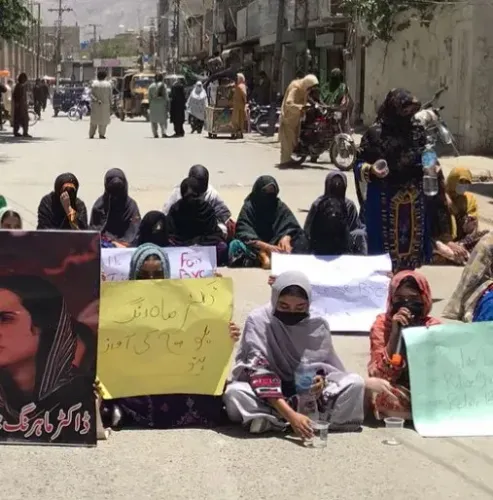
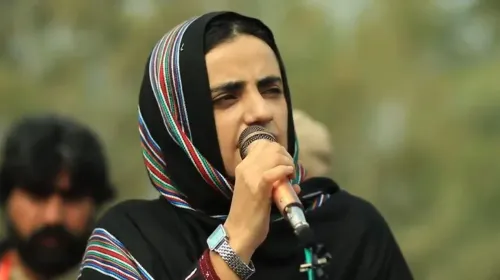
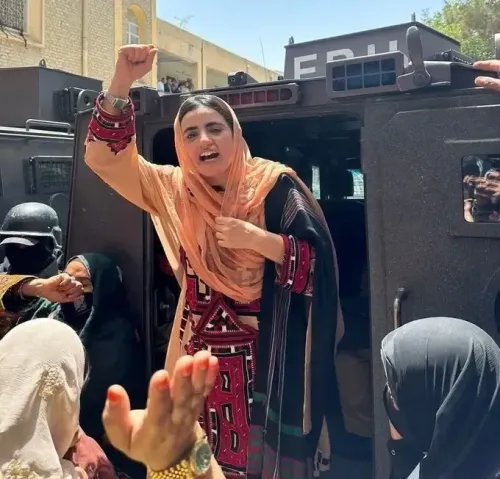
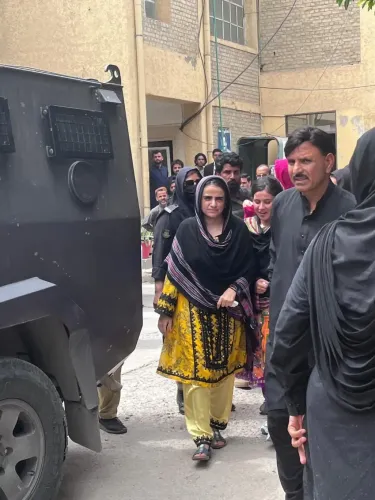
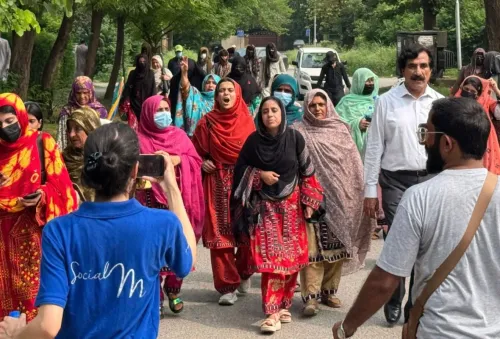
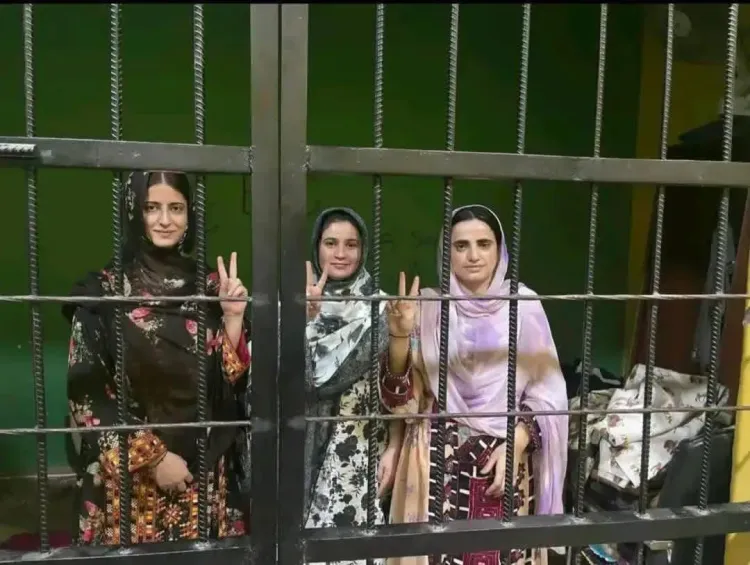
Baloch Yakjehti Committee (BYC) leaders' sit-in inside Huda Jail, Quetta entered its sixth consecutive day on 18 June .
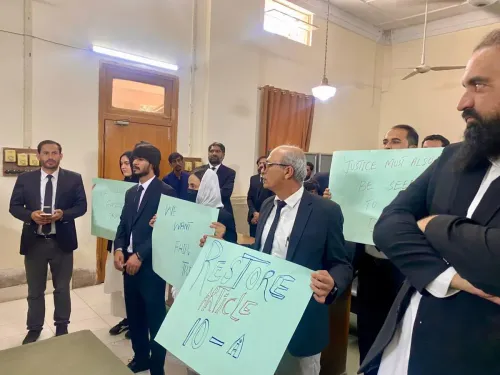
The protest targets 'faceless trials' and judicial proceedings the BYC calls 'unconstitutional and illegal.' A parallel three-day online protest has drawn participation from students, lawyers, and civil society across Balochistan.
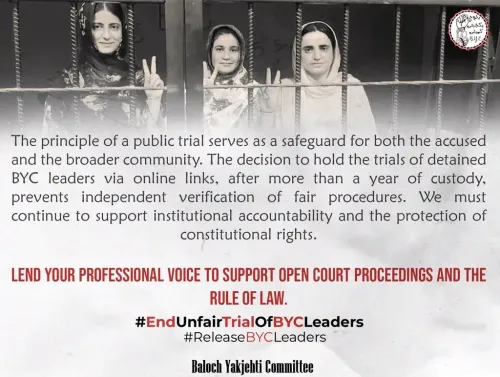
BYC leader Mahrang Baloch and other activists have reportedly been in detention for fourteen months on what the group calls 'baseless cases.' The BYC alleges five Baloch women have been forcibly disappeared, with no information on their condition.
The organisation accuses Pakistan's judiciary of operating under military directives and applying unequal legal standards.
Leaders of the Baloch Yakjehti Committee (BYC), a Balochistan-based human rights organisation, continued their sit-in protest inside Huda Jail in Quetta on Thursday, 18 June, marking the sixth consecutive day of demonstrations against what the group describes as 'unfair judicial proceedings and faceless trials.' The protest was triggered by the BYC's rejection of proceedings before a so-called faceless court, which the organisation has characterised as 'unconstitutional and illegal.'
How the Protest Unfolded
According to a statement shared by the BYC on social media platform X, the sit-in began five days prior when the organisation's leaders formally rejected a faceless court's decision and chose to protest from within the jail itself. Alongside the jail-based demonstration, the BYC declared a three-day online protest, which has drawn participation from individuals across various walks of life, including students, lawyers, and civil society members.
'Today, into its sixth day, the sit-in by BYC leaders inside Huda Jail against faceless trials continues,' the organisation stated, adding that the online campaign has amplified concerns about what it calls 'unconstitutional practices.'
BYC's Allegations Against Pakistan's Judicial System
The BYC has levelled serious allegations against Pakistan's judicial system, claiming it 'operates entirely through directives from the military establishment' and applies different legal standards to the elite class and ordinary citizens. The group contends that the Baloch people bear the heaviest burden under this system.
'In Pakistan, the judicial system is constantly being questioned, with claims that it has badly failed to meet legal requirements. Even at the international level, expressions of dissatisfaction are being voiced,' the BYC stated. It further alleged that daily occurrences in Balochistan include extrajudicial killings, enforced disappearances, violations of privacy, and unjust arrests.
Detained Leaders and Enforced Disappearances
The BYC specifically cited the arrest of its prominent leader Mahrang Baloch as an example of what it calls 'unjust arrests,' noting that she and other leaders have faced 'baseless cases' and have remained in detention for the past fourteen months. The organisation also alleged that five Baloch women have been forcibly disappeared, with no information available about their whereabouts or condition.
'The issue of forcibly disappeared persons in Balochistan has taken a serious turn, which is a clear violation of international and national constitutions and laws,' the BYC stated, adding that the 'illegal and unconstitutional abduction of Baloch youth, followed by dumping their bodies, has become a daily routine.'
Call to Action and Broader Context
The BYC has called upon the people of Balochistan, political activists, students, lawyers, intellectuals, and human rights defenders to continue raising their voices against faceless trials. The organisation warned that if the law itself becomes a tool of suppression, 'this system will become intolerable for any human being.'
The protest comes amid longstanding international scrutiny of human rights conditions in Balochistan, where enforced disappearances and allegations of extrajudicial action have drawn repeated criticism from rights groups. How Pakistani authorities respond to the escalating jail-based demonstration is expected to shape the BYC's next steps.
Point of View
Designed to deny authorities the optics of a dispersed street agitation. Faceless courts in Pakistan have existed in a legal grey zone for years, but their application to civilian activists in Balochistan marks a qualitative shift that international human rights bodies have flagged repeatedly. What mainstream coverage often misses is the compounding effect: with Mahrang Baloch detained for fourteen months and five women allegedly disappeared, the BYC is no longer just protesting a single trial — it is contesting the legitimacy of an entire judicial architecture. Whether Islamabad engages or doubles down will signal how it intends to manage Baloch dissent ahead of any future international rights reviews.
NationPress
19 Sept 2026
Frequently Asked Questions
What is the BYC sit-in protest in Quetta about?
The Baloch Yakjehti Committee (BYC) sit-in inside Huda Jail in Quetta is a protest against 'faceless trials' and what the group calls unconstitutional judicial proceedings. Leaders began the demonstration after rejecting a faceless court's decision, and the protest entered its sixth consecutive day on 18 June.
Who is Mahrang Baloch and why is she detained?
Mahrang Baloch is a prominent leader of the Baloch Yakjehti Committee (BYC). According to the BYC, she has been held in detention for fourteen months on what the organisation describes as 'baseless cases,' citing her arrest as a key example of unjust judicial action against Baloch activists.
What are faceless trials in Pakistan?
Faceless trials refer to judicial proceedings in which the identity of judges or court members is concealed from the accused and their legal representatives. The BYC and critics argue such trials violate basic principles of transparent justice and are unconstitutional under both national and international legal standards.
What has the BYC alleged about enforced disappearances in Balochistan?
The BYC has alleged that five Baloch women have been forcibly disappeared with no information on their whereabouts, and that the abduction of Baloch youth followed by the dumping of their bodies has become a routine occurrence. The organisation calls this a clear violation of national and international law.
What is the BYC calling for?
The BYC has called on the people of Balochistan, political activists, students, lawyers, and human rights defenders to continue raising their voices against faceless trials. It has also urged an end to extrajudicial killings, enforced disappearances, and what it describes as the military establishment's control over Pakistan's judiciary.