Balochistan lawyers protest 'faceless trials' of BYC leaders in Quetta
Synopsis
Lawyers in Quetta took their protest directly to the judges — walking out of the Sessions Court, the High Court, and the ATC to denounce 'faceless and opaque' trials of BYC leaders including Dr. Mahrang Baloch. The demonstration marks a rare moment of institutional pushback from within Pakistan's legal community against a trial format critics say is flatly unconstitutional.
Key Takeaways
Lawyers staged protests outside three courts in Quetta on 17 June against faceless trials of Baloch Yakjehti Committee (BYC) leaders.
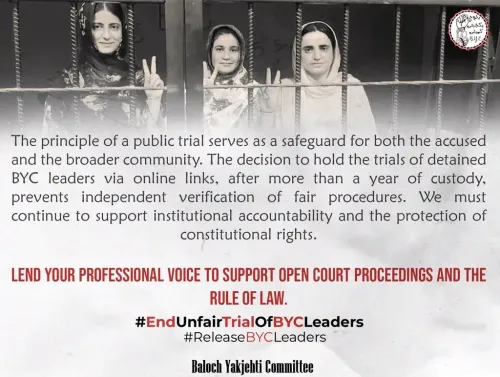
The BYC described the proceedings as a 'blatant violation' of constitutional fair-trial guarantees.
Lawyers demanded the immediate withdrawal of all notifications authorising faceless trial formats.
Nadia Baloch , sister of BYC chief organiser Dr.
Mahrang Baloch and a practising lawyer, led calls for open, constitutional hearings.
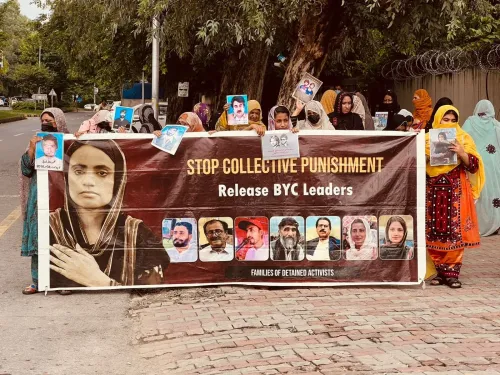
The BYC warned that unchecked erosion of fair-trial rights threatens every citizen in Pakistan, not just political activists.
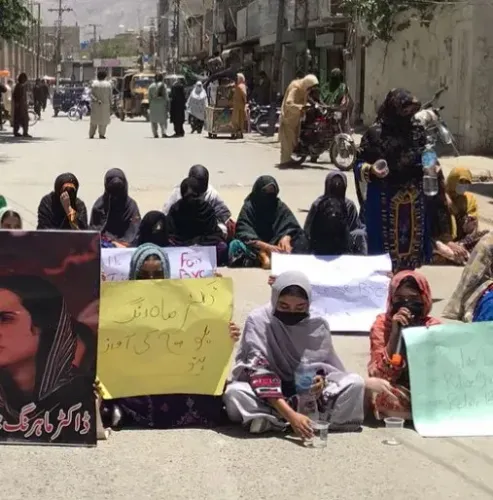
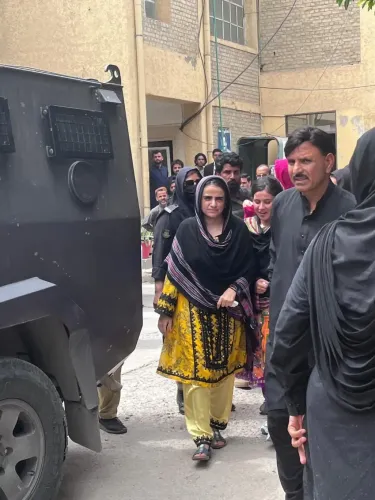
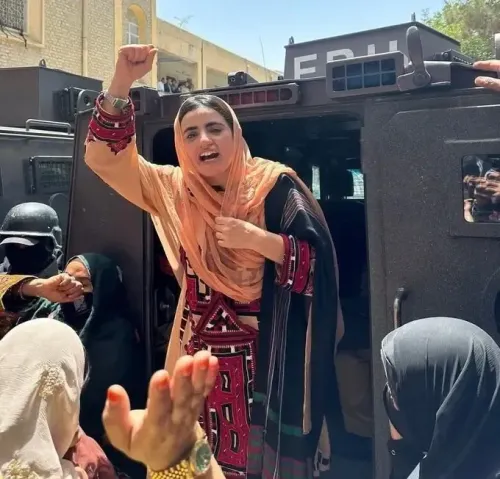
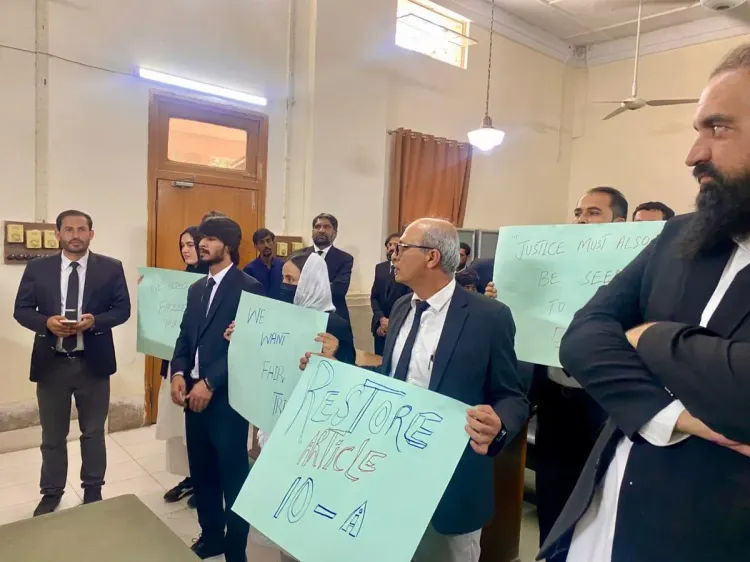
Lawyers across Balochistan staged coordinated protests outside the Sessions Court, the Balochistan High Court, and the Anti-Terrorism Court (ATC) in Quetta on Tuesday, 17 June, denouncing what they called 'faceless and opaque' judicial proceedings against leaders and activists of the Baloch Yakjehti Committee (BYC). The demonstrators argued that the ongoing trials violate fundamental constitutional guarantees of fair and transparent justice.
What the Lawyers Alleged
According to the BYC, the protesting lawyers expressed their objections directly to the presiding judges, categorically rejecting the format of the proceedings. They described the trials as 'a blatant violation of the fundamental principles of justice, the constitution, and fair trials,' the BYC stated in a release.
The lawyers demanded the immediate withdrawal of all notifications authorising the faceless trial proceedings against BYC leaders, insisting that all hearings be conducted in a 'transparent, public, and constitutionally compliant manner.'
BYC's Broader Warning
The BYC framed the controversy as extending well beyond its own leadership. 'This is not merely a matter of cases involving a few political prisoners but a question of the entire judicial system, civil liberties, and the supremacy of law in Pakistan,' the organisation stated. It warned that silence in the face of such proceedings would leave every citizen vulnerable to similar treatment in the future.
Nadia Baloch Speaks Out
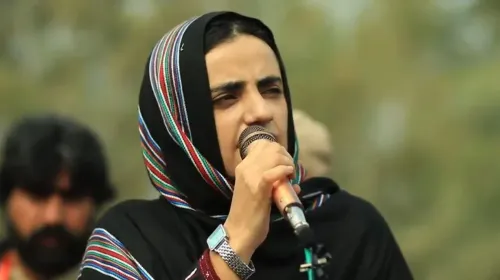
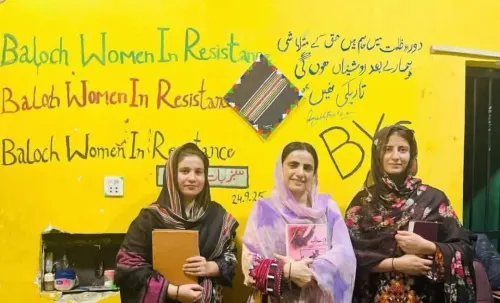
Nadia Baloch, a lawyer and sister of BYC chief organiser Dr. Mahrang Baloch, was among the prominent voices at the protests. She criticised the proceedings as unconstitutional, saying they lack transparency and erode public confidence in the judiciary.
'Today, I, with my fellow lawyers, organized a protest at Sessions Court Quetta, Quetta Kacheri, and Anti-Terrorism Court (ATC) Quetta against the faceless trials being held against the members of the Baloch Yakjehti Committee, including my sister Dr. Mahrang Baloch. I am a lawyer, and I can't be silent when the fundamental rule of justice is being violated,' Nadia Baloch wrote in a post on X.
She called on the broader legal fraternity, human rights activists, and civil society across Pakistan to unite against what she termed a 'perilous trend.' 'We reject the faceless and non-transparent trials, and we demand that open, fair, and constitutional trials be restored immediately,' she added.
Context and Stakes
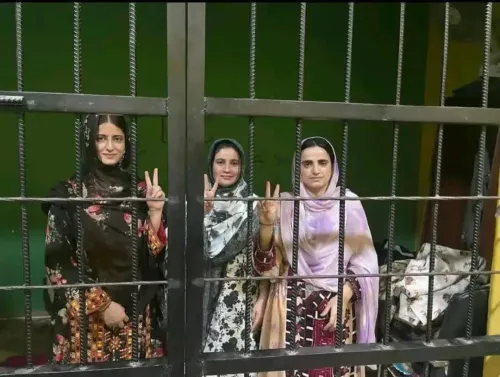
The BYC has been at the centre of sustained civil activism in Balochistan, with Dr. Mahrang Baloch emerging as one of its most prominent faces. Critics and human rights observers have repeatedly raised concerns about the use of anti-terrorism legislation to prosecute political activists in the province. The use of 'faceless trial' mechanisms — in which the identities of judges or certain proceedings are concealed — has drawn scrutiny from legal experts who argue such formats are incompatible with Pakistan's constitutional framework. This protest marks one of the more visible collective actions by the legal community in Quetta in recent months, signalling growing institutional disquiet over how these cases are being handled.
What Comes Next
No official response from the Balochistan government or the judiciary had been issued at the time of reporting. Legal observers say the pressure from the bar could prompt a formal review of the trial format, though outcomes remain uncertain. The BYC has indicated it will continue to mobilise support until the proceedings are shifted to open court.
Point of View
Typically justified on security grounds, carry a structural contradiction: they ask the public to trust a system it cannot see. In Balochistan — where enforced disappearances and anti-terror statutes have long been used against political voices — that contradiction is especially sharp. The legal community's visible dissent raises the stakes: if the bar itself withdraws legitimacy from a trial format, the judiciary faces a credibility problem that no verdict can easily resolve.
NationPress
16 Sept 2026
Frequently Asked Questions
What are 'faceless trials' and why are lawyers in Quetta opposing them?
Faceless trials are judicial proceedings in which certain details — such as the identities of judges or the specifics of hearings — are concealed from the public and, in some cases, from the accused. Lawyers in Quetta argue that applying this format to the cases of Baloch Yakjehti Committee (BYC) leaders violates Pakistan's constitutional guarantees of fair and transparent trials, and have demanded the proceedings be moved to open court.
Who are the BYC leaders being tried?
The Baloch Yakjehti Committee (BYC) is a civil activist organisation in Balochistan. Its chief organiser, Dr. Mahrang Baloch, is among those facing proceedings under the contested trial format. Several other BYC leaders and activists are also named in the cases being heard at the Anti-Terrorism Court and Sessions Court in Quetta.
What did Nadia Baloch say about the protests?
Nadia Baloch, a lawyer and sister of Dr. Mahrang Baloch, said she could not remain silent 'when the fundamental rule of justice is being violated.' She joined fellow lawyers at protests outside three courts in Quetta on 17 June and called on Pakistan's legal fraternity, human rights activists, and civil society to collectively condemn what she described as a dangerous precedent for every citizen's right to a fair trial.
What are the lawyers demanding?
The lawyers are demanding the immediate withdrawal of all official notifications that authorise faceless trial proceedings against BYC leaders. They are calling for all judicial hearings to be conducted in a transparent, public, and constitutionally compliant manner, as guaranteed under Pakistan's constitution.
Has the Balochistan government or judiciary responded?
No official response from the Balochistan government or the judiciary had been issued at the time of reporting. The BYC has said it will continue to mobilise support until the trial format is changed to open court proceedings.