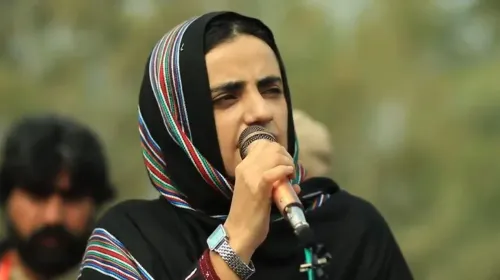
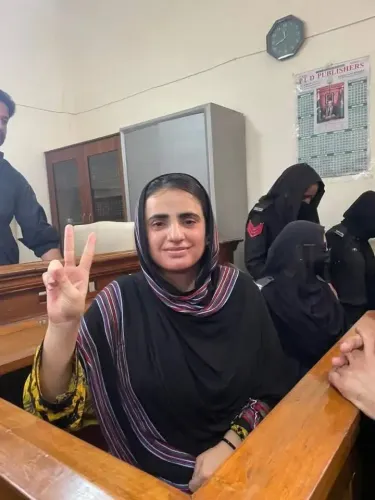
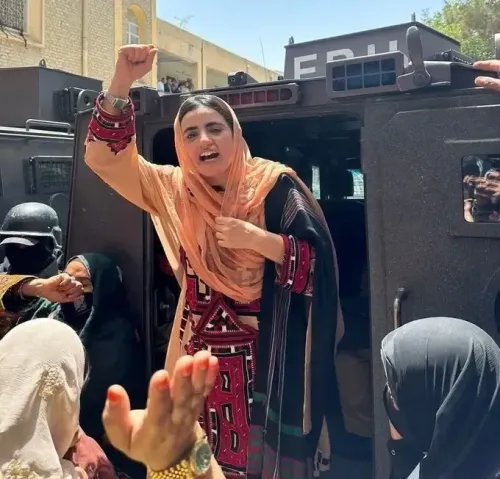
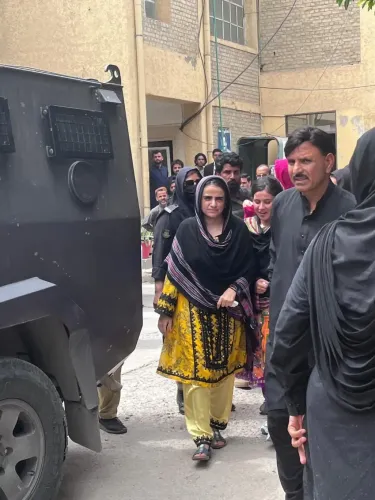
BYC leaders' sit-in at Quetta jail enters Day 3 over 'faceless trial'
Synopsis
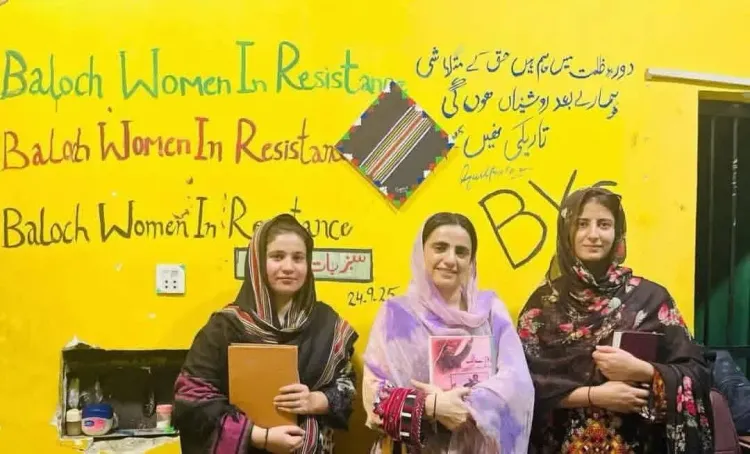
BYC leaders, including chief organiser Mahrang Baloch, have been held in Quetta's Huda jail since March 2025 — and now their colleagues inside are staging a sit-in over a 'faceless trial' that both the BYC and the Baloch National Movement say has no legal basis. With lawyers and relatives blocked from entry, the standoff is entering its third day with no resolution in sight.
Key Takeaways
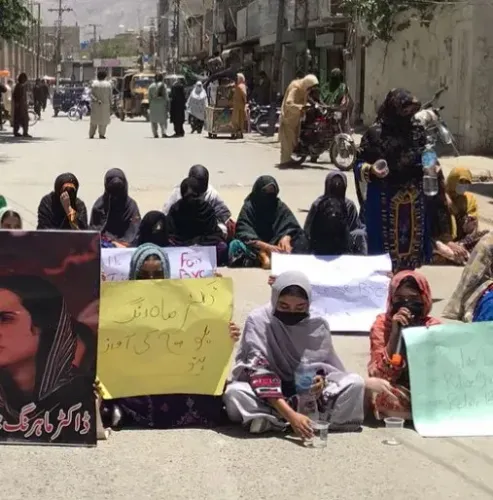
BYC leaders staged a sit-in inside Central Jail Huda , Quetta , entering its third consecutive day on Tuesday .
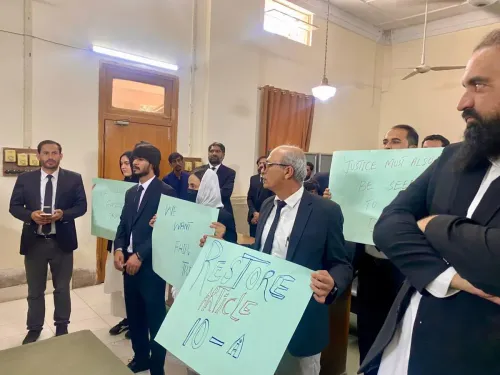
The protest targets what the BYC calls a 'faceless trial' — described as 'unconstitutional, illegal, and a violation of transparent justice.' Relatives and lawyers of detained leaders were reportedly denied entry despite waiting for hours outside the jail.
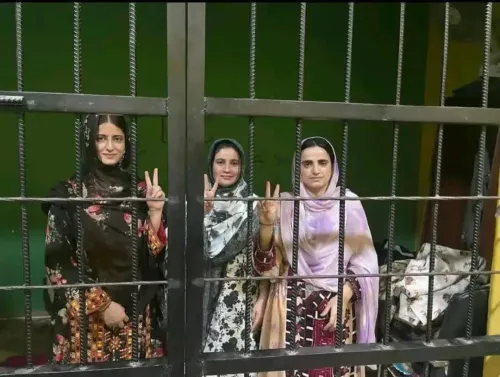
Chief organiser Mahrang Baloch and other BYC leaders have been held at Huda jail since March 2025 — a period of 14 months — on charges the organisation denies.
The Baloch National Movement (BNM) separately condemned the proceedings as 'sham judicial proceedings' orchestrated by the Pakistani state.
Leaders of the Baloch Yakjehti Committee (BYC), a prominent human rights body, entered the third consecutive day of a sit-in protest inside Central Jail Huda in Quetta, Balochistan, on Tuesday, 17 June 2025, denouncing what they describe as a 'faceless trial' as 'unconstitutional, illegal, and a violation of the basic principles of transparent justice.'
What Is Happening Inside Huda Jail
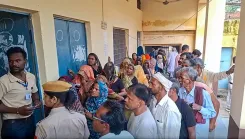
According to the BYC, Pakistani jail authorities have imposed strict restrictions inside the prison, barring all visitors. The rights body alleged that relatives and lawyers of the detained leaders, despite waiting for hours outside the facility, were denied access. 'No individual is being allowed to enter the jail,' the BYC stated, warning of apprehensions that 'state institutions may attempt to pressure or harass the forcibly detained BYC leaders.'
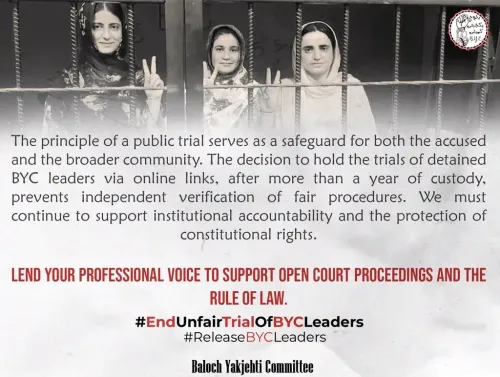
The BYC demanded that the legal and human rights of political prisoners be respected, all 'illegal actions' ongoing inside the facility be halted, and the faceless trial against its leadership be immediately terminated.
Fourteen Months in Custody: The BYC's Account
In a detailed statement shared on social media platform X, the BYC said its leadership has been held in state custody for 14 months on charges they deny committing. 'From physical remand to mental and physical hardship, every possible attempt has been made to weaken the BYC leadership. From open court proceedings to jail trials and now to faceless proceedings, the repeated changes in judicial procedure further make it clear that these decisions are not based on law but on the exercise of power,' the organisation said.
Several BYC leaders, including its chief organiser Mahrang Baloch, have been held at Central Jail Huda in Quetta since March 2025. Their continued detention has drawn global attention, with human rights defenders alleging the charges are 'false and politically motivated.'
Baloch National Movement Condemns Proceedings
The Baloch National Movement (BNM) separately expressed deep concern over what it called Pakistani authorities' attempts to punish Mahrang Baloch and her associates through 'sham judicial proceedings.' The BNM alleged that Pakistan's judicial system is 'merely a puppet subordinate to Pakistan Army authorities,' adding that the cases are being heard through what it described as an 'unjust Faceless Court established inside Hudda Jail (Shaal)' — characterising it as a 'ridiculous mockery of justice by the state.'
The Pakistani government has not publicly responded to these specific allegations, and the characterisations of the judicial proceedings by the BYC and BNM represent their stated position, not independently verified findings.
Broader Context and What Comes Next
The BYC has been at the centre of a sustained crackdown in Balochistan, Pakistan's largest but least developed province, which has seen decades of insurgency and allegations of enforced disappearances. The use of in-camera or 'faceless' court proceedings — where the identity of judges or proceedings are not publicly disclosed — has drawn criticism from international human rights organisations as incompatible with fair trial standards.
With the sit-in now in its third day and access to the detained leaders reportedly blocked, pressure is mounting on Pakistani authorities to clarify the legal basis of the ongoing trial. Human rights groups are expected to escalate calls for independent monitoring of the proceedings.
Point of View
And that trajectory matters more than any single hearing. Balochistan's human rights record is already under international scrutiny, and in-camera trials of high-profile activists risk deepening that scrutiny at a time when Pakistan is seeking economic partnerships that come with governance conditionalities. The Pakistani state's silence on the specific legal authority for a 'faceless court' inside a prison is itself telling — legitimate judicial mechanisms rarely require this level of opacity.
NationPress
15 Sept 2026
Frequently Asked Questions
What is the 'faceless trial' that BYC leaders are protesting against?
A 'faceless trial,' as described by the BYC, refers to judicial proceedings conducted inside Huda jail where the process lacks public transparency — reportedly with no open court access and undisclosed judicial identity. The BYC calls this arrangement unconstitutional and a violation of fair trial principles, while the BNM has described it as a 'Faceless Court' set up inside the prison itself.
Who is Mahrang Baloch and why is she detained?
Mahrang Baloch is the chief organiser of the Baloch Yakjehti Committee (BYC), a human rights body active in Balochistan, Pakistan. She has been held at Central Jail Huda in Quetta since March 2025, along with other BYC leaders. Human rights defenders allege the charges against her are 'false and politically motivated,' though the Pakistani government has not publicly addressed these specific claims.
How long have the BYC leaders been in custody?
According to the BYC, its leadership has been in state custody for 14 months as of the date of the protest. They have been held at Central Jail Huda in Quetta since March 2025.
What are the conditions inside Huda jail according to the BYC?
The BYC alleges that Pakistani jail authorities have imposed strict restrictions inside the prison, preventing any visitors — including relatives and lawyers — from meeting the detained leaders. The organisation has warned of apprehensions that state institutions may attempt to 'pressure or harass' the detainees.
What has the Baloch National Movement said about the trial?
The Baloch National Movement (BNM) condemned the proceedings as 'sham judicial proceedings,' alleging that Pakistan's judicial system acts as a 'puppet subordinate to Pakistan Army authorities.' It described the in-jail court as an 'unjust Faceless Court' and called the process a 'ridiculous mockery of justice by the state.' These are the BNM's stated positions and have not been independently verified.