Baloch Activist Mahrang Baloch Exposes Disturbing Abuses in Solitary Confinement
Synopsis
Mahrang Baloch, a prominent human rights activist, reveals the harrowing conditions faced by her and fellow activists in Pakistani prisons. Her letter to 'The Guardian' outlines the brutalities of solitary confinement and the ongoing harassment of her family, emphasizing the dire human rights situation in Balochistan.
Key Takeaways
Mahrang Baloch is a notable human rights activist facing severe conditions in Pakistani prisons.
She has been in solitary confinement, with alarming health issues.
The systemic oppression of the Baloch people is emphasized through her experiences.
Enforced disappearances and family harassment are rampant in Balochistan.
Mahrang's struggle reflects a broader fight for justice and human rights.
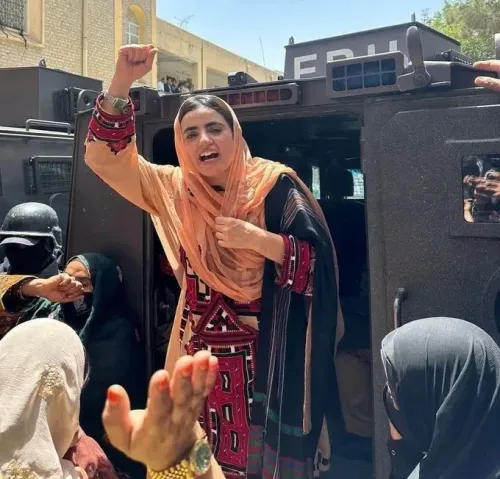
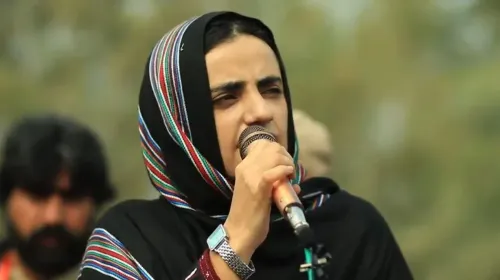
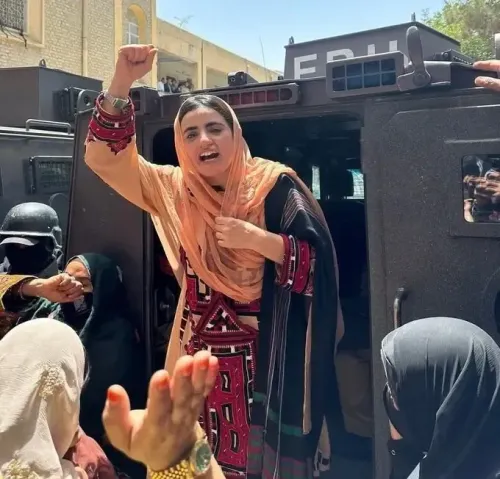
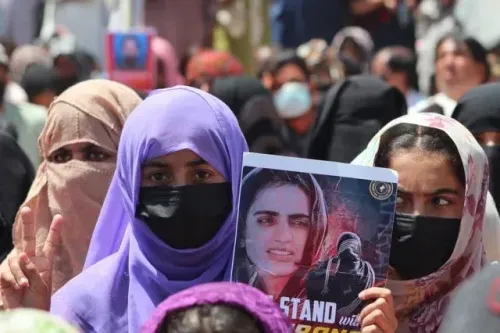
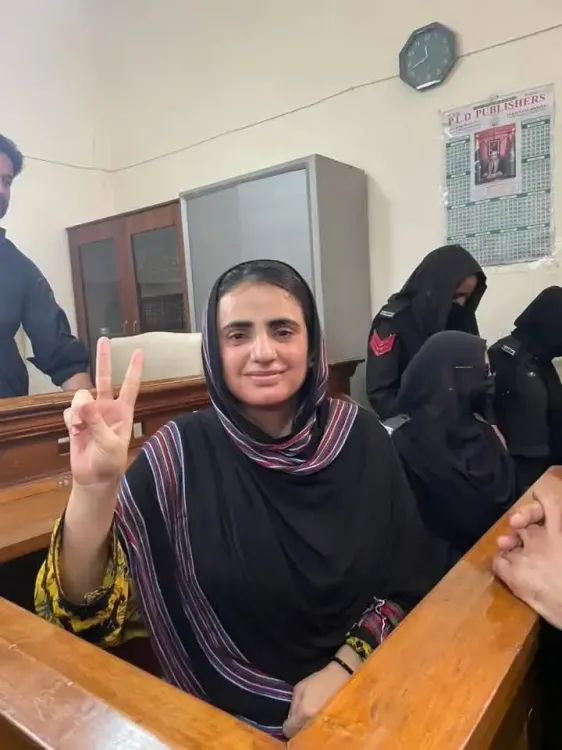
London, April 4 (NationPress) Mahrang Baloch, a prominent human rights advocate and the chief organiser of the Baloch Yakjehti Committee (BYC), has once again brought to light the shocking abuses endured by her and her fellow activists at the hands of Pakistani authorities during their year-long imprisonment.
In a recent correspondence addressed to the well-known British publication 'The Guardian', Mahrang detailed her experience of being held in solitary confinement within a cramped 20-square-metre cell at Central Jail Huda in Quetta. She described the conditions as stark, featuring “just a small cot and a corner commode,” a treatment she believes is intentionally severe for inmates.
“Alongside me are two other defenders and members of BYC, the organization I established to combat human rights violations in Balochistan. We are confined to cells adjacent to one another but are isolated from the other women. They claim that as political prisoners, we cannot interact. It seems they fear we might influence them,” her letter revealed.
Mahrang’s health has significantly deteriorated; since October 2025, she has been grappling with intense back and joint pain, rendering her unable to exercise.
She noted that her condition escalated in February, leading to hospitalization and the discovery of multiple health issues.
“As a physician, I attempted self-treatment. However, in February, my situation worsened, necessitating hospitalization where I was diagnosed with a slipped disc and radiculopathy [compressed or irritated nerve roots in the spine],” the activist explained.
She expressed alarm over the escalating harassment faced by her family members from Pakistani authorities and the enforced disappearances of some relatives.
“While I endure these hardships, the greater anguish lies in knowing my family is being relentlessly targeted for my political activism. My cousin, Salal Baloch, has been forcibly disappeared. On March 12 this year, my 19-year-old cousin, Saifullah Baloch, was abducted and remains unaccounted for. My brother is listed on the fourth schedule, a watch list that imposes strict monitoring, travel restrictions, mandatory police reporting, and financial limitations for up to three years, and he is continually harassed by the counter-terrorism department,” the human rights advocate noted.
“Whenever my sister advocates for our release during press conferences, she faces harassment and has even been charged. These tactics aim to break my spirit and compel me to renounce my political activism,” she added.
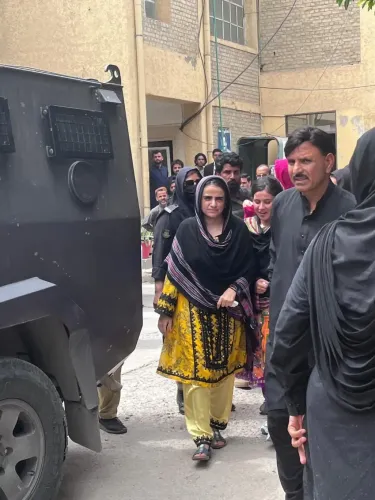
Since their arrest in March last year, Mahrang stated that Pakistani authorities have persistently sought to undermine their resolve.
She accused her companion Beebow Baloch of being assaulted during her transfer from Pishin jail, while another activist, Beebarg Zehri, developed a medical complication—"urethral stricture"—resulting from the deplorable conditions in his cell.
“Yet none of us has capitulated. Perhaps it is our political grounding or the strength of our convictions that keeps us going. Or it might be our faith in our people—who, even under oppression, have not lost their moral courage. This fills me with immense pride,” she emphasized.
Mahrang underscored that “no household in Balochistan is safe” amid the violence perpetrated by Pakistani authorities, stating, “Enforced disappearances are rampant; victims are killed in staged encounters; relatives are targeted, and now even women, including Mahjabeen Baloch, a disabled student, and Hani Baloch, a mother of two who was pregnant, have been forcibly disappeared.”
In 2025 alone, she mentioned that BYC documented over 1,200 cases of enforced disappearances across the province.
Reflecting on the night of their arrests, Mahrang alleged that the Pakistani police fatally shot a peaceful activist and two bystanders while also assaulting other demonstrators during the crackdown.
“This experience revealed to me that our struggle transcends personal grievances; it is a part of a long history of injustice against the Baloch people. It concerns our survival. I am convinced that my mission is to fight for the justice and well-being of Baloch families; that is my destiny,” she asserted.
Point of View
Mahrang Baloch's revelations highlight the urgent need for international attention on human rights abuses in Pakistan, specifically regarding the treatment of political prisoners and the systemic oppression faced by the Baloch people.
NationPress
7 Oct 2026
Frequently Asked Questions
What is the Baloch Yakjehti Committee?
The Baloch Yakjehti Committee (BYC) is an organization founded by Mahrang Baloch to advocate against human rights violations in Balochistan.
What are the conditions like in Central Jail Huda?
Mahrang Baloch describes the conditions as deliberately harsh, with prisoners held in solitary confinement in small cells with minimal amenities.
What are the health issues faced by Mahrang Baloch?
Mahrang has been suffering from severe back and joint pain, and was diagnosed with a slipped disc and radiculopathy after a worsening of her condition.
What has happened to Mahrang’s family members?
Mahrang's family members have faced harassment from authorities, with some being forcibly disappeared, including her cousins and brother.
What does Mahrang Baloch advocate for?
Mahrang Baloch advocates for human rights and justice for the Baloch people, fighting against the systemic oppression they face.