Baloch Yakjehti Committee 'faceless trials': Rights group raises alarm over Pakistan's secret courts
Synopsis
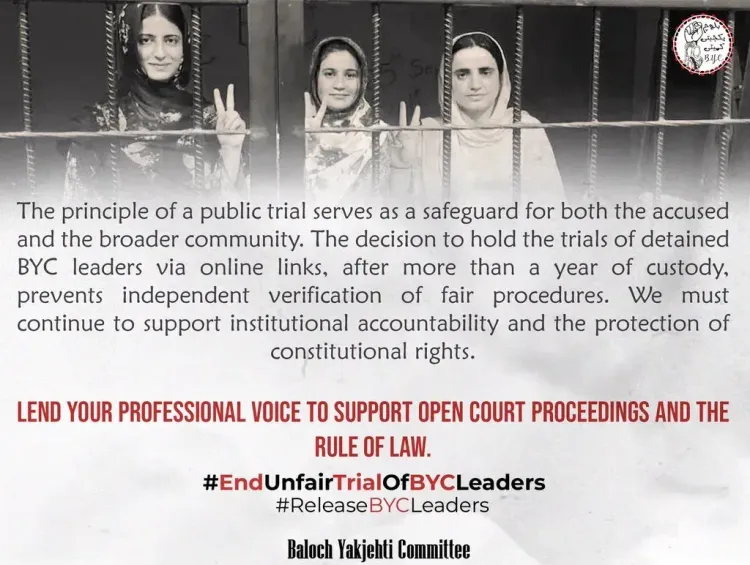
Pakistan's use of 'faceless courts' to try detained Baloch Yakjehti Committee leaders — including chief organiser Mahrang Baloch, held since March 2025 — has drawn a sharp rebuke from the Human Rights Council of Balochistan. The rights body says secret, prison-based proceedings strip defendants of legal assistance and public scrutiny, calling the pattern 'deliberate, coordinated and systematic.'
Key Takeaways
The Human Rights Council of Balochistan (HRCB) condemned Pakistan's use of 'faceless courts' to try detained Baloch Yakjehti Committee (BYC) leaders on 17 June .
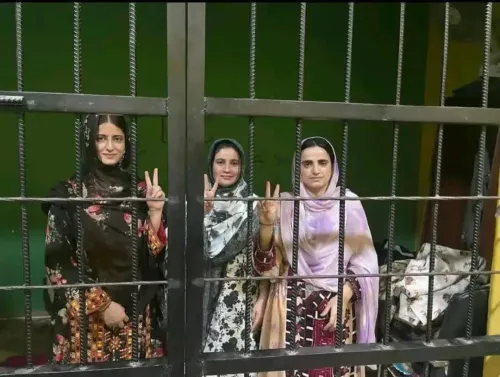
BYC chief organiser Mahrang Baloch has been held at Central Jail Huda, Quetta since March 2025 on charges human rights defenders call politically motivated.
The HRCB described the government's actions as 'deliberate, coordinated and systematic,' including fabricated charges, family collective punishment, and judicial interference.
Dozens of additional cases have reportedly been registered against BYC leaders across multiple police stations, allegedly to prolong detention indefinitely.
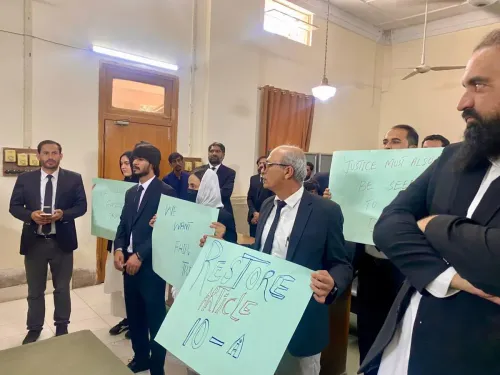
Lawyer and sister of Mahrang Baloch, Nadia Baloch , led protests at Sessions Court Quetta and Anti-Terrorism Court Quetta , calling faceless trials unconstitutional.
The HRCB has demanded restoration of open court hearings, unrestricted detainee access, and an independent investigation into alleged torture and ill-treatment.
The Human Rights Council of Balochistan (HRCB) has condemned what it describes as the systematic and unlawful treatment of detained Baloch Yakjehti Committee (BYC) leaders by Pakistani authorities, warning that conducting hearings inside prisons or through so-called 'faceless courts' is fundamentally incompatible with the right to a fair trial. The statement, issued on 17 June, follows mounting concern over the continued incarceration of BYC leaders — including chief organiser Mahrang Baloch — since March 2025.
What Are 'Faceless Courts'
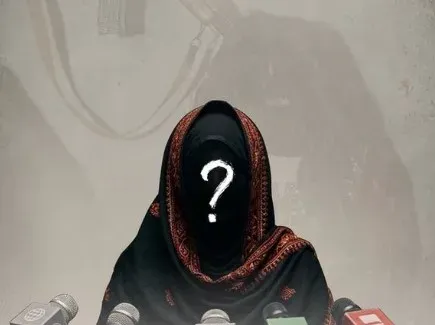
According to the HRCB, information provided by detainees' families and legal representatives indicates that Pakistani authorities are seeking to expedite proceedings through 'faceless courts' — a mechanism that would conduct hearings in secrecy, without meaningful access for lawyers, witnesses, family members, independent observers, or the public. The HRCB stated that such practices 'fundamentally undermine the principles of transparency, accountability, and justice.'
'Conducting hearings inside prisons or through faceless courts, without the effective participation of defence lawyers, witnesses, family members, and public observers, is incompatible with the fundamental right to a fair trial,' the rights body said in its statement. 'These measures isolate defendants from legal assistance, obstruct witness participation, and deny public scrutiny of proceedings that directly affect the liberty and rights of prominent human rights defenders,' it added.
Pattern of Alleged Abuse
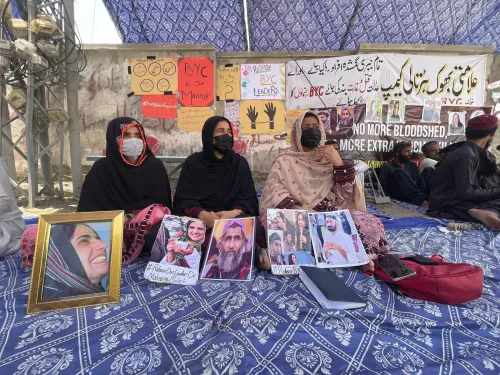
The HRCB characterised the government's actions against BYC detainees as 'deliberate, coordinated and systematic.' The alleged pattern reportedly includes registering fabricated criminal charges, official-level defamation campaigns, collective punishment targeting activists' families, restrictions on legal representation, and direct interference in court proceedings.
Notably, dozens of additional cases have reportedly been registered against BYC leaders across several police stations. The HRCB warned that 'this pattern appears designed to prolong detention indefinitely and obstruct any realistic prospect of acquittal or release.' The government has, according to the statement, failed to substantiate its allegations against detainees in open court proceedings.
Mahrang Baloch and the BYC Detentions
Several BYC leaders, including chief organiser Mahrang Baloch, have been held at Central Jail Huda in the provincial capital Quetta since March 2025. Their continued detention has sparked international condemnation, with human rights defenders alleging the charges are 'false and politically motivated.'
This is not the first time Pakistani authorities have faced criticism over the treatment of Baloch activists — the region has a prolonged history of enforced disappearances, extrajudicial detentions, and allegations of military interference in civilian justice, making the current BYC case a focal point for broader accountability concerns.
Lawyers Protest in Quetta
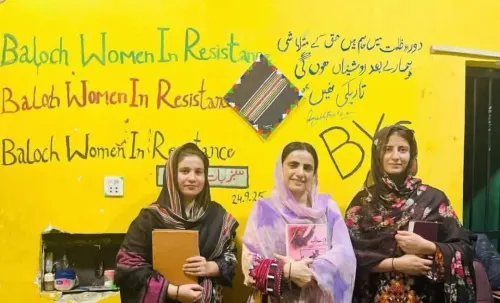
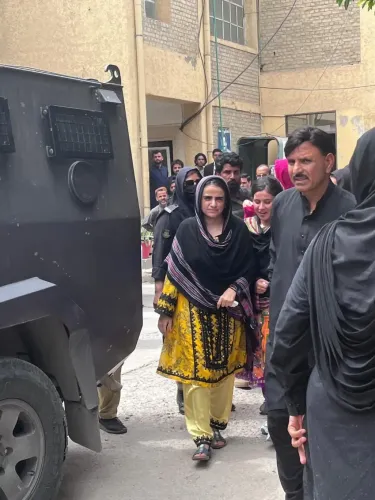
Nadia Baloch, sister of Mahrang Baloch and a practising lawyer, organised a protest at Sessions Court Quetta, Quetta Kacheri, and the Anti-Terrorism Court (ATC) Quetta against the faceless trial proceedings. In a post on X, she said: 'I am a lawyer, and I can't be silent when the fundamental rule of justice is being violated.'
She argued that faceless trials are unconstitutional, lack transparency, and erode public confidence in the judiciary. 'We reject the faceless and non-transparent trials, and we demand that open, fair, and constitutional trials be restored immediately,' Nadia Baloch said, calling on legal professionals, human rights activists, civil society, and citizens across Pakistan to unite against what she described as a 'perilous trend.'
HRCB Demands
The HRCB has urged the Pakistani government to immediately end all secret, inaccessible, or prison-based court proceedings against detained BYC leaders, restore hearings to open and publicly accessible courtrooms in line with domestic and international fair trial standards, and ensure unrestricted access for lawyers, family members, and medical professionals to all detainees.
The body further demanded that the independence and impartiality of the judiciary be guaranteed, free from governmental, military, intelligence, or executive interference, and called for an independent, transparent investigation into allegations of torture and ill-treatment reportedly committed against BYC detainees. How Pakistani authorities respond to these demands is expected to shape the next phase of both the legal proceedings and international scrutiny.
Point of View
Witnesses cannot testify, and families cannot observe, the distinction between detention and conviction collapses entirely. Pakistan's claim to democratic governance is difficult to sustain alongside proceedings of this character.
NationPress
22 Sept 2026
Frequently Asked Questions
What are 'faceless courts' in the context of the BYC trials in Pakistan?
'Faceless courts' refer to secret judicial proceedings conducted without meaningful access for defence lawyers, witnesses, family members, or public observers. According to the HRCB, Pakistani authorities are reportedly seeking to use this mechanism to expedite trials of detained BYC leaders, raising serious fair trial concerns under both domestic and international law.
Who is Mahrang Baloch and why has she been detained?
Mahrang Baloch is the chief organiser of the Baloch Yakjehti Committee (BYC), a prominent Baloch rights movement. She has been held at Central Jail Huda in Quetta since March 2025. Human rights defenders allege the charges against her are 'false and politically motivated,' though Pakistani authorities have not publicly conceded this.
What has the Human Rights Council of Balochistan demanded from Pakistan?
The HRCB has called on Pakistan to immediately end all secret or prison-based court proceedings against BYC detainees, restore hearings to open courtrooms, ensure unrestricted access for lawyers and family members, guarantee judicial independence, and launch an independent investigation into alleged torture and ill-treatment of detainees.
What did Nadia Baloch say about the faceless trial proceedings?
Nadia Baloch, a lawyer and sister of Mahrang Baloch, organised protests at Sessions Court Quetta and Anti-Terrorism Court Quetta, calling faceless trials unconstitutional and damaging to public confidence in the judiciary. In a post on X, she said: 'I am a lawyer, and I can't be silent when the fundamental rule of justice is being violated,' and urged civil society and the legal profession to condemn the trend.
Why does the BYC detention case matter beyond Balochistan?
The case has drawn international attention because it reflects a broader pattern of alleged state repression in Balochistan, including enforced disappearances and military interference in civilian justice. The use of faceless courts, if confirmed, would represent a significant escalation — moving from extrajudicial detention to judicially-sanctioned secrecy — with implications for Pakistan's human rights obligations under international law.