California declares emergency in Orange County over chemical crisis at Garden Grove plant
Synopsis
A tank of highly flammable methyl methacrylate at GKN Aerospace in Garden Grove has been heating uncontrollably for days — and California Governor Gavin Newsom has now declared a state of emergency in Orange County. With temperatures inside the tank jumping from 77°F to 90°F in 24 hours, fire officials warn of two scenarios: toxic rupture or explosion. The clock is ticking.
Key Takeaways
California Governor Gavin Newsom declared a state of emergency in Orange County on 24 May 2025 .
A tank of methyl methacrylate (MMA) at the GKN Aerospace plant in Garden Grove has been at unstable and rising temperatures for several days.
Tank temperature climbed to 90°F (32.22°C) , up from 77°F (25°C) the previous day.
Fire officials warn of two risk scenarios: toxic chemical rupture or an explosion that could trigger nearby tanks.
Cal OES had been mobilised for over 24 hours before the formal emergency declaration.
Residents near the facility have been directed to follow guidance from local emergency officials.
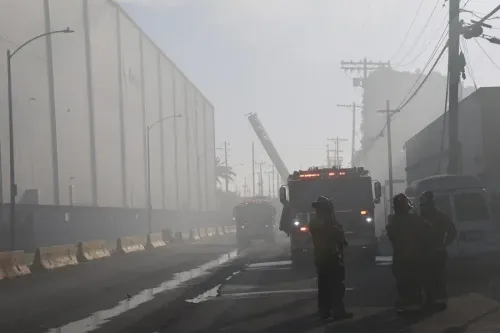
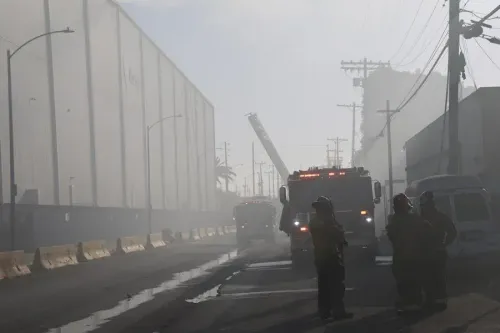
California Governor Gavin Newsom declared a state of emergency in Orange County on 24 May as emergency crews raced to stabilise a tank holding volatile industrial chemicals at the GKN Aerospace manufacturing facility in Garden Grove. The declaration unlocks additional state resources and accelerates coordination among local, state, and federal agencies responding to the escalating hazardous materials crisis.
What Triggered the Emergency
A tank containing methyl methacrylate (MMA) — a highly flammable chemical used in acrylic plastics and aerospace manufacturing — has remained at an unstable and rising temperature for several days at the GKN Aerospace plant. Temperatures inside the compromised tank climbed to approximately 90 degrees Fahrenheit (32.22 degrees Celsius), up from 77 degrees Fahrenheit (25 degrees Celsius) recorded a day earlier, according to fire officials.
The Risk Scenarios Fire Officials Are Warning About
Authorities have outlined two critical failure scenarios as the situation worsens. The tank could rupture, releasing toxic chemicals into the surrounding area, or it could explode and trigger a chain reaction involving nearby chemical storage tanks. Either outcome poses a serious threat to Orange County residents and surrounding communities.
What the Governor Said
'The safety of Orange County residents is the top priority,' Governor Newsom said in an official statement, adding that California was deploying all available resources to support responders and affected communities. In a post on social media platform X, Newsom wrote: 'I'm proclaiming a state of emergency in Orange County as California continues to respond to the hazardous chemical incident in Garden Grove. @Cal_OES has been mobilized for over 24 hours and state agencies are supporting impacted communities to protect public safety, and assist local officials as response efforts continue. Please continue to follow guidance from emergency officials.'
State Response and Coordination
The California Governor's Office of Emergency Services (Cal OES) had already been mobilised for over 24 hours before the formal emergency declaration. The state of emergency order enables faster procurement of equipment, personnel, and inter-agency support. Residents in the vicinity of the plant have been urged to follow guidance issued by local emergency officials as the situation continues to evolve.
What Happens Next
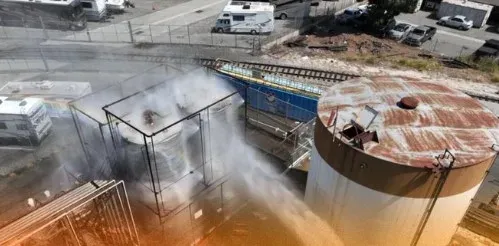
Emergency crews are continuing cooling operations on the tank as authorities monitor temperature readings in real time. The focus remains on preventing either rupture or explosion before the chemical can be safely neutralised or removed. The situation remains active and fluid, with the risk level contingent on whether crews can bring temperatures down before a structural failure occurs.
Point of View
Response speed is not bureaucratic detail, it is the difference between containment and catastrophe. This incident will likely renew debate about inspection regimes at aerospace and chemical manufacturing facilities in densely populated Southern California corridors.
NationPress
25 Sept 2026
Frequently Asked Questions
Why did California declare a state of emergency in Orange County?
Governor Gavin Newsom declared a state of emergency on 24 May 2025 due to a hazardous chemical crisis at the GKN Aerospace plant in Garden Grove, where a tank of methyl methacrylate (MMA) has been at dangerously rising temperatures for several days. The declaration enables faster mobilisation of state resources and inter-agency coordination.
What is methyl methacrylate and why is it dangerous?
Methyl methacrylate (MMA) is a highly flammable industrial chemical used in acrylic plastics and aerospace manufacturing. It is volatile and can ignite or explode under elevated temperatures, posing serious risks of toxic release or fire if containment fails.
What are the two risk scenarios fire officials have warned about?
Fire officials have warned that the overheating tank could either rupture and leak toxic chemicals into the surrounding area, or explode and potentially trigger a chain reaction involving other nearby chemical storage tanks at the GKN Aerospace facility.
How serious is the temperature rise inside the tank?
The temperature inside the compromised MMA tank rose from approximately 77 degrees Fahrenheit (25°C) to about 90 degrees Fahrenheit (32.22°C) within a single day, according to fire officials, indicating an accelerating and unstable situation.
What should Orange County residents do?
Residents near the GKN Aerospace facility in Garden Grove have been advised to follow all guidance issued by local emergency officials. Governor Newsom's office has urged the public to stay updated through official emergency channels as response efforts continue.