Chad quits ICC, calls tribunal 'selective' against Africa
Synopsis
Two nations on two continents — Chad and Venezuela — announced ICC withdrawals within days of each other, both citing the same charge: that the Hague court targets the Global South while shielding powerful Western interests. With 9 of 13 ICC investigations aimed at Africa, the statistical case is hard to dismiss, and the twin exits could reignite the African Union's long-stalled push for a continental criminal court.
Key Takeaways
Chad formally notified the UN of its ICC withdrawal on 27 July , citing 'undeniable selectivity' against Africa.
According to official data cited by Chad, 9 of 13 ICC investigations and 6 of 7 people in ICC custody are linked to African cases.
Chad called on the African Union to build stronger domestic and regional justice institutions to replace reliance on the ICC.
Venezuela announced a parallel 'firm and irrevocable' withdrawal on 25 July , with Foreign Minister Felix Plasencia citing bias against the Global South .
Venezuela's National Assembly had voted in December 2025 to begin the exit process; the ICC had opened a probe into Caracas in 2021 .
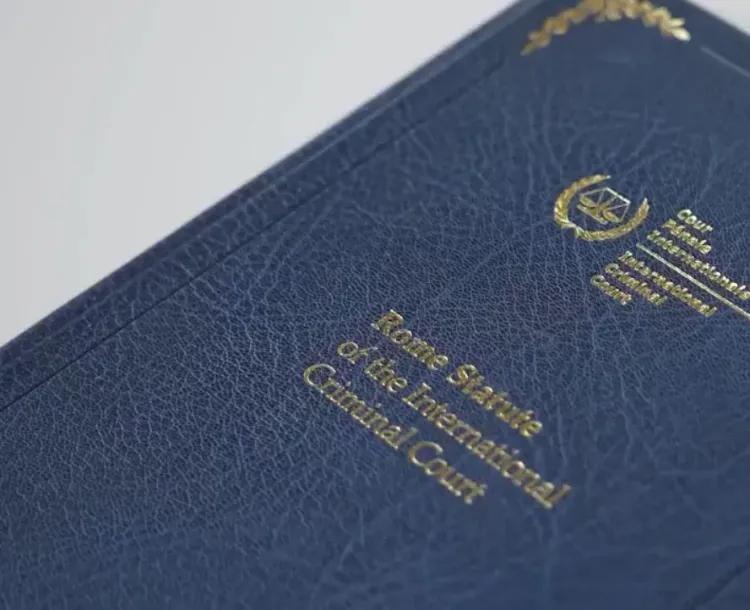
Under the Rome Statute, withdrawals take effect one year after UN notification.
Chad on Monday, 27 July formally notified the United Nations secretary-general of its decision to withdraw from the International Criminal Court (ICC), accusing the Hague-based tribunal of being 'limited and inconsistent' and guilty of 'undeniable selectivity.' The announcement, made by the Chadian Ministry of Foreign Affairs, marks a significant blow to the court's already strained legitimacy in Africa.
The Case Chad Made Against the ICC
N'Djamena's indictment of the court rests heavily on statistical disproportion. Citing official data as of 11 May, the Chadian foreign ministry noted that 9 of the 13 ICC investigations opened to date involve African countries. Of the seven individuals currently in ICC custody, six are linked to African cases — a pattern Chad characterised as institutionalised bias.
The ministry stopped short of equating withdrawal with impunity. Its statement stressed that Chad 'remains committed to prosecuting war crimes and other serious offences,' expressing confidence that domestic courts and regional African bodies are capable of delivering justice to victims.
A Continental Call to Action
Alongside the withdrawal announcement, Chad urged the African Union (AU) and its member states to invest in strengthening domestic legal institutions. The government called for 'a more equitable, balanced, credible and effective continental justice system' that simultaneously protects African sovereignty — a framing that positions the move as reform-minded rather than purely obstructionist.
Notably, this is not an isolated African grievance. The AU has previously debated a collective withdrawal from the ICC, and several member states — including Burundi and South Africa (which later reversed course) — have at various points moved to exit the court. Chad's departure adds fresh momentum to that debate.
Venezuela Moves in Parallel
Chad's announcement follows a near-simultaneous move by Venezuela, which on Friday, 25 July declared its own 'firm and irrevocable' withdrawal from the ICC under Article 127 of the Rome Statute. Venezuelan Foreign Minister Felix Plasencia posted on X that Caracas had formally notified UN Secretary-General António Guterres of the decision.
Plasencia argued that the court had disproportionately directed its work 'to the detriment of the Global South,' and accused the ICC of perpetuating what he described as the persecution of the Venezuelan people. He said the court's conduct deepened 'inequalities among peoples and disregarded their right to self-determination and sovereignty.'
The ICC had announced in 2021 that it would investigate possible crimes against humanity by the Venezuelan government during a crackdown on anti-government protests in 2017. Venezuela's National Assembly voted in December 2025 to begin the formal withdrawal process under the Rome Statute.
What Happens Next
Under the Rome Statute, a withdrawal takes effect one year after formal notification to the UN secretary-general, meaning Chad and Venezuela will remain technically bound by the court's jurisdiction during that transitional period. Observers will watch whether other African or Latin American states follow suit, and whether the AU uses this moment to accelerate the long-discussed creation of a regional criminal court with binding authority.
Point of View
As cited by Chad, is damning: 9 of 13 investigations in Africa is a pattern, not an anomaly. What mainstream coverage tends to underplay is that the ICC's legitimacy crisis is structural — it was built on a model that requires great-power cooperation to function, yet the great powers (the US, Russia, China) never joined. That asymmetry has always meant smaller, weaker states bear the institutional burden. Chad's call for a stronger African justice architecture is the more consequential long-term signal — if the AU moves on it, the ICC may find itself increasingly irrelevant across an entire continent.
NationPress
26 Oct 2026
Frequently Asked Questions
Why is Chad withdrawing from the ICC?
Chad is withdrawing from the International Criminal Court because it believes the tribunal applies justice selectively and disproportionately against African nations. The Chadian Ministry of Foreign Affairs cited official data showing that 9 of the ICC's 13 investigations and 6 of its 7 current detainees are linked to African cases.
What is the Rome Statute and how does withdrawal work?
The Rome Statute is the founding treaty of the International Criminal Court, signed in 1998 and entered into force in 2002. Under Article 127, a member state can withdraw by notifying the UN secretary-general, with the exit taking effect one year later — meaning obligations remain in force during that transitional period.
Is Venezuela also leaving the ICC?
Yes. Venezuela announced on 25 July that it was making a 'firm and irrevocable' withdrawal from the ICC, with Foreign Minister Felix Plasencia citing geographical bias against the Global South. Venezuela's National Assembly had voted in December 2025 to begin the process; the ICC had opened a crimes-against-humanity investigation into Venezuela in 2021.
Does Chad's withdrawal mean it is abandoning accountability for war crimes?
Chad says no. The Chadian government's statement stressed that withdrawal does not mean abandoning accountability, and that the country remains committed to prosecuting war crimes through its own courts and regional African bodies.
Which other countries have previously tried to leave the ICC?
Burundi completed its withdrawal from the ICC in 2017. South Africa and Gambia both initiated withdrawal processes but later reversed their decisions. The African Union has periodically debated a collective exit, reflecting longstanding continental frustration with the court's perceived bias.