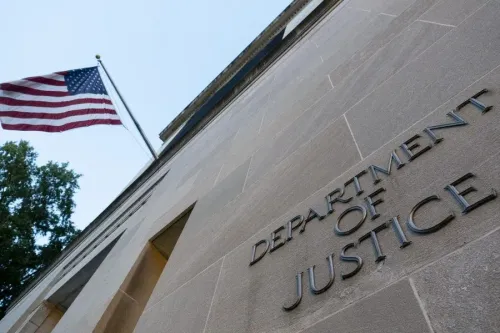
DOJ defends Adani case dismissal: 'Charges should never have been brought'
Synopsis
The US Department of Justice didn't just drop the Adani case — it argued the prosecution was misconceived from day one. In a rare detailed court filing, the DOJ cited foreign jurisdiction, no investor losses, Indian investigations finding no misconduct, and charges it called non-actionable 'puffery.' It also flatly denied that investment promises drove the decision.
Key Takeaways
The US DOJ filed a detailed defence of its decision to drop all charges against Gautam Adani and seven co-defendants on 4 July .
The filing, authored by Principal Associate Deputy Attorney General R Trent McCotter , was submitted to the US District Court for the Eastern District of New York .
The DOJ cited multiple flaws: foreign jurisdiction, no US investor losses, key evidence and witnesses in India, and defendants unlikely to appear in a US court.
Securities fraud charges against Gautam Adani and Sagar Adani were called charges that 'should never have been brought,' partly dismissed as corporate 'puffery.' FCPA charges were found to not meet departmental guidelines — no US national interest, no effect on US companies, no national security link.
The DOJ denied that potential Adani investments in the US influenced the decision to dismiss charges, calling such reports 'false.'
The US Department of Justice (DOJ) on Saturday, 4 July filed a detailed court submission vigorously defending its decision to drop all criminal charges against Indian billionaire Gautam Adani and seven co-defendants, asserting that the prosecution was legally flawed from the outset and that the Executive Branch holds sole constitutional authority over prosecutorial decisions.
What the DOJ Filing Said
The submission was made to the US District Court for the Eastern District of New York in response to a 26 June court order demanding an explanation for why the department was seeking dismissal with prejudice of all charges. Principal Associate Deputy Attorney General R Trent McCotter authored the filing, granting what he described as a 'limited waiver' of privilege to explain the department's reasoning.
The DOJ concluded, after months of review, that the prosecution suffered from 'multiple legal, jurisdictional and practical flaws.' Foremost among them: the alleged conduct occurred overwhelmingly in India. 'This is a foreign case,' the filing states, adding that 'India can better manage its internal systems than can prosecutors in Brooklyn and Washington.'
Indian Authorities Found No Misconduct
The filing noted that Indian authorities had independently investigated many of the same allegations and, through reports and decisions issued in 2026, 'has found no actionable misconduct.' The DOJ also pointed to significant evidentiary obstacles — key witnesses and substantial evidence are located in India — and the fact that none of the defendants had appeared before the US court, nor were they likely to, given that all are foreign nationals residing outside the United States.
Securities Fraud Charges Called Unjustified
On the securities fraud counts specifically targeting Gautam Adani, Sagar Adani, and a third defendant, the DOJ was unequivocal: those charges 'should never have been brought.' The filing argued that the alleged conduct occurred almost entirely outside the United States, raising significant jurisdictional questions under US securities laws. It further contended that many of the statements cited by prosecutors amounted to general corporate assertions about integrity and compliance — the kind courts have previously treated as non-actionable corporate 'puffery.'
The department also noted that the institutional investors involved were among the most sophisticated financial entities in the world and had not suffered losses, as the securities continued to perform. Two of the debt offerings had already been repaid in full, while the remaining notes were being serviced without any sign of default.
FCPA Charges Did Not Meet Departmental Guidelines
Regarding the Foreign Corrupt Practices Act (FCPA) charges against the remaining defendants, the DOJ said the case failed to satisfy current departmental guidelines, which prioritise prosecutions involving US national interests, organised crime, national security, or significant harm to US businesses. According to the filing, the alleged conduct 'did not involve criminal organisations, did not have any effect on US companies, did not in any way implicate national security, was not egregious, and has been the subject of investigations in India.'
DOJ Rejects Influence Claims
The filing directly addressed and rejected media reports suggesting the dismissal was linked to potential investments by Adani companies in the United States. McCotter stated plainly: 'That is false,' denying that securities charges were dropped in exchange for any investment commitments. He also criticised what he described as 'current or former Department attorneys who unethically fed those stories.'
The court is yet to formally rule on the dismissal motion. The case, which had drawn significant attention across Indian financial markets and political circles, now appears headed toward a full withdrawal — though the judge retains the discretion to accept or reject the government's application.
Point of View
But the manner of dismissal — with the court still yet to formally accept it — leaves the legal chapter technically open.
NationPress
3 Oct 2026
Frequently Asked Questions
Why did the US DOJ drop charges against Gautam Adani?
The DOJ concluded after months of review that the prosecution had multiple legal, jurisdictional and practical flaws. Key reasons included that the alleged conduct occurred overwhelmingly in India, Indian authorities found no actionable misconduct, investors suffered no financial losses, and key witnesses and evidence were located outside the United States.
What were the charges against Gautam Adani and the co-defendants?
The charges included securities fraud counts against Gautam Adani, Sagar Adani, and one other defendant, as well as Foreign Corrupt Practices Act (FCPA) charges against the remaining co-defendants. All charges were sought to be dismissed with prejudice.
What does 'dismissed with prejudice' mean in this case?
Dismissal with prejudice means the charges are dropped permanently and cannot be refiled. The DOJ sought this outcome, though the US District Court for the Eastern District of New York must formally accept the motion before it takes effect.
Did Adani investment promises influence the DOJ's decision?
The DOJ explicitly denied this. Principal Associate Deputy Attorney General R Trent McCotter stated in the filing: 'That is false,' rejecting media reports that suggested the dismissal was linked to potential Adani Group investments in the United States.
What happens next in the Adani case?
The US District Court for the Eastern District of New York must rule on the DOJ's dismissal motion. The judge retains discretion to accept or reject the application, meaning the case is not formally closed until the court issues its order.