What were the highlights of German Chancellor Friedrich Merz's Gujarat visit?
Synopsis
German Chancellor Friedrich Merz's recent visit to Gujarat marks a significant step in enhancing India-Germany relations. With a focus on collaboration in defense, technology, and trade, the discussions led to multiple agreements. This visit not only celebrates a milestone in diplomatic ties but also sets the stage for future cooperation in critical sectors.
Key Takeaways
Elevated bilateral relations between India and Germany.
19 agreements signed across multiple sectors.
Focus on defense , technology , and trade .
Participation in the International Kite Festival .
Bilateral trade reached an all-time high.
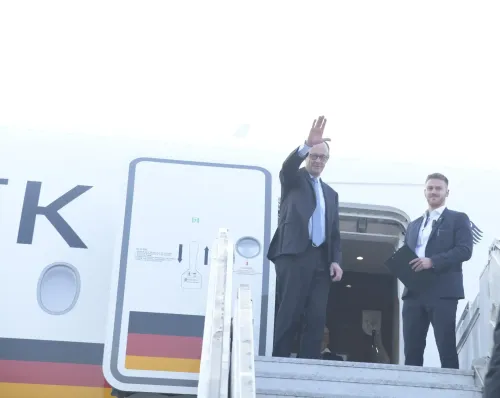
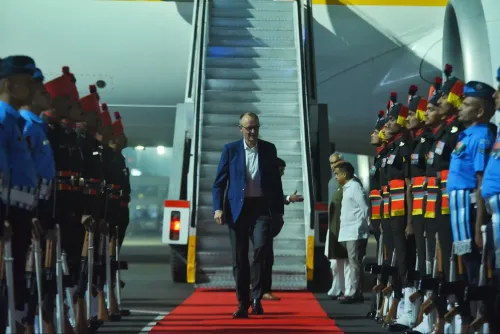
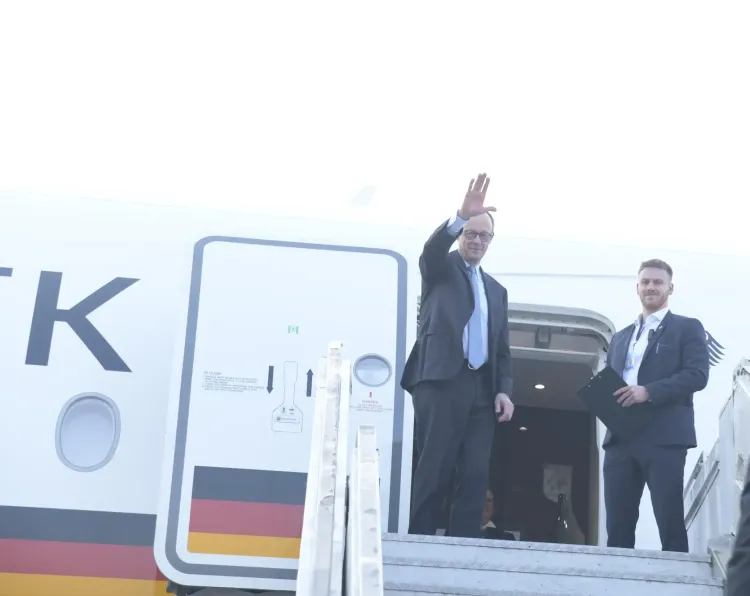
Gandhinagar, Jan 13 (NationPress) German Chancellor Friedrich Merz concluded his two-day visit to Gujarat on Tuesday and proceeded to the next destination of his trip in Bengaluru.
He was seen off at Ahmedabad Airport by Gujarat Governor Acharya Devvrat, Chief Minister Bhupendrabhai Patel, and other dignitaries.
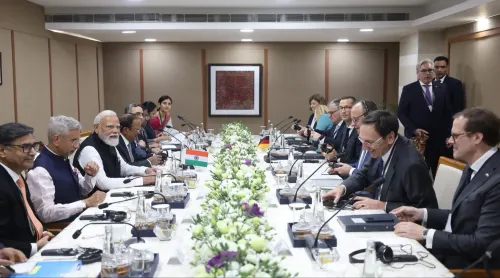
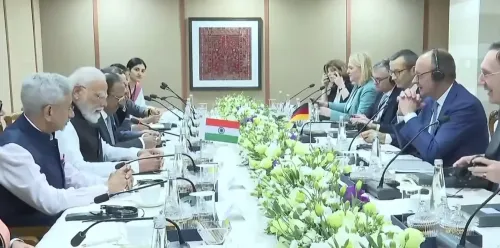
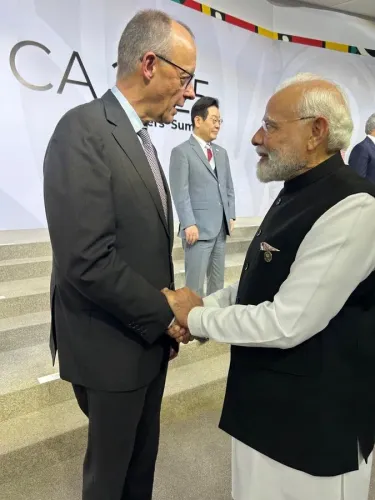
On Monday, Prime Minister Narendra Modi and Chancellor Merz engaged in delegation-level discussions at the Mahatma Mandir Convention Centre in Gandhinagar, where they committed to elevating the relationship between their nations through enhanced collaboration in defence, space, and other vital and emerging technologies.
Post discussions, PM Modi took to X to express: "Hosting Chancellor Friedrich Merz in Ahmedabad was a delightful experience. His visit has invigorated the India–Germany alliance as we celebrate 25 years of our Strategic Partnership and 75 years of diplomatic ties. It is an honor that he chose India for his inaugural visit in Asia, showcasing his dedication to robust India-Germany relations."
"We have agreed to elevate our partnership to a qualitatively superior level, fostering deeper collaboration in defence, space, and other pressing technologies. Our dialogues included joint initiatives on climate action, establishing trusted and resilient supply chains, education, sports, and enhancing cultural and interpersonal connections," he added.
Both leaders participated in the International Kite Festival at the Sabarmati Riverfront, where they enjoyed the vibrant colors and energy of this annual celebration, even joining in on the kite flying festivities.
Moreover, they interacted with CEOs from both German and Indian businesses. PM Modi highlighted that the trade volume between India and Germany has hit an unprecedented peak.
"Chancellor Merz and I convened with Indian and German CEOs. The collaboration between our nations is essential for global well-being. The burgeoning trade and investment ties have reinvigorated our partnership. Our bilateral trade has reached an all-time high, with numerous German firms investing in India. We aim to further enhance our economic connections in the near future," PM Modi posted on X.
On Monday, India and Germany formalized several agreements spanning sectors such as trade, technology, health, and renewable energy. The Ministry of External Affairs (MEA) reported that 19 agreements were finalized along with multiple policy announcements aimed at strengthening cooperation across strategic, economic, and social areas.
Both leaders acknowledged the consistent growth in trade and investment, noting that bilateral trade reached record levels in 2024, with positive trends expected to persist into 2025.
In 2024, India-Germany trade in goods and services exceeded $50 billion, constituting over 25% of India's trade with the EU.
An official statement highlighted the leaders' endorsement of a Joint Declaration of Intent to bolster economic cooperation through the German-Indian CEO Forum, which aims to promote collaboration in business and industry, underpinned by the long-standing presence of German firms in India and vice versa.
Additionally, they commended advancements in cooperation in critical and emerging technologies, encompassing semiconductors, critical minerals, digitalisation, telecommunications, health, and the bioeconomy, thereby solidifying the Innovation and Technology Partnership Roadmap.
They also recognized the strong mutual interest in establishing institutional dialogues across the semiconductor value chain via a new Joint Declaration of Intent on Semiconductor Ecosystem Partnership.
Both parties underscored the importance of enhanced collaborative research and industrial engagement between the Indian and German semiconductor sectors. PM Modi welcomed the establishment of the Global Capability Centre (GCC) by Infineon, a German technology company, in GIFT City last March.
Point of View
It's essential to recognize the growing bond between India and Germany as a strategic partnership that benefits both nations. Chancellor Merz's visit underscores a collective commitment to addressing global challenges through collaboration in critical technologies and sustainable practices. This alignment is vital for enhancing economic ties and fostering cultural exchanges, which is beneficial for both countries.
NationPress
17 Sept 2026
Frequently Asked Questions
What agreements were signed during Chancellor Merz's visit?
During Chancellor Merz's visit to Gujarat, India and Germany signed 19 agreements focusing on various sectors, including trade, technology, health, and renewable energy.
What was the purpose of the discussions between PM Modi and Chancellor Merz?
The discussions aimed to elevate the India-Germany relationship by enhancing cooperation in defense, space, and emerging technologies, as well as addressing climate action and trade.
What is the significance of the International Kite Festival?
The International Kite Festival symbolizes cultural vibrancy and unity, showcasing the rich traditions of Gujarat while fostering camaraderie between the leaders.
How has bilateral trade between India and Germany changed?
Bilateral trade between India and Germany reached record levels, surpassing $50 billion in 2024, which is over 25% of India's trade with the EU.
What is the Semiconductor Ecosystem Partnership?
The Semiconductor Ecosystem Partnership is a collaborative initiative aimed at strengthening institutional dialogues and cooperation in the semiconductor value chain between India and Germany.